About Mauremys mutica (Cantor, 1842)
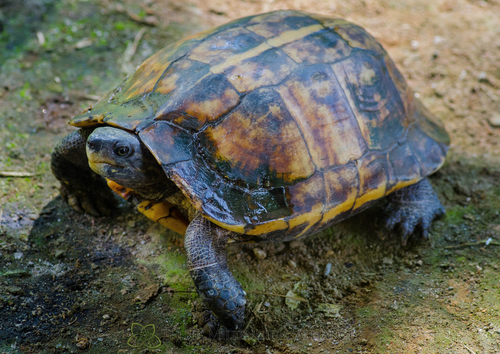
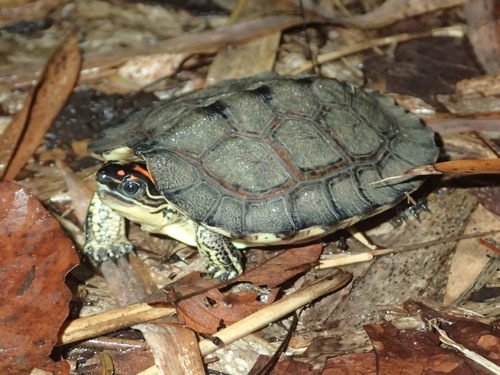
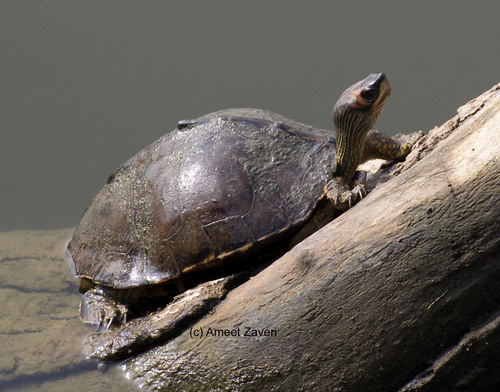
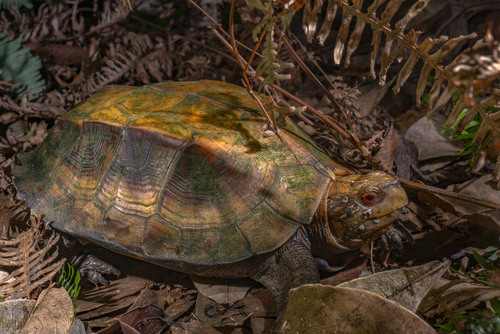
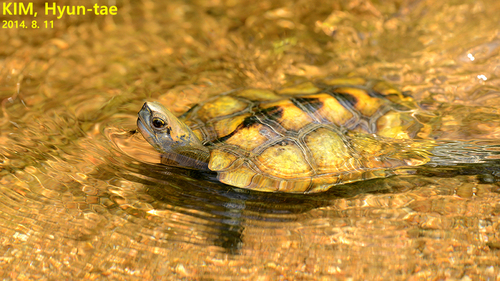
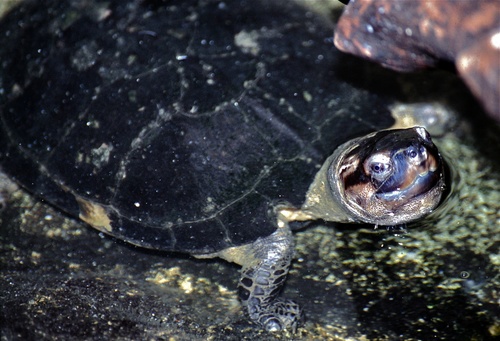
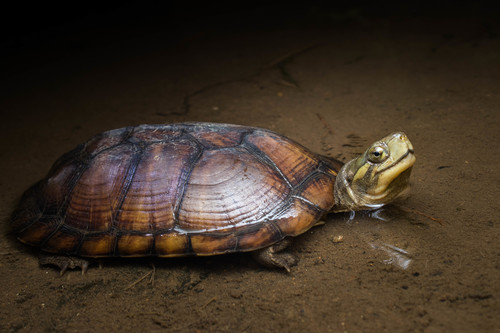
The yellow pond turtle, scientifically named Mauremys mutica (Cantor, 1842), is a medium-sized semiaquatic turtle that belongs to the Geoemydidae family, growing up to 19.5 cm long. This species has a distinct broad yellow stripe that extends behind the eye and down the neck. Its carapace (upper shell) ranges in color from grayish brown to brown, while its plastron (lower shell) is yellow or orange with black blotches along the outer edges. It is native to East Asia, with its range extending from central Vietnam and Laos northward through the coastal provinces of south and central China. Insular native populations are found on Taiwan, Hainan, and the Ryukyu Islands. While populations in the southern Ryukyus are considered native, populations in the northern and central Ryukyus, as well as central Japan, are believed to be introduced from imports originating from Taiwan. This species lives in ponds, creeks, swamps, marshes, and other shallow, slow-moving bodies of water. It is omnivorous, feeding on insects, fish, tadpoles, and plant material including leaves and seeds. The yellow pond turtle generally stays in or near water during the day, but may become more active at night and during rainy weather, when it sometimes moves onto land. One subspecies, M. m. kami, is currently recognized and found in the southern Ryukyu Islands. Research has found unexpected genetic diversity in M. mutica, which raises the possibility that additional subspecies may exist. Evidence of widespread hybridization further complicates efforts to understand the genetics of this species and related species. Several hybrid Asian pond turtles that were originally described as new species have been confirmed to be hybrids. Fujian pond turtles (Mauremys iversoni) are hybrid specimens mainly produced in Chinese turtle farms, most often from matings between female yellow pond turtles and male golden coin turtles (Cuora trifasciata). The supposed species Mauremys pritchardi consists of wild and captive-bred hybrids between the yellow pond turtle and the Chinese pond turtle (Chinemys reevesi). "Clemmys guangxiensis" is a composite taxon described from specimens of M. mutica and the natural hybrid "Mauremys" × iversoni. The yellow pond turtle is threatened with extinction. China is the largest consumer of turtles globally, and this trade has been identified as the greatest threat to Asian turtles, including M. mutica. Most turtle trade is for human consumption, but demand from traditional medicine and the pet trade also drives harvest of the species. Habitat loss and water pollution are additional threats to the species. The IUCN classifies M. mutica as a critically endangered species, and it is listed in CITES Appendix II.