About Marsilea quadrifolia L.
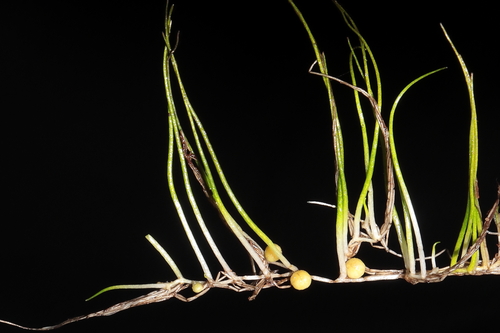
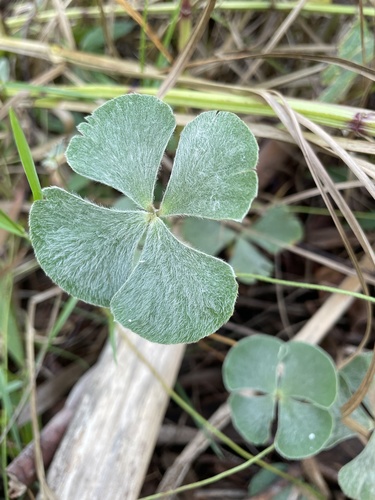
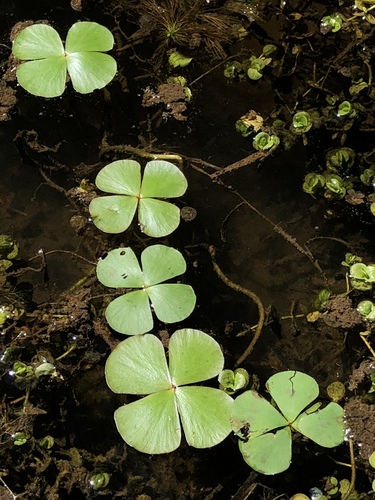
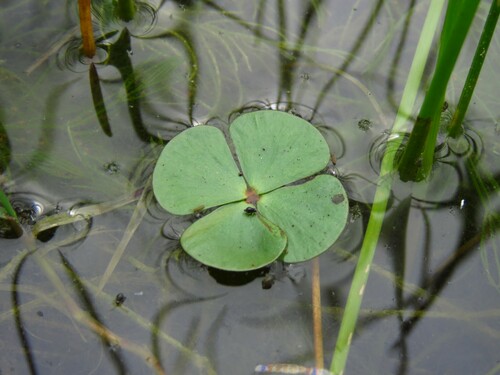
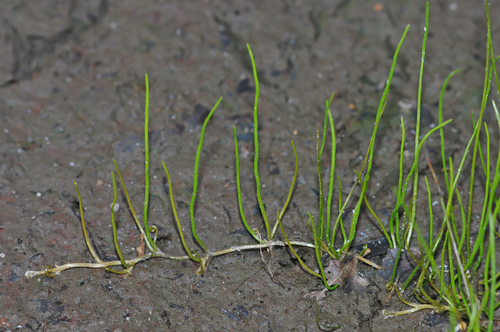
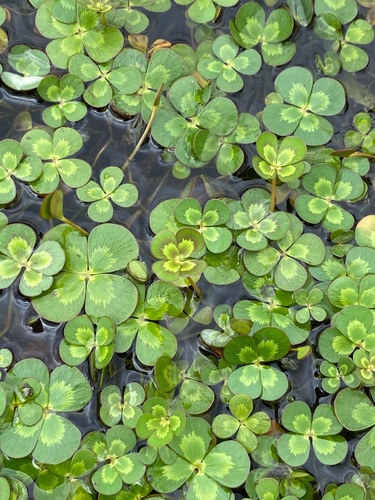
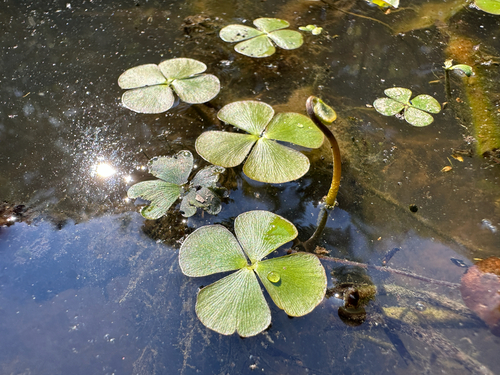
Marsilea quadrifolia L. is an aquatic fern that produces leaves divided into four parts that resemble four-leaf clover (Trifolium). Its leaves either float on deep water, or grow erect in shallow water or on land. Its leaflets are obdeltoid, up to 3/4 of an inch long, and glaucous, and petioles can reach up to 8 inches long. Its fern sporocarps are ellipsoid, up to 3/16 of an inch long, and dark brown; they grow on stalks up to 3/4 of an inch long that attach to the base of the petioles.
In some regions, this plant has been used as food for over 3000 years. It is reported to have anti-inflammatory, diuretic, depurative, febrifuge and refrigerant properties. It is also used to treat snakebite, and is applied directly to abscesses.
This plant prefers light sandy soils and medium loamy soils. It can grow in semi-shade such as light woodland, or in full sun with no shade. It requires moist or wet soil, and can grow directly in water. Marsilea quadrifolia can be grown as a potted plant, either with just consistently wet soil, or in a semi-submerged state with fronds emerging above the water, or fully submerged with fronds floating on the water surface. In aquariums, water clover (as it is commonly called) is grown fully submerged, usually in the foreground, where it spreads via runners. It is generally unfussy about light and water conditions, and does not require a rich growing substrate.
Marsilea species germinate very easily from their sporocarps. However, the sporocarps must be abraded, cracked, or have an edge cut off before being submerged in water, to allow water to penetrate and swell the internal tissues. Germination also depends on the presence of infrared light, and full sunlight provides suitable conditions for this process.