About Marsilea drummondii A.Braun
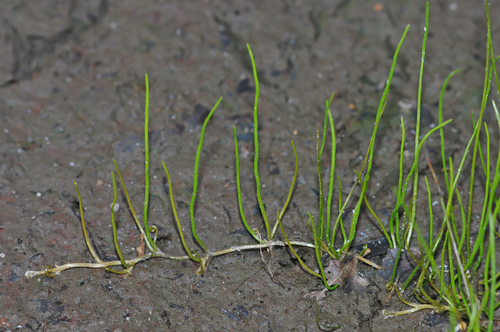
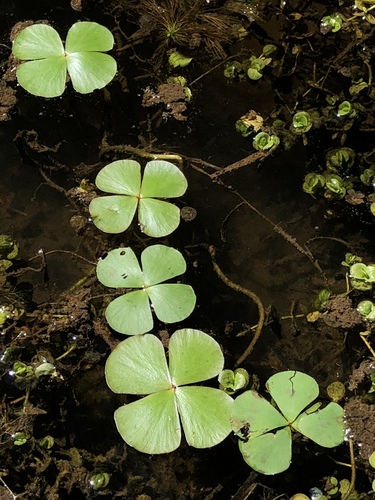
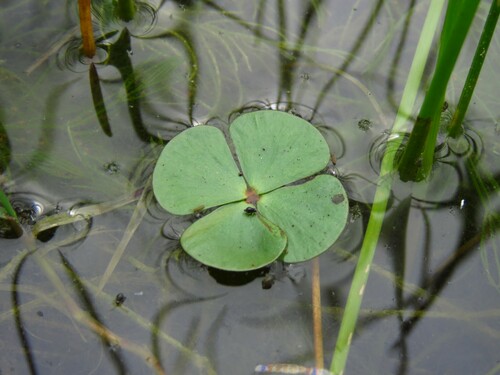
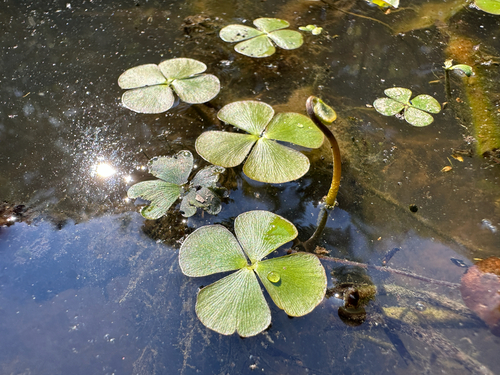
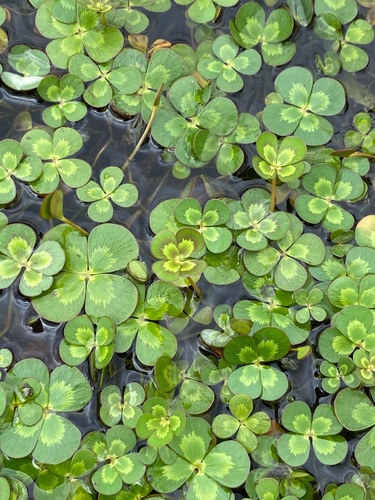
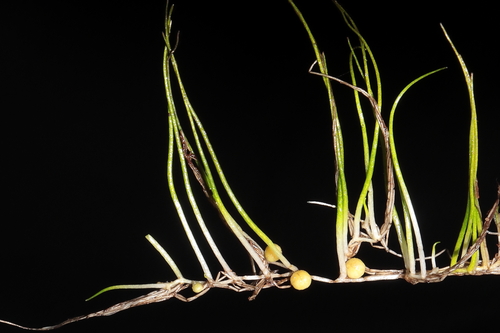
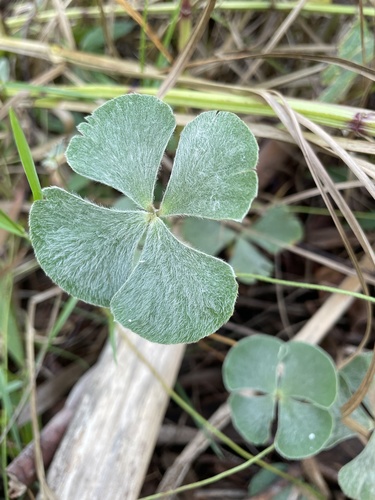
Marsilea drummondii A.Braun is a fern species, commonly called nardoo, with the Diyari name ngardu. It is native to Australia, where it is widespread and common, especially across inland regions. This is a rhizomatous perennial aquatic fern that roots in muddy substrates, and produces foliage that floats on the surface of still water bodies. It grows in water up to one metre deep, and grows in large numbers after floods. It can form mats across the water's surface, and grow as carpet-like ground cover as floodwaters recede. It varies in appearance, and grows in many types of wetland habitat. Generally, its frond is formed of two pairs of leaflets, and grows upright when it is not floating. This plant produces sporocarps that can stay viable for 50 years, and only release spores after being thoroughly soaked. Sporocarps are dispersed by birds that eat them but cannot digest them, and by flowing water. Aboriginal Australians use the sporocarp as food: they collect, roast, and grind the sporocarps into powder, then mix the powder with water to make a dough. The sporocarp can be toxic because it contains high levels of thiaminase, an enzyme that destroys thiamine. Eating large amounts of improperly prepared sporocarps can cause beriberi. This plant is known to have poisoned sheep and humans, including the leaders of the Burke and Wills expedition. Nardoo must be properly prepared with heat before consumption to destroy the thiaminase.