About Marmosa mexicana Merriam, 1897
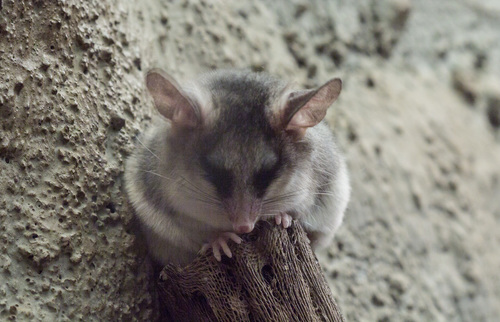
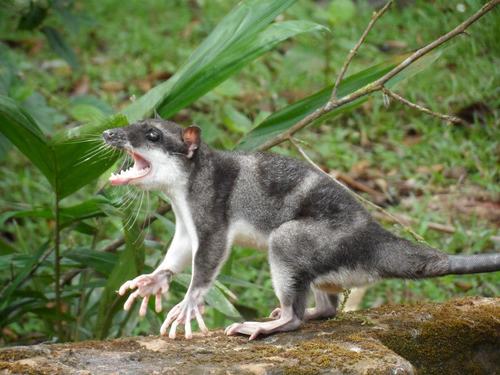
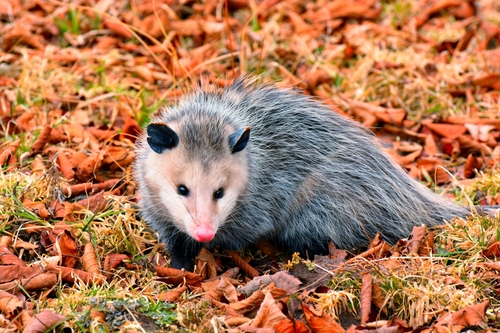
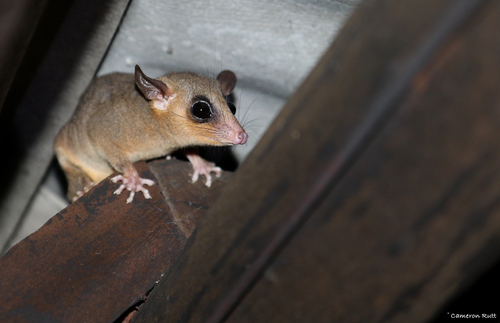
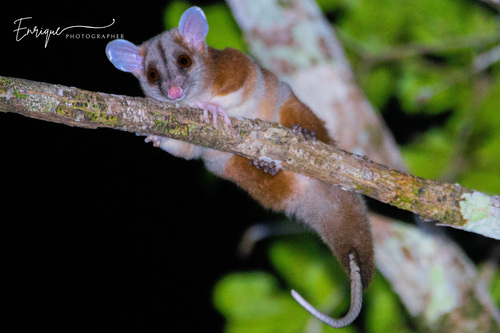
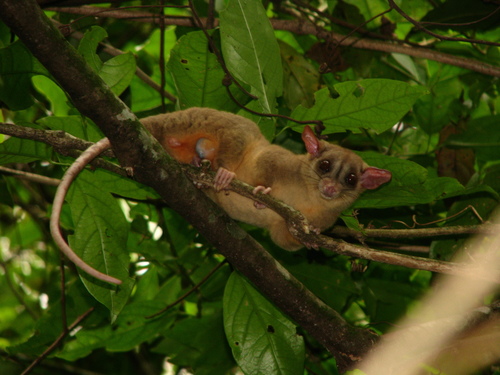
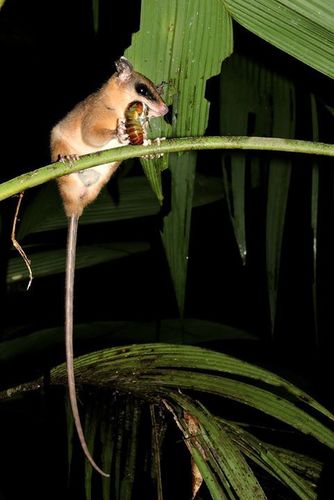
Marmosa mexicana Merriam, 1897 is a small to moderate-sized reddish-brown marsupial, with body color ranging from bright to dull reddish-brown. The hairs on its back, sides, and outer leg surfaces are lead-colored at the base and tipped with reddish brown. Its forehead and nose are paler in color than the rest of the head. It has black eye-rings that vary in intensity between individual populations from different regions. Its cheeks, throat, belly, and inner leg surfaces are yellowish, with a median white patch on the chest. Body hair extends onto the base of the tail for approximately 10 millimeters. Marmosa mexicana has a pink nose, grayish brown ears, and a dusky brown tail. It has a prehensile tail that is the same length as its body; while the tail appears naked, it actually has a fine layer of hair.
This species is found in Belize, Costa Rica, El Salvador, Guatemala, Honduras, eastern Mexico as far north as Tamaulipas, Nicaragua, and western Panama. It occurs at elevations from sea level up to 3000 meters (recorded at Volcán Tacaná), and is most commonly found below 1800 meters. It inhabits primary and secondary forest, including lowland tropical rainforest, dry deciduous forest, and cloud forest, as well as plantations and grassland. One documented habitat for the species is the Petenes mangroves ecoregion of the Yucatán.
Like all marsupials, Marmosa mexicana likely has a short gestation period, with females giving birth to poorly developed young that complete most of their development during lactation. Its reproductive pattern is thought to be similar to that of Marmosa robinsoni, which gives birth to 6–14 young after a 14-day gestation period. The tiny newborns, measuring up to only 12 millimeters, attach to the mother's mammae and remain there for around 30 days. Unlike many marsupials, female mouse opossums (including Marmosa mexicana) do not have a pouch to protect developing young. The young are born so underdeveloped that they do not open their eyes until 39–40 days after birth. It is likely that young Marmosa mexicana are completely weaned after around 65 days, and the species may have an incredibly short lifespan of only one year. Marmosa species build their own nests for shelter, or use abandoned bird nests, tree holes, or banana stalks. These nest sites are rarely permanent; instead, the opossum uses whichever site is most convenient at dawn.