About Marisa cornuarietis (Linnaeus, 1758)
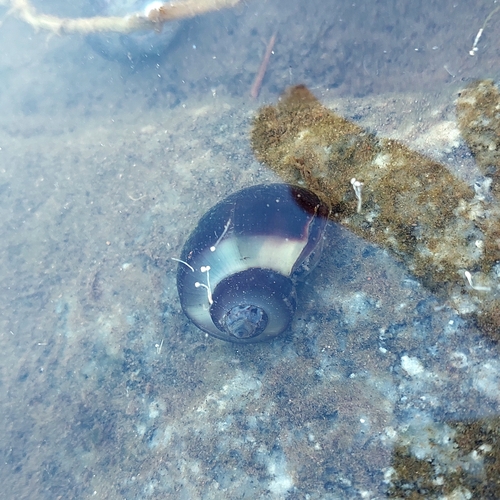
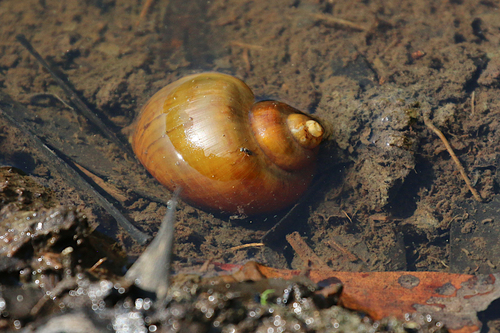
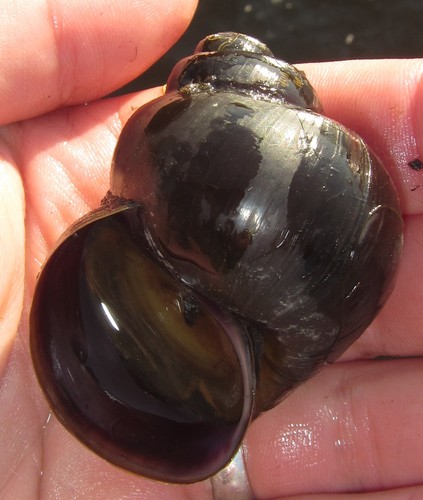
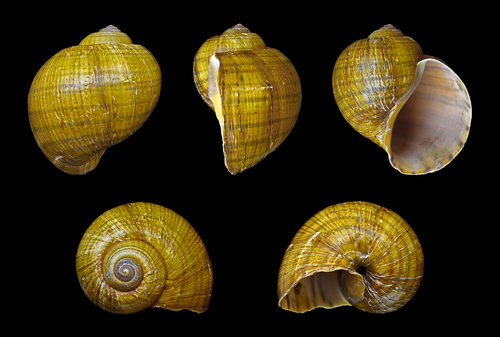
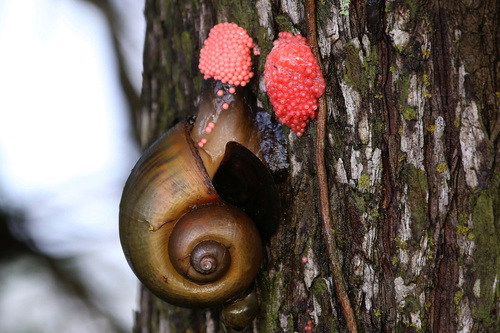
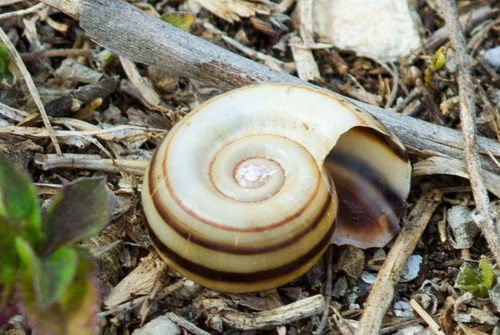
Marisa cornuarietis is a species of snail first described by Linnaeus in 1758. Although Marisa snails superficially resemble great ramshorn snails due to the planispiral coiling of their shells, they are not closely related to true ramshorn snails in the family Planorbidae. This species is easily recognizable by its flat-coiled, or planispiral, shell. Shell color ranges from pale to darker red, brown, or more vivid shades of these colors, and stripes are fairly common. Shell diameter is usually 35–50 mm, or 2 inches, and can grow even larger. This species is indigenous to northern South America and Central America, including Bolivia, Brazil, Colombia, Costa Rica, French Guiana, Guyana, Panama, Suriname, Trinidad and Tobago, and Venezuela; its type locality is unknown, and it is widespread across northern South America. As a non-indigenous species, Marisa cornuarietis was first discovered in the United States in Coral Gables, Florida, in 1957, and has since spread to many other counties in southern Florida. Established non-indigenous populations in Florida now exist in Broward, Dade, Lee, Monroe, Palm Beach, and possibly Collier counties. It was first found in Texas in 1983, and has also been reported in California and Idaho; established populations exist in specific geothermal springs in Idaho. The species has also been recorded at certain locations in Puerto Rico and Cuba. Initial introductions of this species were likely from aquarium release, also called "aquarium dumping". It is ranked as the 74th worst alien species in Europe by Nentwig et al. (2018). This snail prefers still or slow-moving fresh water, and depends on the availability of aquatic vegetation as a food source. This species has both gills and a lung, which allows for efficient underwater respiration even when dissolved oxygen levels are low. It is a gonochoric species, and lays eggs in characteristic disk-shaped clutches that adhere to various substrates. Unlike some other apple snails, this snail lays its eggs below the waterline.