About Maricopella allynsmithi (Gregg & W.B.Miller, 1969)
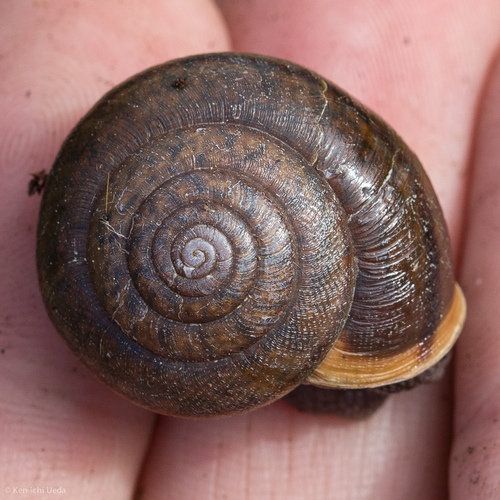
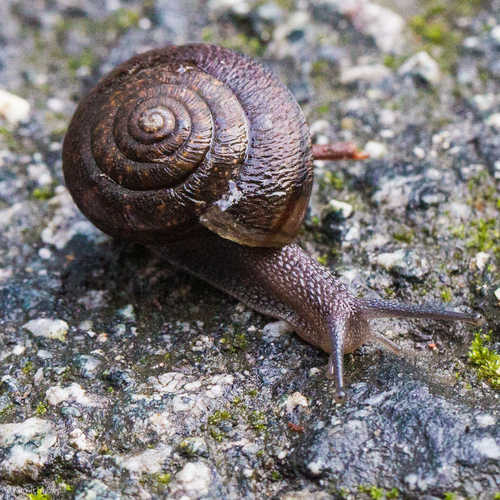
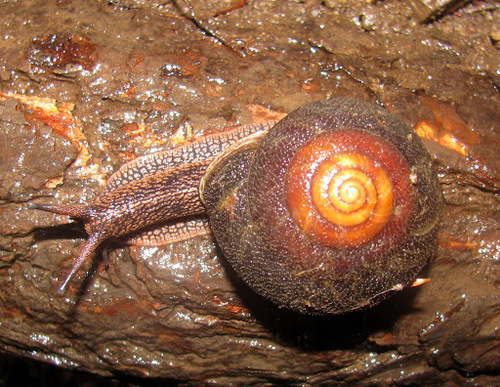
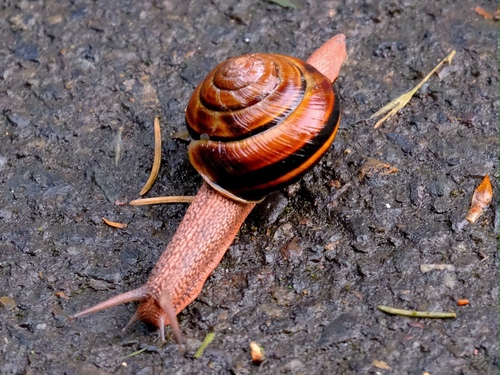
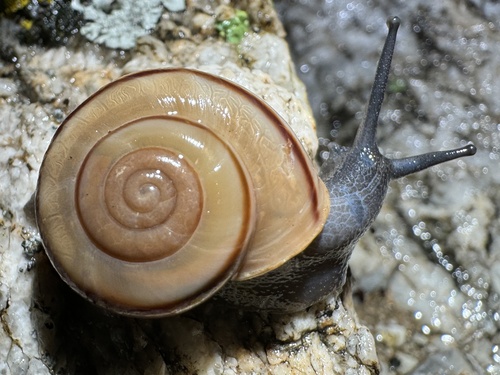
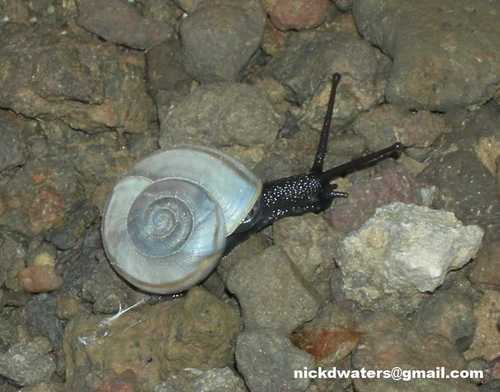
Sonorella allynsmithi, also known by the synonym Maricopella allynsmithi, is a species of land snail belonging to the subfamily Helminthoglyptinae. It is native to Arizona in the United States. This snail has a shiny, rounded, grayish to brownish white shell that can grow up to 1.9 centimeters wide. Its body ranges from dark gray to black, and has copper flecks along the skirt and tail tip. It is hermaphroditic, and both mating partners usually become fertilized during mating. The snail lays eggs in moist conditions, and may hold onto its eggs until rain falls. The egg capsules of this species contain calcite crystals, and there is sometimes enough calcite to form a shell around the egg. This snail feeds on plant and fungal matter found in the soil. It inhabits rocky mountain slopes, and shelters in talus and rockslides. During the dry conditions common to its native habitat, the snail seals its shell aperture to solid rock to prevent desiccation. The rock it uses must be rich in calcium carbonate, which the snail uses to build its shell. This species is associated with several local plant species: saguaro cactus (Carnegiea gigantea), yellow paloverde (Parkinsonia microphylla), brittlebush (Encelia farinosa), foxtail brome (Bromus madritensis), Natal grass (Melinis repens), creosote bush (Larrea tridentata), and Coulter's lupine (Lupinus sparsiflorus). This species was first described from a specimen collected in the city of Phoenix, Arizona, and it occurs in the mountains of Maricopa County.