About Maranta arundinacea L.
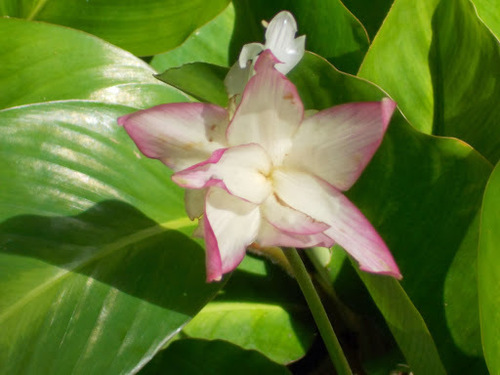
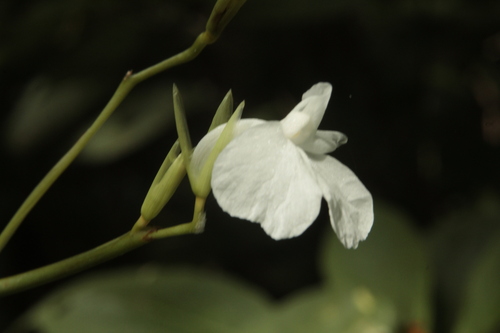
Maranta arundinacea L., commonly known as arrowroot, is a perennial plant that reaches a height of 0.3 m (1 ft) to 1.5 m (5 ft). It has lanceolate leaves, and its edible part is the rhizome. Twin clusters of small white flowers bloom approximately 90 days after planting. This plant rarely produces seeds, so reproduction is typically done by planting a section of rhizome that has a bud. Rhizomes are ready for harvesting 10–12 months after planting, when the plant’s leaves start to wilt and die. The rhizomes are fleshy and cylindrical, growing between 20 cm (8 in) and 45 cm (18 in) long. Arrowroot probably originated in the Amazon rainforest of northwestern Brazil and neighboring countries. It grows best at temperatures between 23 °C (73 °F) and 29 °C (84 °F), with annual precipitation ranging from 150 cm (59 in) to 200 cm (79 in). Dormant rhizomes can survive temperatures as low as 5 °C (41 °F). In the continental United States, arrowroot is only cultivated as an outdoor plant in southern Florida. Maranta arundinacea is native to Mexico, Central America, the West Indies (including Cuba, Hispaniola, Puerto Rico, and most of the Lesser Antilles) and South America (including Brazil, Peru, Ecuador, Colombia, Venezuela, Suriname, Guyana, and French Guiana). It is widely cultivated in many warm countries, and is considered naturalized in The Bahamas, Bermuda, Cambodia, China (specifically Guangdong, Guangxi, Hainan, Yunnan), the Cook Islands, Equatorial Guinea, Gabon, India, Indonesia, Jamaica, Japan (specifically the Volcano Islands), Mauritius, the Netherlands Antilles, Réunion, Samoa, Sri Lanka, Taiwan, Trinidad and Tobago, Tonga, the United States (Florida), the Philippines and Vanuatu. The Caribbean island nation of St. Vincent and the Grenadines is the world's largest grower of arrowroot and producer of arrowroot flour. In Kerala, India, arrowroot, locally called ബിലാത്തി കൂവ (Bilathi Kūva), is cultivated to produce an easily digestible starch, while in Odisha, India, it is called ପାଳୁଅ (Paḷua). Currently, arrowroot starch is used in food preparations and confectionery, as well as for industrial applications such as cosmetics and glue. The residue left after starch extraction has a high fibre content and can be used as feed for livestock.