About Marah oregana (Torr. & A.Gray) Howell
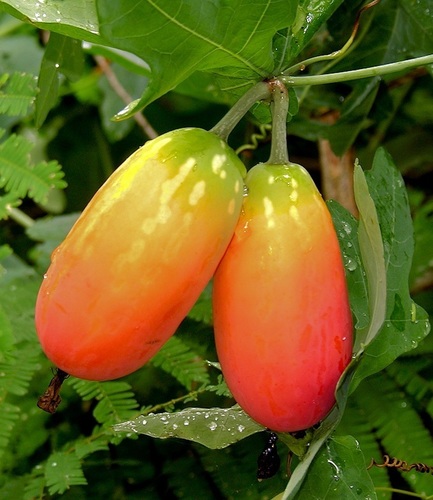
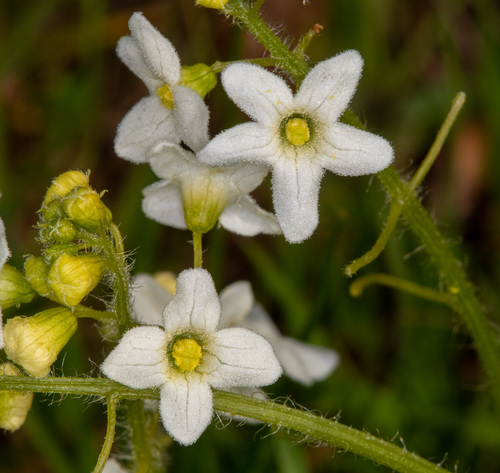
Marah oregana, commonly called Oregon manroot, coastal manroot, or western wild-cucumber, is a common manroot found along the northwest coast of the United States, with a range extending from California north into Canada. Both the leaves and fruit of this species contain high concentrations of tetracyclic triterpenoid compounds called cucurbitacins. These compounds give the plant a bitter flavor that acts as a natural pest deterrent. If ingested, they can cause varying degrees of gastrointestinal upset and dehydration. While specific toxicity data for this wild cucumber species is limited, case reports of ingestion from other species in the Cucurbitaceae family document severe illness that requires intensive care to manage dehydration caused by extreme gastrointestinal distress. There is no specific antidote for cucurbitacin poisoning. These compounds have also been reported to cause delayed alopecia, though the mechanism behind this effect is not known. All parts of Marah oregana have a bitter taste – this trait is the meaning of the genus name Marah, which comes from Hebrew. The fruit of this plant is inedible. There are records that some Native American groups may have consumed its seeds to commit suicide. The plant's large tuber can be processed to produce a soap-like extract. Native American peoples used Marah oregana to treat a variety of health conditions. The Chinook prepared a poultice from the plant's gourd. The Squaxin mashed the upper stalk in water, and used this mixture to soak aching hands. The Chehalis people burned the root, mixed the resulting powder with bear grease, and applied the mixture to scrofula sores. The Coast Salish made a decoction from the plant to treat venereal disease, kidney trouble, and scrofula sores.