About Maoriblatta novaeseelandiae (Brunner von Wattenwyl, 1865)
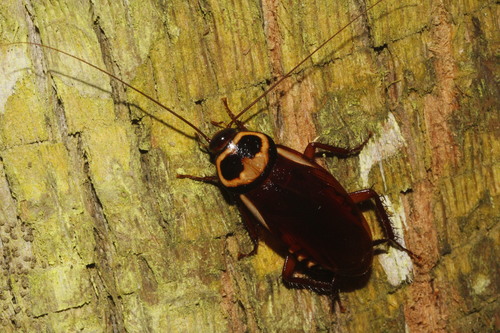
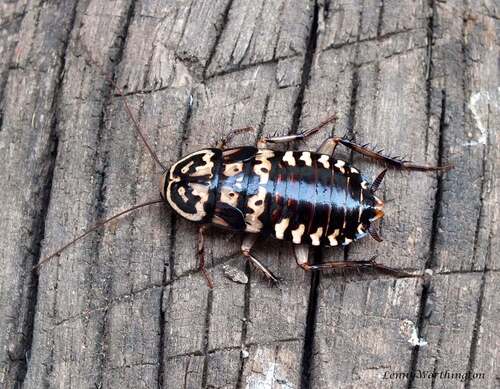
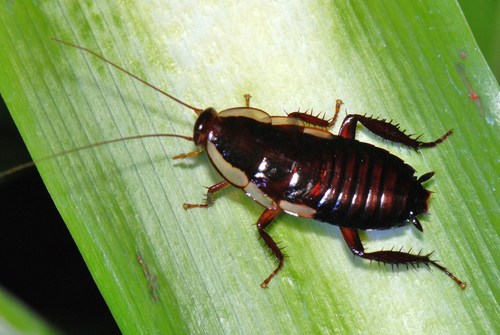
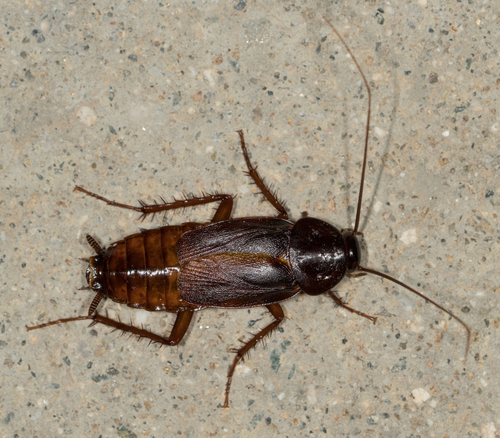
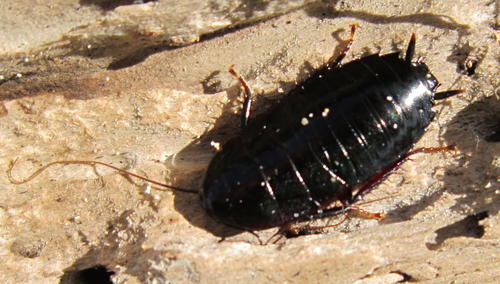
Maoriblatta novaeseelandiae (originally described as Platyzosteria novaeseelandiae) is a large, flightless cockroach, measuring 25 to 29 millimeters in length. It has a glossy black body covering (integument), dark red legs, and antennae that are brown at the base and fade to a lighter color toward their tips. Its dorsal (upper) surface is covered in fine punctures. It is the largest endemic cockroach species native to New Zealand. The holotype specimen of this species is held at the Natural History Museum, Vienna. This species is distributed across native lowland forests throughout New Zealand's North Island, and in coastal regions of the northern South Island. Collection records span from the Three Kings Islands in the north to Kaikōura in the south. On the North Island, it occurs at altitudes from sea level up to 600 meters. It lives among grasses and underneath rotten logs, stones, and debris, feeding on decaying plant material. It is typically nocturnal, and hides behind tree bark, under stones, or under logs during the day. An introduced Australian black cockroach, likely a Polyzosteria species, that lives on New Zealand's coast is sometimes confused with this species. It can be distinguished from Maoriblatta novaeseelandiae by the fact that adult introduced individuals lack tegmina (forewings).