About Manilkara bidentata (A.DC.) A.Chev.
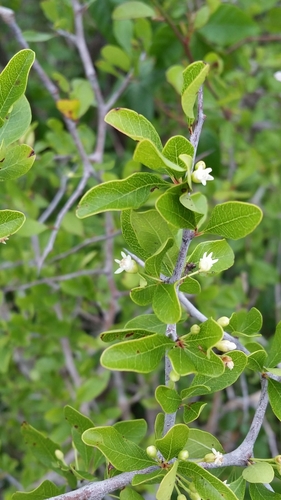
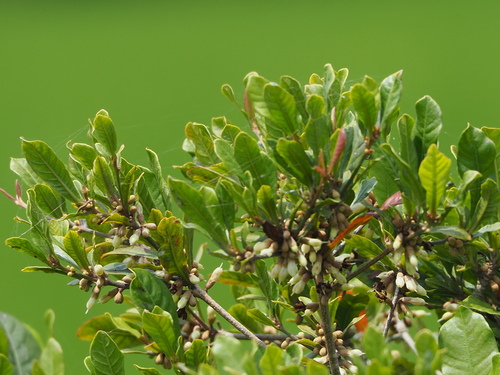
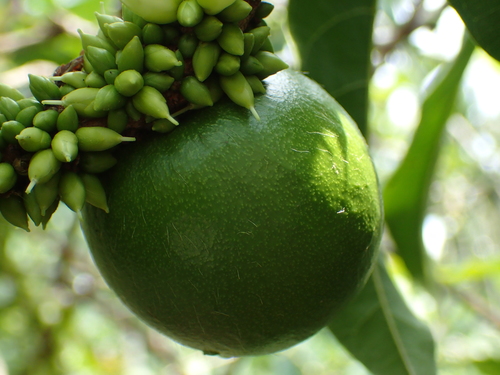
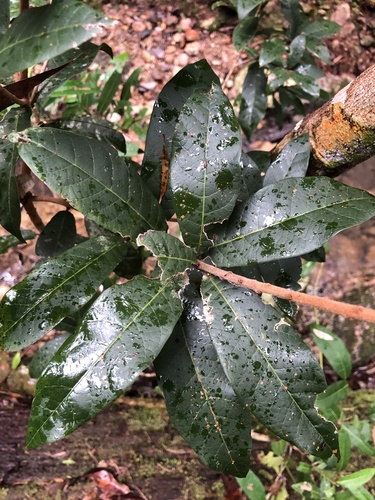
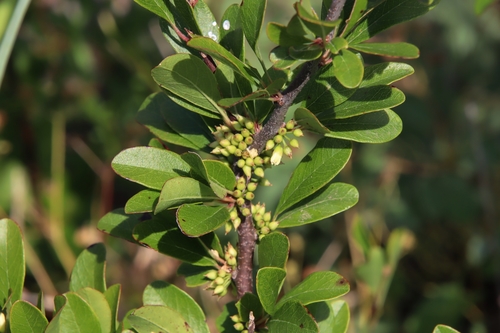
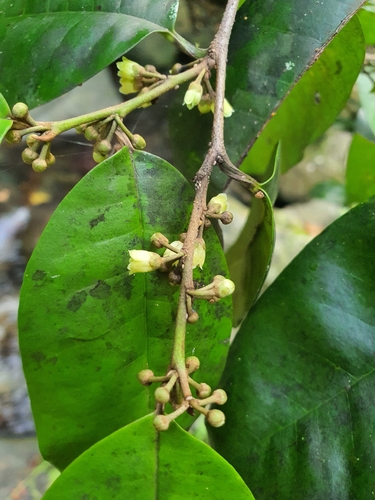
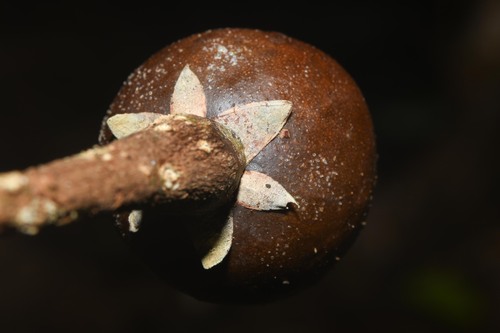
Manilkara bidentata, commonly called balatá, is a large tree that reaches 30–45 m (98–148 ft) in height. Its leaves are alternate, elliptical, smooth-edged, and 10–20 cm (3.9–7.9 in) long. It produces white flowers at the start of the rainy season. Its fruit is an edible yellow berry 3–5 cm (1.2–2.0 in) in diameter, which usually holds one seed, and occasionally two. The tree’s latex has industrial uses, including use in chicle production. Latex is extracted from balatá the same way sap is extracted from the rubber tree. After extraction, it is dried to form an inelastic, rubber-like material. This material is almost identical to gutta-percha (produced by a closely related southeast Asian tree), so it is sometimes called gutta-balatá. Balatá was historically used to make the outer layer of high-quality golf balls. Balatá-covered golf balls have a high spin rate, but do not travel as far as most golf balls with a Surlyn cover. Because the material is not durable when struck by a golf club, these balls do not last long before they need to be replaced. While they were once favored by professional and low-handicap golf players, balatá-covered golf balls are now obsolete, replaced by newer Surlyn and urethane technology. In 1943, Major League Baseball used balata instead of rubber in its baseballs due to wartime rationing. The initial balata baseballs had much less bounce than traditional rubber-core balls, so MLB reformulated the balata-ball design several weeks into the season. MLB resumed using rubber for baseballs in 1944. Today, Brazil is the largest producer of Massaranduba wood from this tree, which is harvested in the Amazon rainforest. Manilkara bidentata is a hardwood with a red heartwood that is used for furniture and construction in regions where the tree grows. Local people often call it bulletwood because of its extremely hard wood, which is dense enough that it does not float in water. Nailed connections to this wood require pre-drilling. In timber trade, it is sometimes incorrectly called "brazilwood". Like the fruit of the related species sapodilla (Manilkara zapota), the fruit of Manilkara bidentata is edible. Although its heartwood can sometimes have a purple tint, Manilkara bidentata should not be confused with another tropical tree widely known as "purpleheart", Peltogyne pubescens. This timber is used to make outdoor furniture, and is marketed as "Pacific Jarrah" in Australia.