About Mangifera indica L.
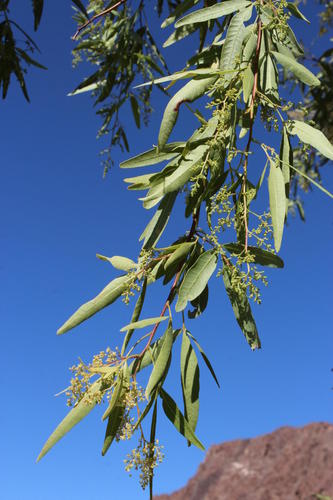
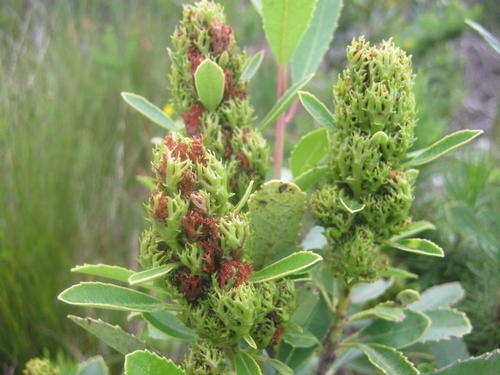
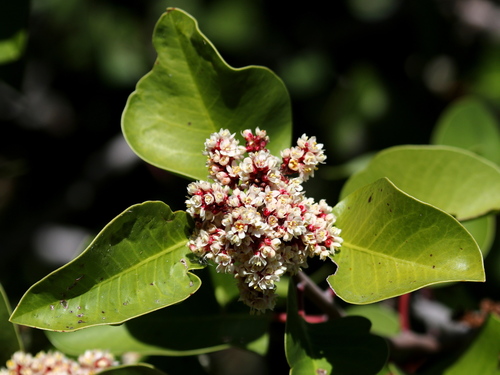
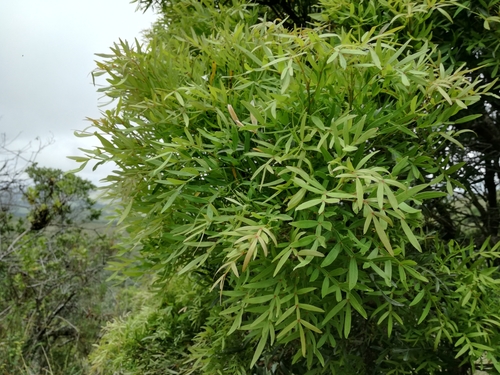
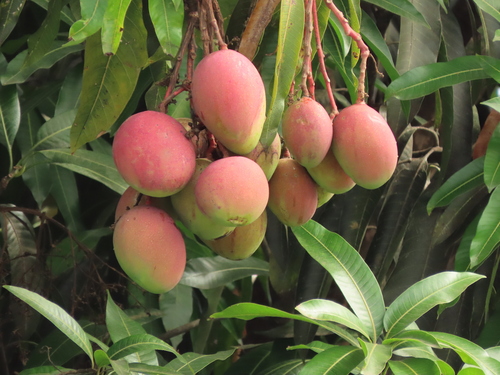
Mangifera indica, commonly known as mango, is a large evergreen tree primarily valued for its edible fruits, which are used both when unripe green and fully ripe. Between 500 and 1000 named, identified, or reported varieties of this species exist, most originating from India. Mature trees reach 15 to 30 metres (50 to 100 feet) in height, with a crown width matching this range and a trunk circumference exceeding 3.7 metres (12 feet). Its leaves are simple, glossy, and dark green. Trees produce their first harvest 2 to 4 years after planting, and can remain productive for over 50 years. Yellow-white fragrant flowers bloom from the end of winter through early spring, with timing varying by location. Both male and female flowers grow on a single tree, and climate strongly influences flowering time. In India, flowering begins in December in the south, January in Bengal, February in eastern Uttar Pradesh and Bihar, and February to March in northern India. For the Dasheri variety, flowering lasts 20 to 25 days; panicles emerge in early December, and all flowers finish opening by February. The Neelum variety produces two crops per year in Kanyakumari, Tamil Nadu, but only flowers once annually when grown in northern India. The mango fruit is an irregular fleshy drupe with an egg-like shape, though it may also be round, oval, heart-shaped, or kidney-shaped. Most mangos are 8 to 12 centimetres (3 to 5 inches) long; unripe fruits are green, while mature ripe fruits are typically greenish-yellow. The interior flesh is bright orange and soft, surrounding a large, flat central pit. Mangos generally reach maturity in April and May. By weight, 85% of a mango consists of skin and pulp, with the remaining 15% made up of the central seed stone. Unripe raw mangos are used to make pickles and chutneys, while ripe mangos are a widely popular edible fruit across the globe. Mangifera indica was first domesticated in southeastern Asia, and has since been introduced to all other warm regions of the world. Its native natural range stretches from Pakistan through Malesia, where it grows in subtropical and tropical climates. Mature mango trees can tolerate a minimum temperature of 17 °F (−8 °C). The tree grows best in well-drained sandy loam soil, and does not thrive in heavy, waterlogged soils. The optimal soil pH for mango growth falls between 5.2 and 7.5. Urushiols present in mango fruit peel can cause contact dermatitis in sensitised people. This reaction is more common in individuals who have previously been exposed to other plants from the Anacardiaceae family, such as poison oak and poison ivy, which are widespread across the United States. Phenolic substances in mango wood can also trigger contact dermatitis. Mangifera indica is primarily cultivated for its fruit rather than its timber. After trees end their productive fruit-bearing lifespan, they can be harvested for lumber. Mango wood is vulnerable to damage from fungi and insects, but it is used to make musical instruments including ukuleles, plywood, and low-cost furniture. Mango bark is processed to produce a yellow dye.