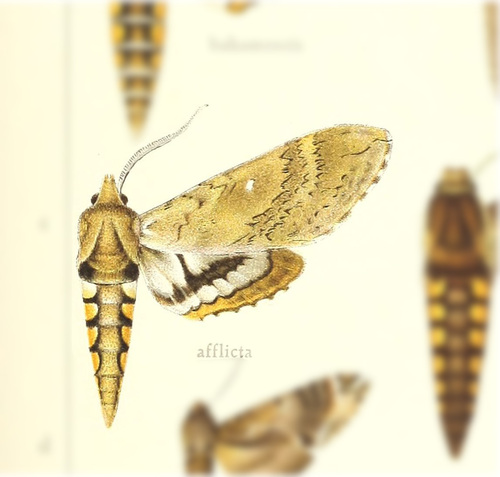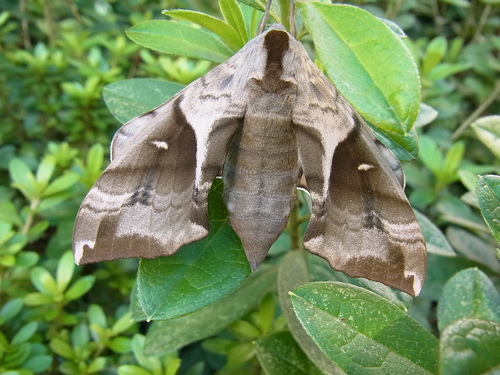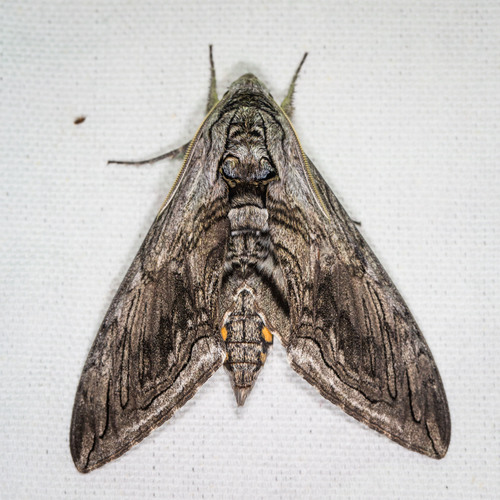
About Manduca quinquemaculatus Haworth, 1803
Manduca quinquemaculata, commonly called the five-spotted hawkmoth, is a brown and gray hawk moth that belongs to the family Sphingidae. Its caterpillar stage is widely known as the tomato hornworm, which can act as a major garden pest. The name tomato hornworm comes from two features: a dark projection on the caterpillar’s posterior end, and the use of tomato plants as one of its host plants.
Tomato hornworms are closely related to two other species, the tobacco hornworm (Manduca sexta) and Blackburn's sphinx moth (Manduca blackburni), and are sometimes confused with these relatives. This confusion occurs because the caterpillars of these species have very similar physical forms, and all feed on the foliage of various plants in the Solanaceae family. Either species can be found growing on tobacco or tomato leaves, which means the specific plant a caterpillar is found on cannot be used to identify its species.
Manduca quinquemaculata has a range that covers all of North America and Australia. Among its close relatives, the tobacco hornworm typically dominates in southern regions, while tomato hornworms are more common in the northern United States.