About Mandragora officinarum L.
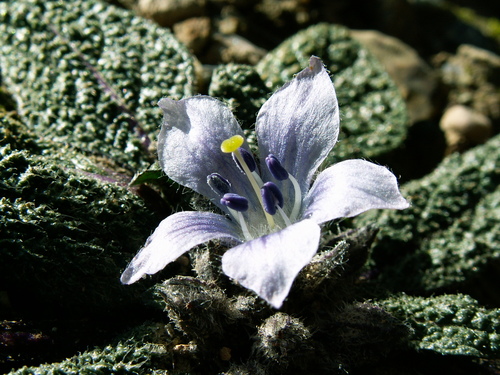
As of 2015, Mandragora officinarum L. has three or four distinct taxonomic circumscriptions. The description below follows the broad circumscription used in a 1998 revision of the genus, where this name applies to all Mediterranean-native mandrake plants. Under this definition, M. officinarum is a very variable perennial herbaceous plant with a long, thick, often branched root. It has almost no stem, and its leaves grow in a basal rosette. Leaf size and shape are highly variable, reaching a maximum length of 45 cm (18 in). Leaves are most commonly elliptical or obovate (wider toward the tip), and have variable hairiness. Flowers emerge from autumn to spring, between September and April, and are produced in the axils of leaves. Flower stalks (pedicels) are also very variable in length, growing up to 45 cm (18 in) long. There are five sepals 6–28 mm (0.2–1.1 in) long, fused at the base with free lobes that extend for half to two-thirds of their total length. There are five petals, colored greenish white to pale blue or violet, 12–65 mm (0.5–2.6 in) long. Like the sepals, petals are joined at the base with free lobes at the tip; these lobes range from half as long as the entire petal to nearly the full petal length. Five stamens attach to the base of the petals and vary in length from 7 to 15 mm (0.3 to 0.6 in). The anthers of the stamens are usually yellow or brown, but may sometimes be pale blue. Fruit develops from late autumn to early summer, between November and June, and is a globe- or ellipsoid-shaped berry. Berry diameter is highly variable, ranging from 5–40 mm (0.2–1.6 in). When ripe, the fruit is glossy and colored yellow to orange, resembling a small tomato. It contains yellow to light brown seeds 2.5–6 mm (0.10–0.24 in) long. Previously, a narrower circumscription was used that limited M. officinarum only to plants found in northern Italy and part of the coast of former Yugoslavia; most Mediterranean mandrakes were placed in Mandragora autumnalis under this arrangement. The broad description above would then apply to both species combined. Under this narrower circumscription, M. officinarum has greenish-white rather than violet petals, petals up to 25 mm (1 in) long instead of usually 30–40 mm (1.2–1.6 in) or longer, and produces globose rather than ellipsoid berries. More recently, plants native to the Levant have been separated into Mandragora autumnalis, leaving M. officinarum to include all other Mediterranean mandrake populations. A key difference between these two species under this circumscription is that the seeds of M. officinarum are less than half the size of the seeds of M. autumnalis. In the broad circumscription where M. officinarum is the only Mediterranean mandrake species, it is native to regions surrounding the Mediterranean Sea. This includes Tunisia, Algeria and Morocco in North Africa; southern Spain, southern Portugal, Italy including Sardinia and Sicily, former Yugoslavia, Greece and Cyprus in Southern Europe; southern Turkey; and Syria, Lebanon, and the Palestine region in the Levant. It typically grows in open habitats such as light woodland and disturbed sites, including olive groves, fallow land, waysides, railway embankments and ruins, at elevations from sea level up to 1,200 m (3,900 ft). When M. autumnalis is considered the main Mediterranean mandrake species, M. officinarum is native only to northern Italy and part of the coast of former Yugoslavia. In the most recent circumscription, M. officinarum is absent from the Levant, where it is replaced by M. autumnalis. All Mandragora species contain highly biologically active alkaloids, particularly tropane alkaloids. Hanuš et al. reviewed the phytochemistry of Mandragora species, identifying more than 80 substances and providing detailed chemical structures for 37 of them. Jackson and Berry found no differences in alkaloid composition between the narrowest circumscription of M. officinarum and M. autumnalis when considered as the main Mediterranean species. Alkaloids found in fresh plant material or dried root include atropine, hyoscyamine, scopolamine (hyoscine), scopine, cuscohygrine, apoatropine, 3-alpha-tigloyloxytropane, 3-alpha,6-beta-ditigloyloxytropane and belladonnines. Non-alkaloid constituents include sitosterol and beta-methylesculetin (scopoletin). The alkaloids make the entire plant, especially the root and leaves, poisonous, with anticholinergic, hallucinogenic, and hypnotic effects. Anticholinergic properties can lead to asphyxiation. Ingesting mandrake root is likely to cause other adverse effects such as vomiting and diarrhea. Alkaloid concentration varies between plant samples, and accidental poisoning is common. Clinical reports of effects from consuming this plant (recorded as Mandragora autumnalis) include severe symptoms matching atropine poisoning: blurred vision, pupil dilation (mydriasis), dry mouth, difficulty urinating, dizziness, headache, vomiting, blushing, and rapid heart rate (tachycardia). Hyperactivity and hallucinations occurred in the majority of reported patients. Mandrake has a long history of human medicinal use, though superstition has played a major role in how it has been applied. WebMD categorizes European Mandrake, derived from Mandragora officinarum, under Vitamins & Supplements and states it is UNSAFE for anyone to use European mandrake for medicinal purposes. In the United Kingdom, the 1997 Prescription Only Medicines (Human Use) Order places Mandragora autumnalis in Schedule 1, meaning any medicinal product containing this substance is a prescription-only medicine, only prescribable by the appropriate practitioner categories specified in Regulation 214 of the 2012 Human Medicines Regulations. Medical herbalists are not recognized as appropriate practitioners under this legislation. As of 2019, Mandragora autumnalis Bertol. is accepted as a species distinct from Mandragora officinarum L., so preparations and products derived from M. officinarum L. may not actually be covered by this UK legislation. However, the European Medicines Agency, which oversees herbal medicinal product registration in the European Union, does not recognize mandrake or any Mandragora species as an approved herbal medicinal product, substance, or preparation under the European Directive on Traditional Herbal Medicinal Products. The root of this plant is hallucinogenic and narcotic. In sufficient quantities, it induces unconsciousness, and was used as an anesthetic for surgery in ancient times. Historically, juice from finely grated root was applied externally to relieve rheumatic pains. It was also used internally to treat melancholy, convulsions, and mania. When taken internally in large doses, it is reported to cause delirium and madness. Historically, mandrake was often made into amulets that were believed to bring good fortune and cure sterility. One old superstition claims anyone who pulls up the root will be condemned to hell, and that the root screams when pulled from the ground, killing anyone who hears the scream. Because of this belief, people historically tied roots to the bodies of animals and used the animals to pull the root from the soil instead of pulling it by hand. In ancient Rome, it was used as a painkiller during surgery.