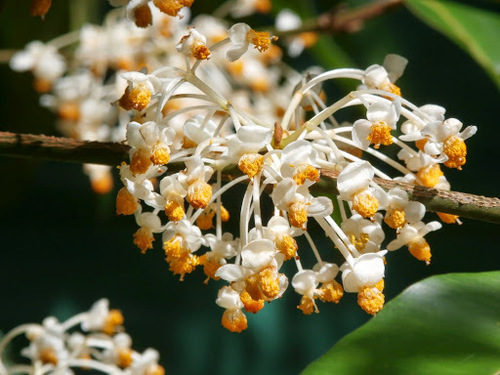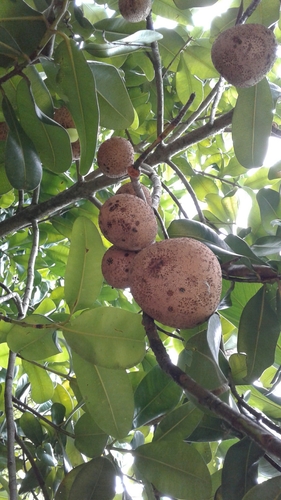
About Mammea americana L.
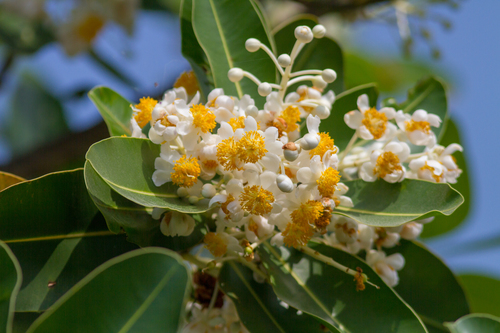
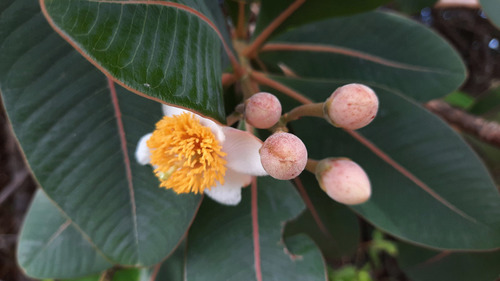
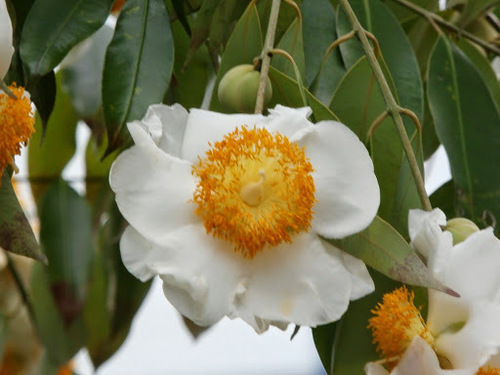
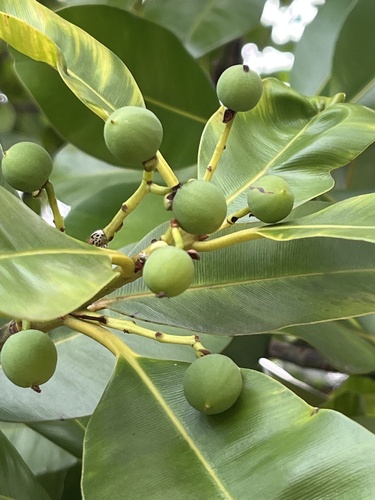
Mammea americana L., commonly known by many names including mammee, mammee apple, mammey, mamey, mamey apple, Santo Domingo apricot, tropical apricot, and South American apricot, is an evergreen tree in the family Calophyllaceae that produces edible fruit. It has also been previously classified in the family Guttiferae Juss. (1789), which places it as a relative of mangosteen. In some Latin American countries, it is called "yellow mamey" (Spanish: mamey amarillo) to distinguish it from the unrelated, similarly looking Pouteria sapota, whose fruit is commonly called "red mamey" (mamey colorado or mamey rojo).
This tree is native to the Caribbean, and is widely cultivated across the tropics and Central America. In Haiti, the fruit is known as zabriko or abricot. Oviedo included this species in his 1529 Review of the Fruits of the New World, after which it was introduced to multiple regions of the Old World: West Africa (especially Sierra Leone), Zanzibar, Southeast Asia, and Hawaii. In the United States, this species is only found in Hawaii and Florida; in Florida, mammee apples were most likely introduced from the Bahamas.
Mammea americana is restricted to tropical or subtropical climates. In Central America, it grows at altitudes up to 1,000 m. It grows best in rich, deep, well-drained soil, but is highly adaptive: it can also grow on limestone in Jamaica, the oolithic limestone of the Bahamas, ancient coral bedrock in Barbados, and coral cays off the coast of Florida. The tree is very sensitive to low temperatures, but is notably resistant to pests and diseases.
In traditional medicine in Trinidad and Tobago, grated seeds of this tree are mixed with rum or coconut oil to treat head lice and chiggers. Underripe fruits of Mammea americana are high in pectin, and the tree's bark contains a large amount of tannin.