About Malva preissiana Miq.
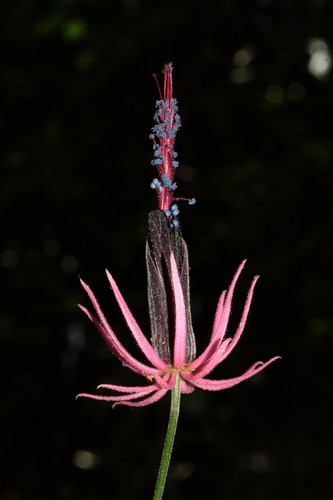
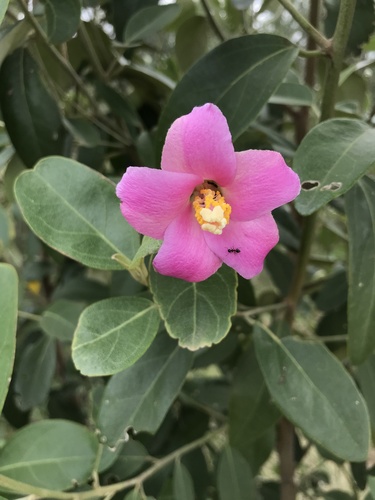
The generic name Malva comes from the Greek word μαλακός ("malakos"), which translates roughly to "soft" and/or "smooth". The specific epithet preissiana honors Joann August Ludwig Preiss, a well-known German botanist who spent up to four years studying Australia's native plants in the late 1800s. Malva preissiana is ornithocoprophilic, meaning it thrives in environments with abundant bird faeces or guano. It gets essential nutrients from the guano, because the seabirds that produce it eat mostly nutrient-rich small fish and other sea creatures. This fish-rich diet leaves higher levels of phosphorus and nitrogen in the soil, which supports the plant's growth. As a result, this plant is typically found in coastal areas of Australia with large populations of gulls or seabirds, and it flourishes particularly during the birds' breeding season, when they are not migrating. Malva preissiana has sclerophyllous leaves, which means the plant has shorter leaves and more robust structures. This unique anatomy makes the plant very durable, so birds often rely on this shrub to build nests for their young. Another key trait of Malva preissiana is its xeromorphic qualities, which let it survive with very little water by storing water in its leaves and stems. This adaptation allows it to endure the warm, dry climates common across Australia. Thanks to its versatile, durable nature, this plant often grows in large numbers after flooding or heavy rain. Malva preissiana is characterized by white flowers. It was previously thought that Malva preissiana could produce both pink and white flowers, but a 2012 study found that the pink-flowered hollyhock belongs to a separate taxon, which was renamed Malva weinmanniana. This difference helps distinguish the native Australian plant from non-native, introduced relatives of the same genus. The plant's large, tuberous root has important medicinal properties, and local Aboriginal people historically mashed and ate this root. Native hollyhock, the common name for Malva preissiana, is easily propagated from its dark, complex seeds.