About Malurus lamberti Vigors & Horsfield, 1827
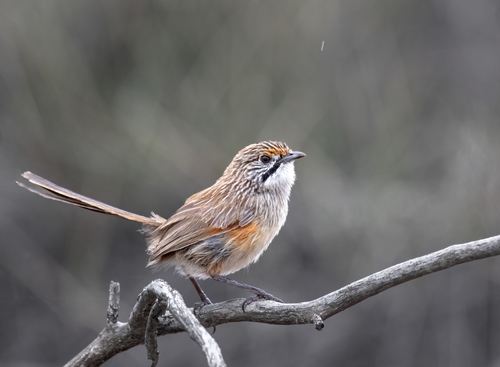
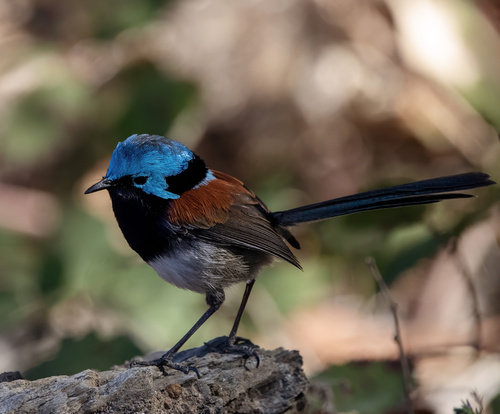
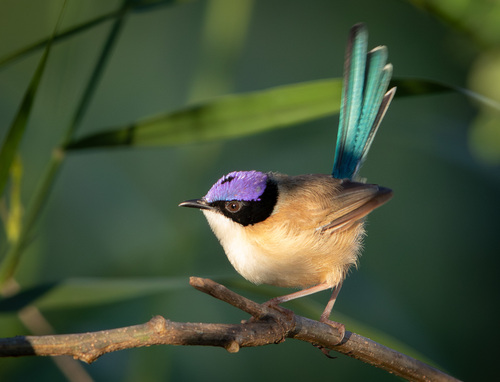
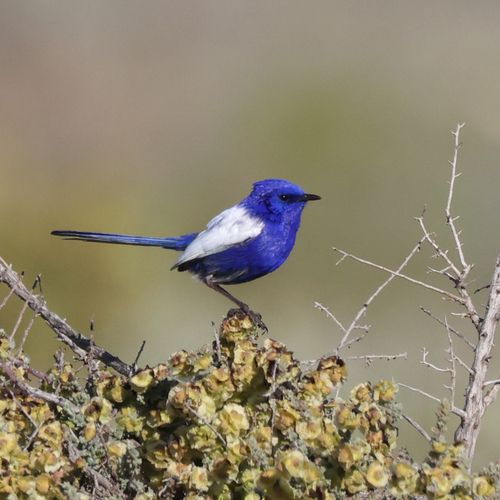
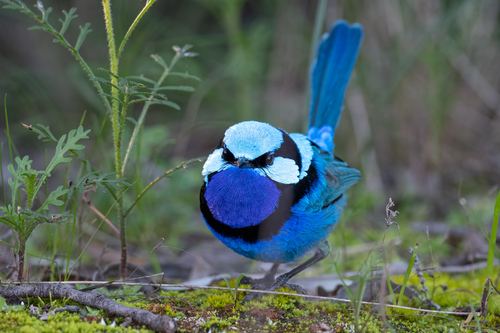
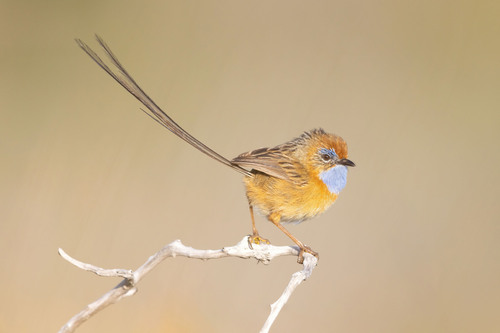
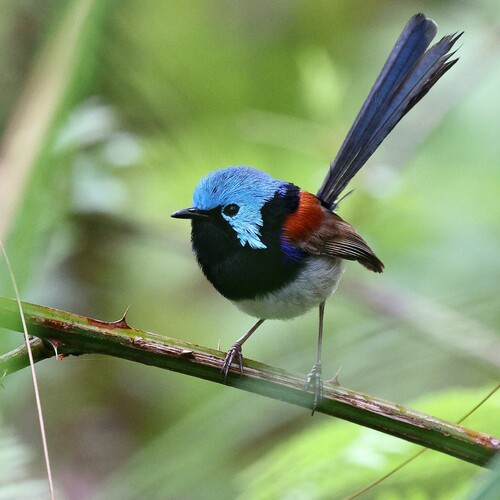
The variegated fairywren (scientific name Malurus lamberti Vigors & Horsfield, 1827) measures 14–15 cm (5.5–6 in) in length and weighs 6–11 g (0.21–0.39 oz). Like other fairywrens, it shows marked sexual dimorphism. Breeding males have highly visible, striking plumage of brilliant iridescent blue and chestnut that contrasts with black and grey-brown. Their brightly coloured crown and ear tufts are featured prominently in breeding displays. Specifically, breeding males have striking bright blue ear coverts, a crown that is often slightly darker, a black throat and nape, a royal blue upper back, chestnut shoulders, and a bluish-grey tail. Their wings are grey-brown and their belly is creamy white. Non-breeding males, females, and juveniles are predominantly grey-brown in colour. All males have a black bill and black lores (the eye-ring and bare skin between the eyes and bill), while females have a red-brown bill and bright rufous lores. Immature males develop black bills by six months of age, and moult into breeding plumage for the first breeding season after hatching. This first breeding plumage may be incomplete, with residual brownish plumage, and can take another one to two years to fully develop. Both sexes moult in autumn after breeding, and males take on an eclipse non-breeding plumage. They moult again into nuptial (breeding) plumage in winter or spring. The blue plumage of breeding males, especially the ear-coverts, is highly iridescent because the barbules have flattened, twisted surfaces. This blue plumage also strongly reflects ultraviolet light, so it may be even more noticeable to other fairywrens, which have colour vision that extends into the ultraviolet part of the spectrum.
The variegated fairywren inhabits scrubland with dense vegetation cover, and individuals have been recorded sheltering in mammal burrows to escape extreme heat. In urban areas like suburban Sydney, it has been reported that these fairywrens prefer areas with more cover than the related superb fairywren, but a 2007 survey of Sydney's northern suburbs suggests variegated fairywrens may actually prefer areas of higher plant diversity rather than just denser cover. Forestry plantations of pine and eucalypts are generally unsuitable habitats for the species, as they lack undergrowth.
Like all fairywrens, the variegated fairywren is an active, restless forager. It feeds most often on open ground near shelter, but also forages through lower foliage. It moves in a series of jaunty hops and bounces, and its relatively large tail, usually held upright and rarely still, helps it maintain balance. Its short, rounded wings give good initial lift and work well for short flights, but are not suited for long-distance travel. During spring and summer, the birds are active in short bursts throughout the day, and sing while foraging. Insects are abundant and easy to catch at this time, so the birds can rest between foraging trips. Groups often shelter and rest together during the hottest part of the day. In winter, food is harder to find, so the birds must forage continuously throughout the day.
Like other fairywrens, male variegated fairywrens have been observed carrying brightly coloured petals as part of courtship displays to females. For this species, the recorded petals used in displays are yellow. Males display and present petals to females either in the male's own territory or in another male's territory. The variegated fairywren is a cooperative breeding species: pairs or small groups maintain and defend small territories year-round. Though it is less studied than the superb fairywren and splendid fairywren, it is presumed to be socially monogamous but sexually promiscuous, meaning each partner mates with individuals outside their social pair. Females and males feed young equally, while helper birds assist in defending the territory, and feeding and rearing young. Birds in a group roost side-by-side in dense cover, and also engage in mutual preening. Larger groups of around 10 birds have been recorded occasionally, but it is unclear whether these gatherings are incidental or represent defined flocks.
The variegated fairywren eats a wide range of small creatures, mostly insects, including ants, grasshoppers, bugs, flies, weevils, and various insect larvae. Unlike superb fairywrens, which forage more on the ground, variegated fairywrens mostly forage deep inside shrubby vegetation less than 2 m (7 ft) above the ground.