About Mallada basalis (Walker, 1853)
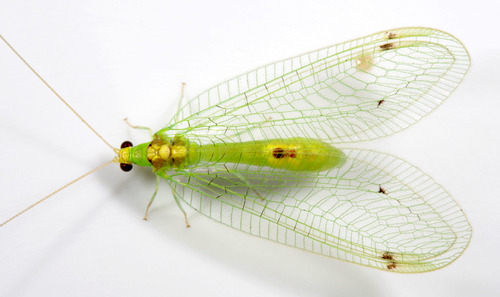
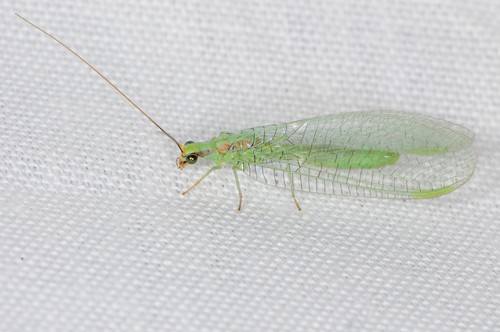
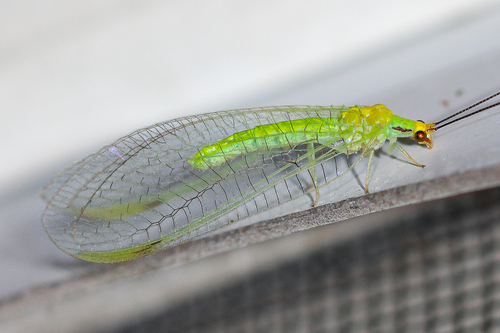
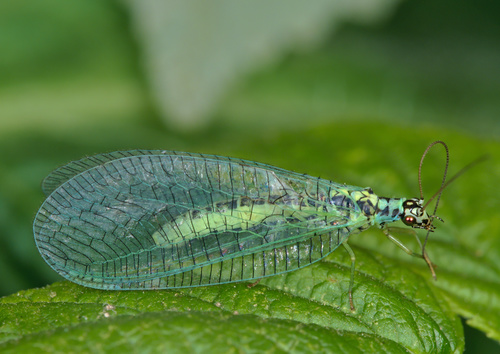
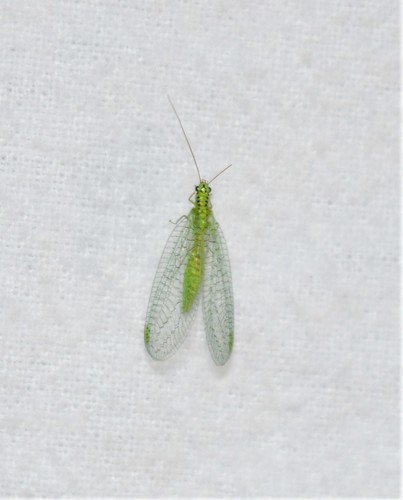
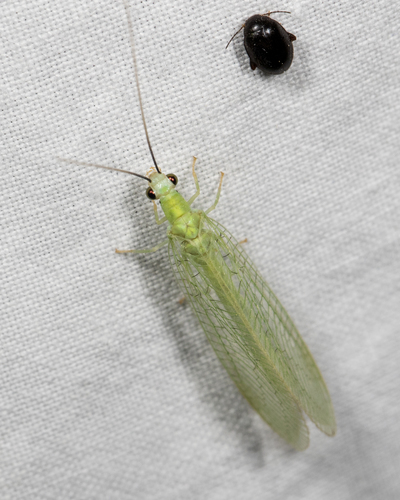
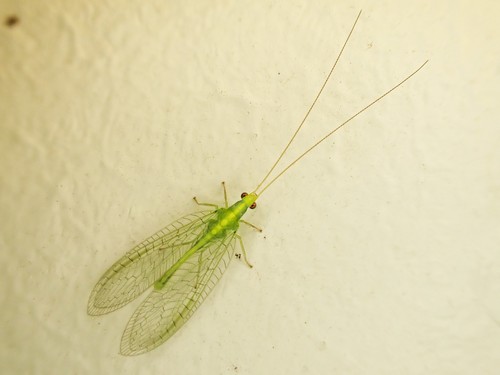
Description and ecology: Mallada basalis is 10–15 mm long, and is typically pale green in colour. Its translucent, veined wings are iridescent in natural sunlight. This species can be distinguished from similar-looking Chrysopidae by the green pterostigma found on its hind wings, a feature that similar species lack. Distribution and habitat: This species has been recorded in eastern Australian states, the Philippines, Taiwan, the Ryukyu Islands, Micronesia, and Polynesia, including an isolated outlier population on Easter Island. It has been observed living in both suburban and native plant environments. The first confirmed sighting of Mallada basalis in New Zealand occurred in 1940 on the Kermadec Islands, though unconfirmed evidence of the species in the region may date back to 1908. A specimen was identified on Tiritiri Matangi Island in the Hauraki Gulf in 2010, and the first specimen found in Auckland was identified in 2016. By 2020, Mallada basalis was distributed across the Auckland and Northland Regions of New Zealand. As of 2020, it remains unclear whether the species arrived in New Zealand through natural self-introduction, or was introduced via human activity. The impact of this species on New Zealand's ecosystems is currently unknown. No native Chrysopidae species have ever been formally described from mainland New Zealand; it is possible that the presence of Mallada basalis could control agricultural pests like aphids and mealybugs, or that it could pose a risk to native insect life. Many different lacewing species were imported to New Zealand between the 1920s and 1970s, but none of these imported species successfully established persistent populations in the country.