About Malacosoma constricta Edwards, 1874
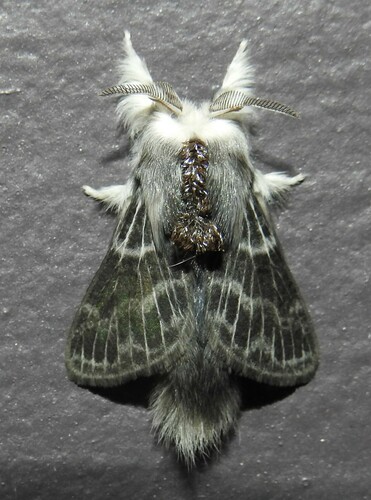
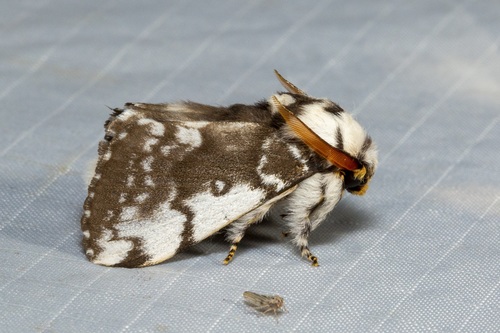
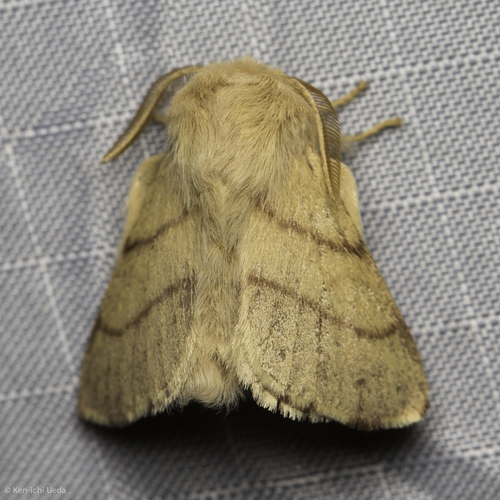
Malacosoma constricta, commonly called the Pacific tent caterpillar, is a moth species endemic to North America. It has been recorded in California, Oregon, and Washington, and has only been reported feeding on oaks. In California, two subspecies are recognized: the subspecies M. constrictum austrinum occurs from Santa Barbara County southward, while M. constrictum constrictum occurs from Los Angeles County northward. The larvae of this species feed on oak leaves, and often completely defoliate the affected branches they feed on. Pacific tent caterpillars spin simple, rudimentary tents that can reach up to 10 cm (3.9 in) wide. Unlike some other tent caterpillar species, larvae of this species feed in groups outside of their tent, and only enter the tent to molt. Pacific tent caterpillar larvae have speckled markings on their sides, orange hairs along their top, and grayish or cream-colored hairs on their sides. Their heads are dark blue in color. Females lay golden yellow eggs in clumps along sticks. According to the U.S. Forest Service, other than obvious visible aesthetic impacts, Pacific tent caterpillars typically do not cause major damage to California oaks. When they occur in high numbers, the caterpillars may be a nuisance. Western tent caterpillars and forest tent caterpillars are also found in California oak woodlands.