About Malacosoma castrense (Linnaeus, 1758)
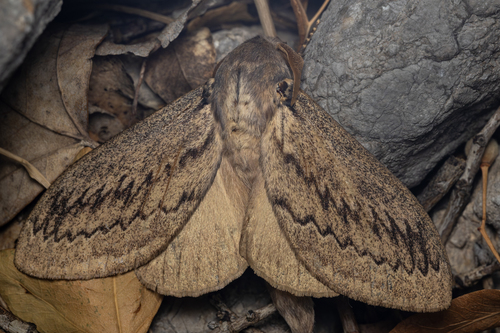
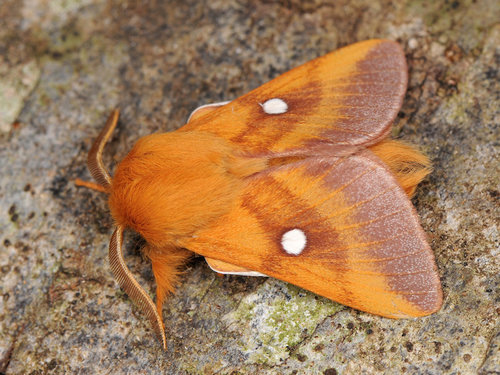
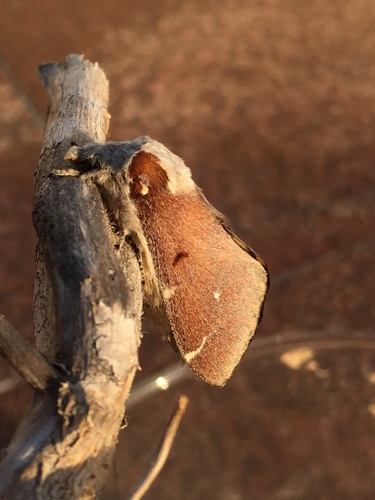
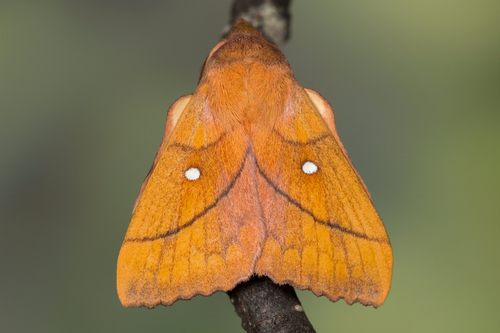
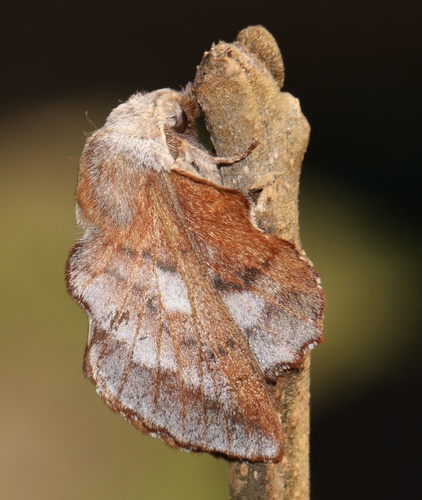
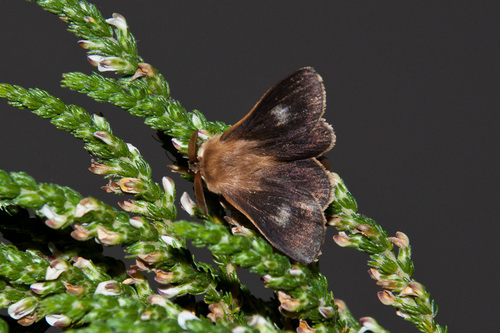
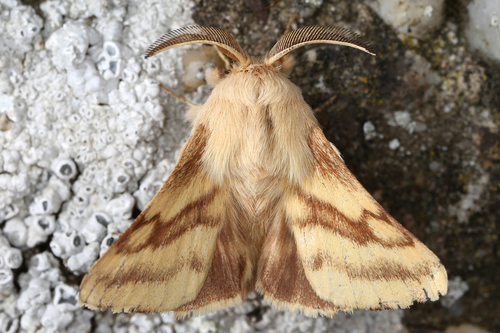
Malacosoma castrense (Linnaeus, 1758), originally spelled Malacosoma castrensis and commonly known as the ground lackey, is a tent caterpillar moth species in the family Lasiocampidae, found in Europe. The species was first formally described by Carl Linnaeus in the 10th edition of his work Systema Naturae, published in 1758. Its only specialist habitats are salt marshes and estuaries. Because it relies on this restricted specialized habitat, it is not particularly common, but it is not considered a threatened species. Female moths lay their eggs in rings around plant stalks, and these eggs are able to survive being immersed in salt water. The blue-grey larvae are tent caterpillars that feed on a range of shrubs, herbaceous plants, including heather, cypress spurge, and species in the genus Lotus, as well as other non-grass plants that grow in their habitat. In captivity, larvae can be fed apple or hawthorn foliage. The ground lackey larva constructs a new tent each time it moults. Once fully grown, caterpillars are fast walkers. When the larva pupates, it does not form a cocoon. Adult moths fly from June to August, with the exact timing varying by location. Males have forewings 13 to 16 mm long, while females have larger forewings that measure 17 to 21 mm long. Adults fly at night.