About Malachius bipustulatus (Linnaeus, 1758)
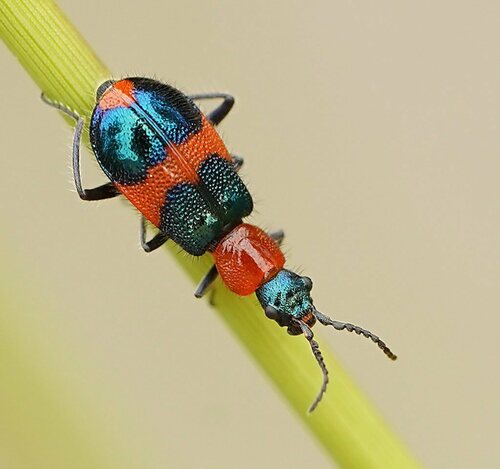
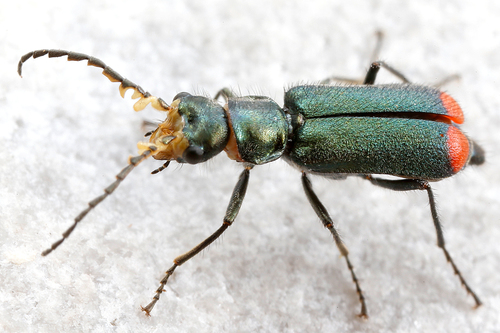
Malachius bipustulatus, commonly known as the malachite beetle, is a species of soft-winged flower beetle in the family Melyridae, subfamily Malachiinae. Adults reach a body length of 5–7 millimetres (0.20–0.28 inches). The head and pronotum are brownish, while the elytra are shining metallic green with a bright red spot at the tip. Along the sides of the abdomen, this species has a distinctive structure made up of orange pouches. These beetles primarily live in low-altitude meadows. During the day, they rest on herbs and flowers, including garden plant flowers; they are most often found on species in the families Apiaceae, Asteraceae, and Rosaceae, where they feed on pollen, nectar, and small insects. When threatened, this beetle can release an odor that repels predators. Males attract females by producing special secretions from their antennae. Malachius bipustulatus is a holometabolous insect, meaning it undergoes complete metamorphosis with four distinct life stages: egg, larva, pupa, and adult (also called imago). The pupal stage is a resting period during which both internal and external body structures develop. Larvae and adults differ greatly in body form and way of life. Larvae typically live under bark, inside old wood, or in the ground among grass roots, where they hunt small insects, other larvae, and slugs.