About Magnolia champaca (L.) Baill. ex Pierre
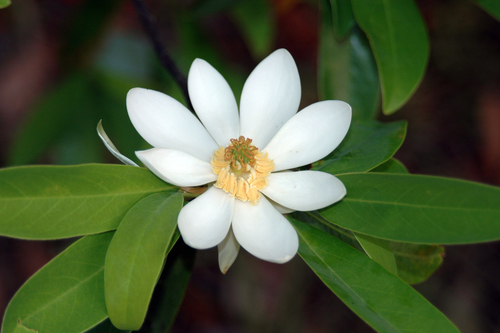
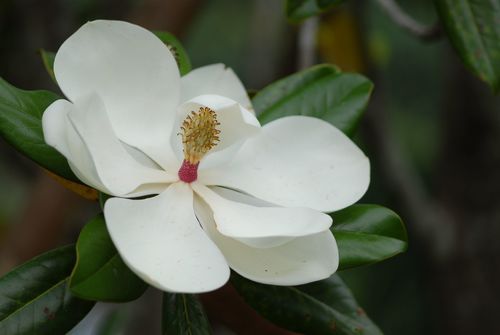
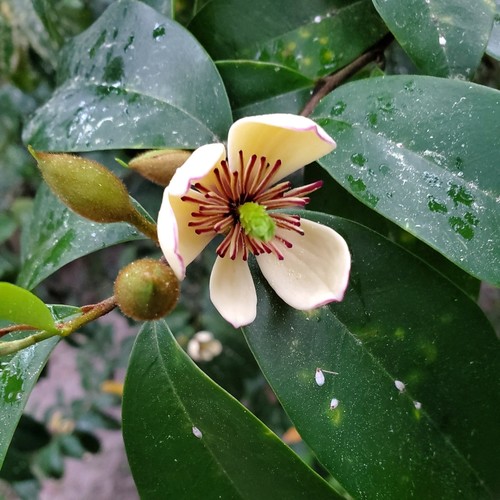
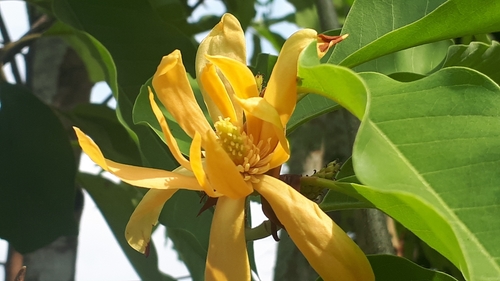
In its native range, Magnolia champaca grows to 50 metres (160 ft) or taller, with a trunk that can reach up to 1.9 metres (6.2 ft) in diameter. This tree has a narrow umbelliform crown. Its strongly fragrant flowers, which range in color from cream to yellow-orange, bloom from June to September. Obovoid-ellipsoid carpels produce 2 to 4 seeds between September and October.
Magnolia champaca is native to the Indomalayan realm, which covers South Asia, Southeast Asia-Indochina, and southern China. It grows in tropical and subtropical moist broadleaf forest ecoregions, at elevations between 200 and 1,600 metres (660 to 5,250 ft). Its confirmed native range includes the Maldives, Bangladesh, Cambodia, China, India, Indonesia, Malaysia, Myanmar, Nepal, the Philippines, Thailand, and Vietnam. Within China, it is native to southern Tibet and southern/southwestern Yunnan Provinces. In 2021, an isolated, presumably native population of M. champaca was identified in Yemen. This discovery makes M. champaca the only species in the Magnoliaceae family known to live on the Arabian Peninsula.
In terms of ecology, the tree's fragrant flowers attract butterflies and hummingbirds, while its aril-covered seeds are very attractive to birds.
For cultivation, Magnolia champaca is sold by specialty plant nurseries as an ornamental plant. It is grown for its ornamental tree shape, to create a dense screening hedge, and for its fragrant flowers. It is planted directly in the ground in tropical and subtropical climate gardens, including areas like coastal Southern and Central California. In cooler temperate climates, it is grown in containers. It requires full sun and regular watering.