About Macrozamia communis L.A.S.Johnson
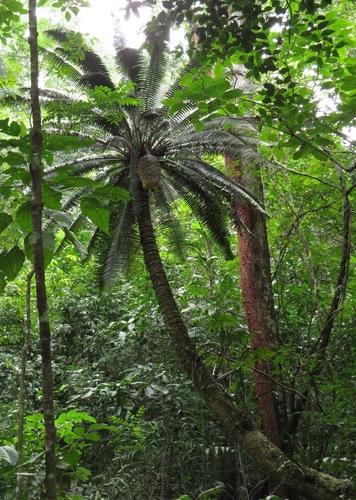
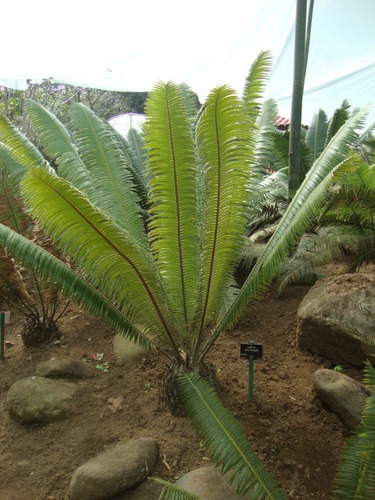
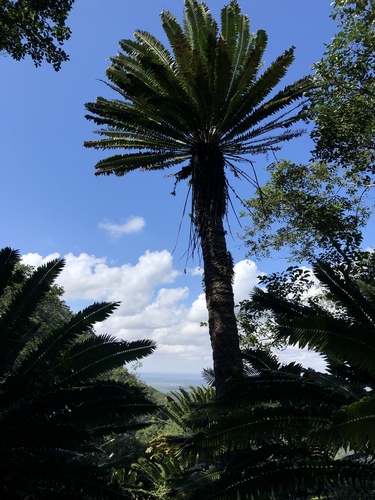
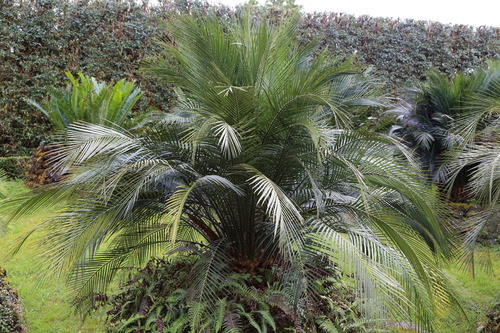
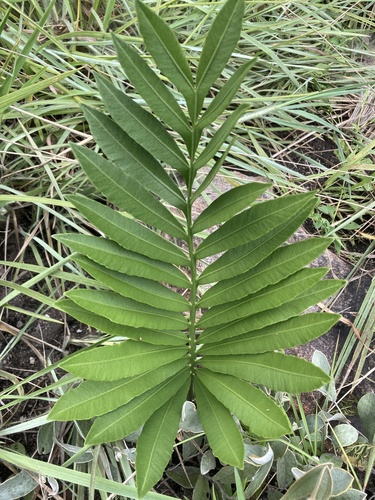
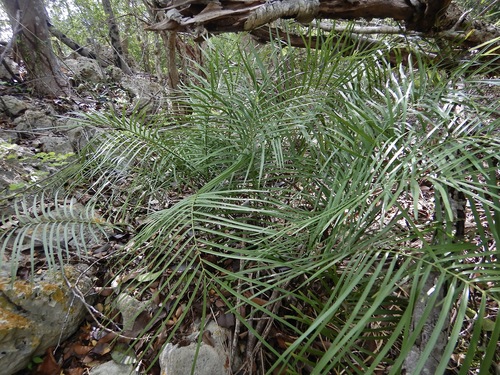
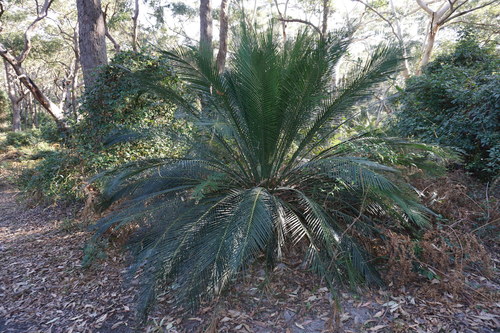
Macrozamia communis is an Australian cycad native to the east coast of New South Wales. Its common name is burrawang, a term that comes from the Daruk Australian Aboriginal language, and this name is also frequently used for other Macrozamia species. Burrawang has the widest distribution of any cycad in New South Wales. It occurs along the coast from the area around Armidale, New South Wales south to Bega, a distance of 700 kilometers, and grows on the coastal slopes of the Great Dividing Range. Some populations are also found on the inland slopes of the range, extending west as far as the Mudgee district. It is most abundant on New South Wales' south coast. This species grows in open forests. Seed cones develop after fire. Male and female seed cones grow on separate individual plants, and the large female seeds are fully ripe when they turn red or yellow. Individual plants take 10 to 20 years to reach maturity and can live up to 120 years. Macrozamia communis seedlings have a tuber and coralloid roots that grow above ground, and these roots host cyanobacteria. The cyanobacteria have a symbiotic relationship with the cycad, carrying out nitrogen fixation for the plant. When the plant reaches maturity, its roots contract, pulling the top of the stem level with the ground. At this stage, the tuber can grow as thick as 1.8 metres (5 ft 11 in), making it the largest tuber of any cycad. Burrawang seeds are a good source of starch, but they are poisonous to eat unless processed. The Cadigal people traditionally treated the seeds by pounding and soaking them in water for a week, changing the water each day. The resulting pulp was then made into cakes and roasted over hot embers. This species is not considered to be at risk of extinction in terms of its conservation status.