About Macrotritopus defilippi (Vérany, 1851)
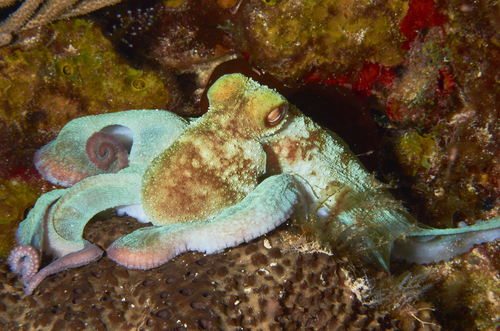
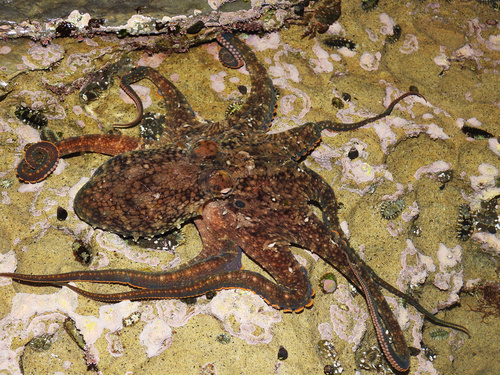
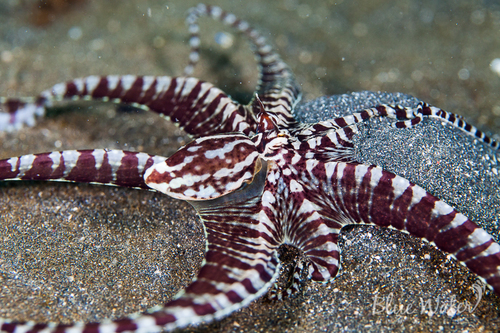
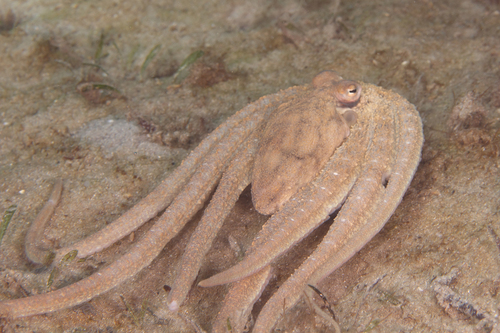
Macrotritopus defilippi is a small octopus with relatively long arms, reaching a maximum mantle length of 90 mm (3.5 in). Like most octopuses, its skin can change colour. Its colouring is usually plain or speckled, and closely matches the colour of the sandy plains it inhabits. When its substrate mixes gravel with sand, its mottled pattern is often larger, small fleshy skin protuberances called papillae may be present, and the arms show some light and dark barring. A white leucophore has sometimes been observed on the tip of the mantle; this may provide disruptive camouflage when white pebbles are nearby. Like other octopus species, Macrotritopus defilippi can alter its appearance to match its surroundings. When an individual stays stationary on a sandy seabed, its colour, patterning, and even brightness match its surroundings so closely that the animal is very hard to detect. This octopus can also bury itself completely in the substrate, leaving no visible trace of its location. Macrotritopus defilippi has been recorded from the Atlantic Ocean (including the Caribbean Sea), the Mediterranean Sea, the northern Indian Ocean, and the coast of Somalia.