About Macrotristria angularis (Germar, 1834)
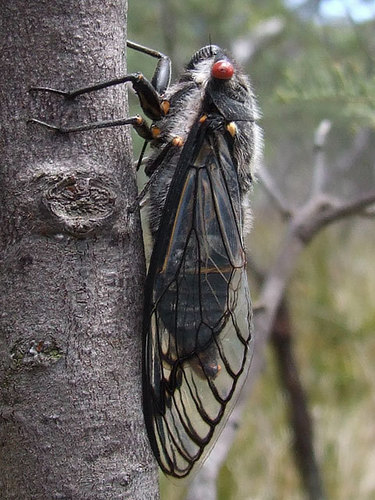
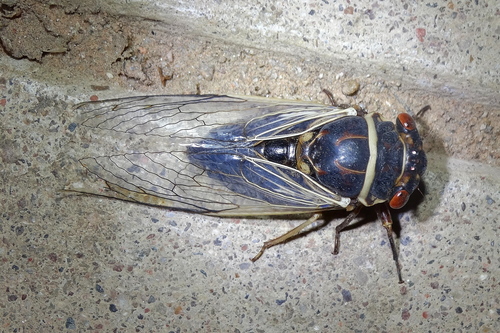
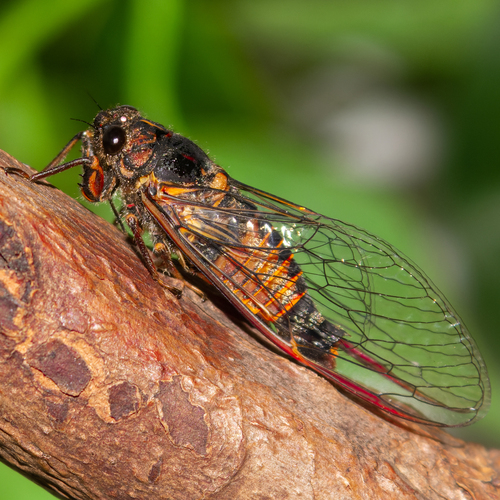
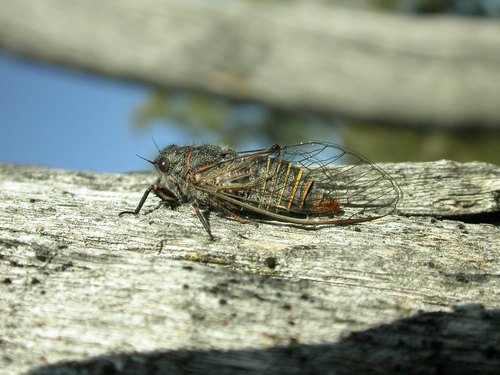
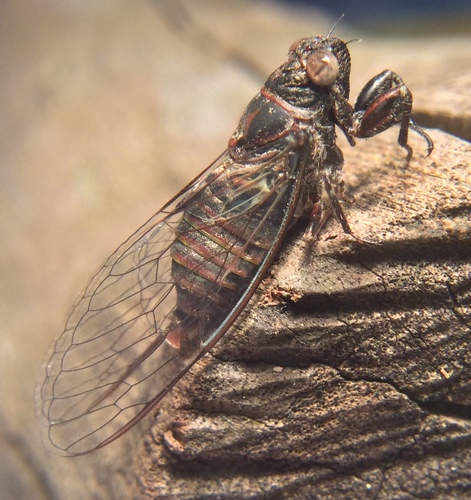
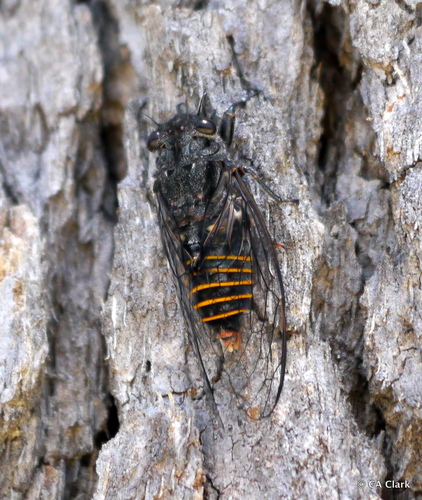
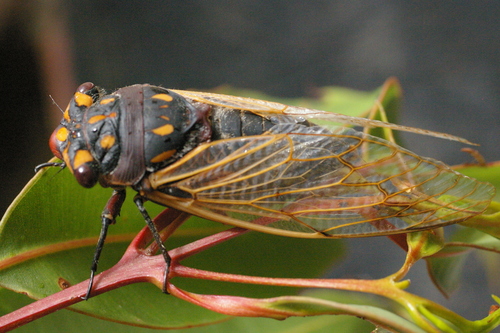
Commonly known as the cherrynose, Macrotristria angularis (Germar, 1834) is a medium to large species of cicada, with males and females appearing very similar. The head and thorax are typically black, though they are red-brown in individuals from North and Central Queensland, and marked with orange patches. The postclypeus is red, while the underparts range from brown to blackish. The transparent panes of this cicada’s wings hold an array of cuticular nanostructures: conical protuberances spaced roughly 200 nm apart, reaching around 200 nm in height, and tipped with a spherical cap with a radius of curvature of approximately 25 to 45 nm. These nanostructures create anti-wetting and anti-reflective surfaces. The cherrynose produces a distinctive trilling call during the day and at sunset. Adult cherrynose cicadas live on the upper branches and trunks of tall eucalypts in sclerophyll forests, and the species is becoming rare in the Sydney region. Individuals have also been recorded living on sheoaks, Angophora (apples), native Callitris (cypress), and Tamarix aphylla.