About Macrotermes carbonarius (Hagen, 1858)
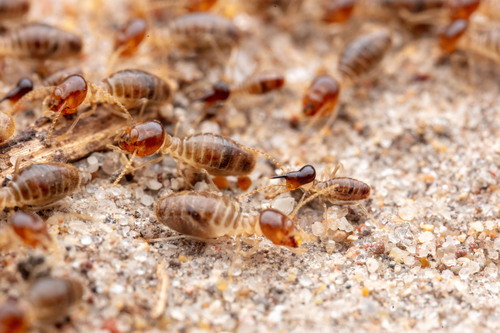
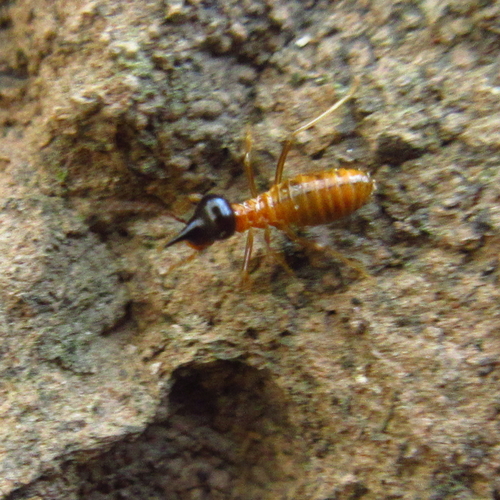
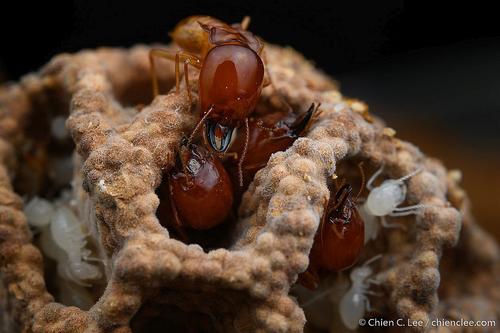
Individuals of Macrotermes carbonarius across the soldier, worker, and imago castes are easily distinguishable from other species within their range by their nearly jet-black exoskeleton coloration. Like other species in the Macrotermes genus, M. carbonarius has dimorphic worker and soldier castes, with the largest soldiers commonly reaching 16 mm in length. Imagoes of M. carbonarius can closely resemble imagoes of certain Odontotermes species. They can be distinguished by the proportionally smaller eyes and larger overall size of M. carbonarius imagoes, which attain a body length of 15–16 mm. The primary distinguishing feature is found in the forewings: unlike Odontotermes, where the median and cubitus veins converge, these veins remain separate in Macrotermes.
For reproduction, nuptial flights occur during daylight in the late afternoon, usually around dusk. Colonies prefer windless, hot and dry conditions with no rain that follow a day of heavy rain. Colonies construct and open horizontally elongated openings called flight holes around midday. If favorable conditions persist into the late afternoon, colonies release massive nuptial flights made up of hundreds or thousands of alates. Flights are short in duration, lasting around 4–10 minutes. Flights can begin as early as mid-October, peak in November, with smaller sporadic flights occurring from December to January.