About Macrostrombus costatus (Gmelin, 1791)
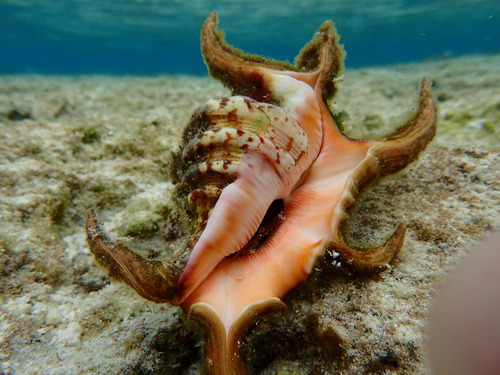
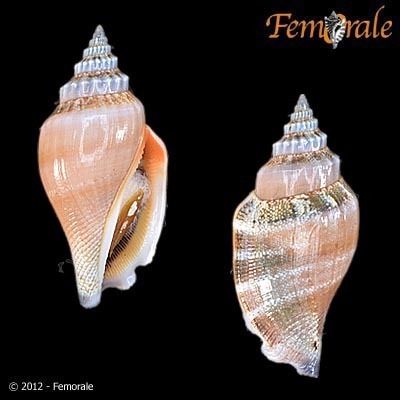
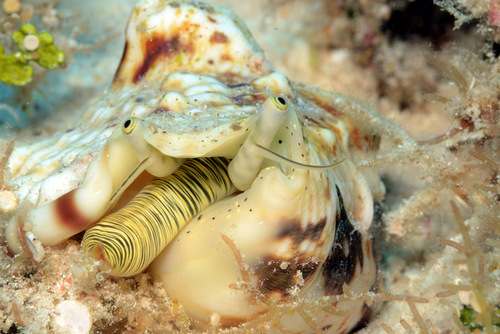
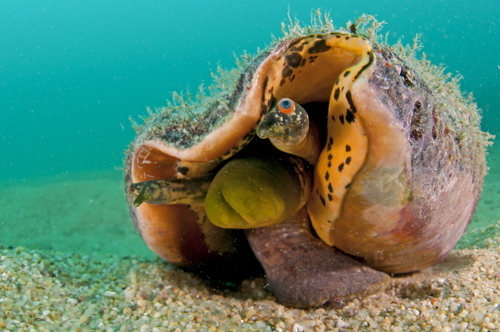
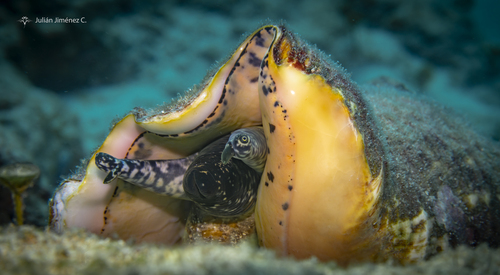
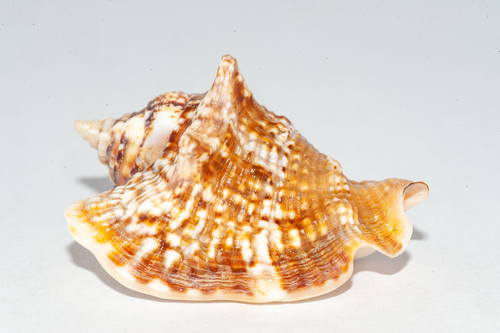
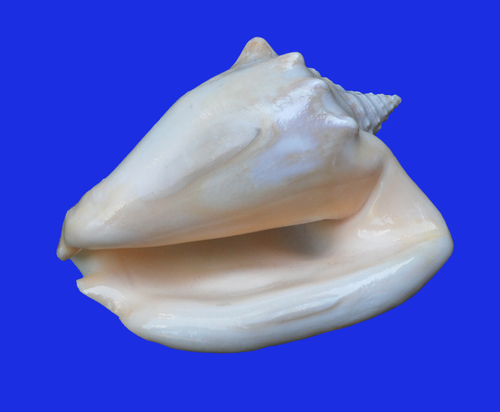
Anatomy and morphology: Macrostrombus costatus, commonly called the milk conch, is a large species of sea snail with a thick shell. Adult milk conch shells can be identified by their high spire and flaring lip. The common name "milk conch" comes from the milky white interior of the shell's aperture and the light cream color of the shell's exterior. Other conch species, such as Aliger gigas or Strombus pugilis, have pink and red tones in their apertures and different colors or patterns on their external shell surfaces, unlike the milk conch. Milk conch eyes have rings that can be red, orange, yellow, or black. The average adult milk conch shell is around 20 cm long, and the maximum recorded shell length is 23.1 cm. This species is smaller than the more widely studied queen conch Aliger gigas, which can reach up to 31 cm in length. Distribution: This species is found in the Caribbean Sea, the Gulf of Mexico, the Lesser Antilles, and the Atlantic Ocean from North Carolina to eastern Brazil. Recorded occurrences along Central and South American coasts include Paraíba state in northeastern Brazil, Venezuela, Panama, Bermuda, the Yucatan Peninsula in Mexico, and Trinidad and Tobago. Habitat: Macrostrombus costatus prefers shallow-water back reef habitats including algal banks, seagrass beds, and patch reefs, which provide it with shelter, protection, and food. Its specific habitat varies by geographic location. In Paraíba, individuals have been observed at 1 meter below the water surface, in sandy areas between patch reefs. In Puerto Rico, they are mostly found in algal mats. In Panama, milk conchs are extremely abundant in seagrass meadows dominated by turtle grass and manatee grass. Milk conchs can live at depths between 3 meters and 20 meters. The minimum recorded depth for this species is 2 m, and the maximum recorded depth is 55 m. Reproduction: Macrostrombus costatus has external sex organs: males have a verge, while females have an egg groove. This species is oviparous. Milk conchs begin spawning in early November, continue spawning through winter and spring, and stop spawning in May. They aggregate in groups to spawn in open sand areas in deeper waters. Life cycle: Milk conchs start their lives developing inside eggs as planktonic larvae. The larvae, called veligers, feed on different phytoplankton cultures to get nutrition for growth. As pelagic veligers, milk conchs reach metamorphosis into benthic snails approximately 26–30 days after hatching. Morphological signs of metamorphosis include development of the proboscis (which holds part of the oral cavity and radula), loss of velar lobes, and outward migration of the eyes. Juvenile milk conchs have a distinct conical shell with tight whorls and a green-colored proboscis. At the juvenile stage, they begin grazing on algae using their proboscis. The main predators of juvenile milk conchs are crustaceans such as crabs and lobsters.