About Macrosiphum rosae (Linnaeus, 1758)
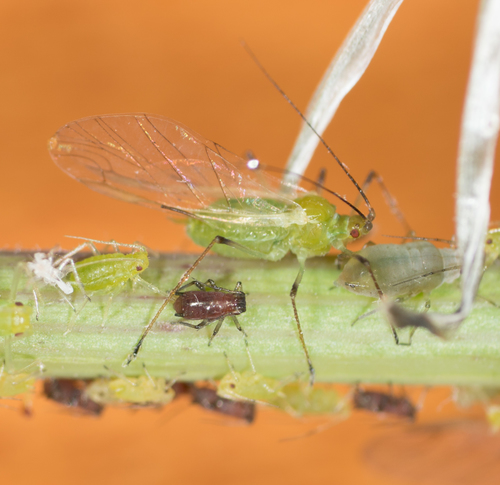
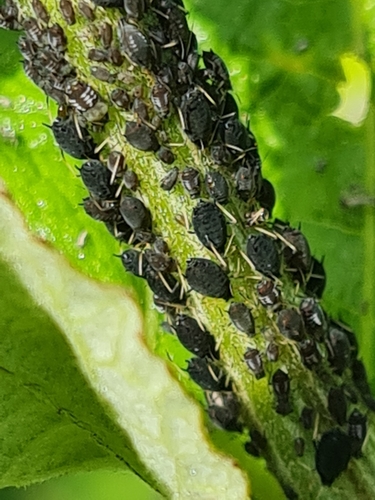
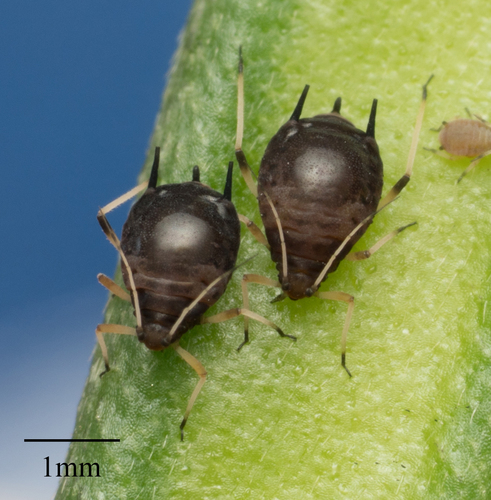
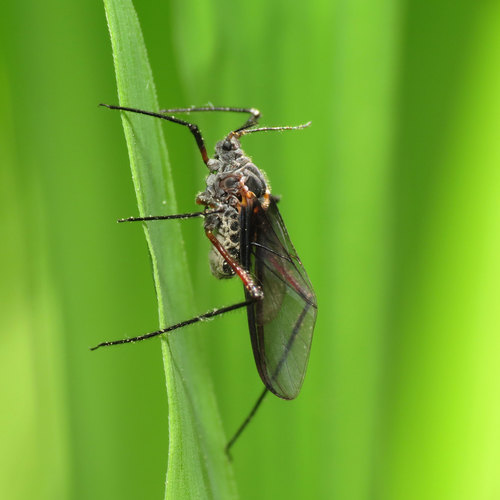
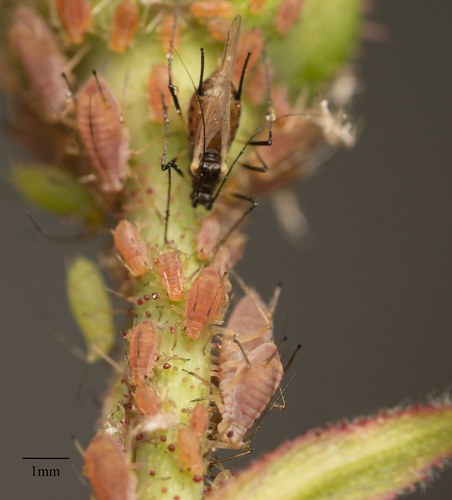
Macrosiphum rosae (Linnaeus, 1758) is an aphid species. Wingless adult individuals have a spindle-shaped, slender body that measures between 1.7 and 3.6 mm (0.07 and 0.14 in) long, and their color ranges from green to pink and reddish-brown. Their antennae and legs are relatively long, and the cauda, a tail-like protrusion, is pale. The species has long, tapered, black siphunculi, which are a pair of small backward-pointing tubes located on the abdomen. This feature distinguishes it from Metopolophium dirhodum, the rose-grain aphid, which has pale siphunculi. Winged adult M. rosae are between 2.2 and 3.4 mm (0.09 and 0.13 in) long, their color ranges from green to pinkish-brown, and they have distinctive black lateral markings. In its life cycle, this aphid mainly overwinters as eggs on rose bushes, though some adults may survive until spring when winters are mild. Eggs hatch in spring into wingless females that reproduce parthenogenetically, and large colonies can develop quickly. These colonies are mostly found on the tips of shoots and around flower buds. In the northern hemisphere, the highest population densities occur in June and July, which matches the rose bushes' flowering period, after which populations decline. This decline happens because some winged females develop during this time, and they migrate to other rose bushes or to certain secondary hosts including holly, teasel, valerian, Knautia and scabious. When autumn arrives, winged males are also produced. The aphids return to rose bushes, where eggs are laid.