About Macropiper excelsum subsp. excelsum
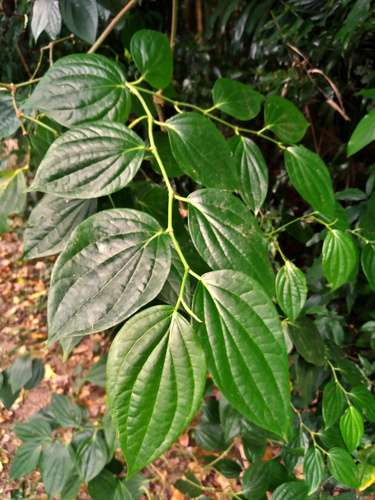
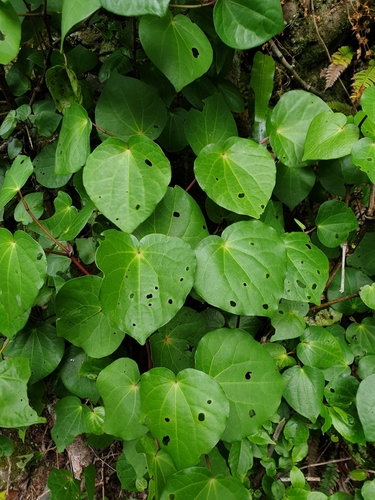
Macropiper excelsum subsp. excelsum, commonly called kawakawa, is found throughout New Zealand's North Island. On the South Island, it occurs as far south as Ōkārito (43.20 °S) on the West Coast, and Banks Peninsula (43.5 °S) on the east coast. This tree grows to 6 metres (20 feet) in height. Its leaves are often covered with holes made by caterpillars of the kawakawa looper moth, Cleora scriptaria. Depictions of this plant often show the variety majus, which has larger, glossier leaves than the typical form of the subspecies. Kawakawa was used as a traditional medicinal plant by the Māori people. An infusion prepared from its leaves or roots was used, or the leaves were chewed, to relieve toothache, and wounds were commonly bound with kawakawa leaves. The plant produces sweet, edible yellow berries, which are most often found on female trees during summer, and these berries were eaten as a diuretic. In traditional practice, leaves with holes left by caterpillars were considered the best to use. In cultural contexts, hosts at a marae wave kawakawa leaves to welcome guests. Kawakawa is also associated with death; at a tangi (Māori funeral gathering), both hosts and guests may wear wreaths of kawakawa on the head as a sign of mourning. Early European settlers to New Zealand used kawakawa to make teas, and experimented with it as a flavouring agent for beer. Today, it is commonly grown as an ornamental plant in gardens. Kawakawa essential oil contains myristicin, a compound that acts as a deliriant when consumed in high concentrations.