About Macroglossus minimus (E.Geoffroy, 1810)
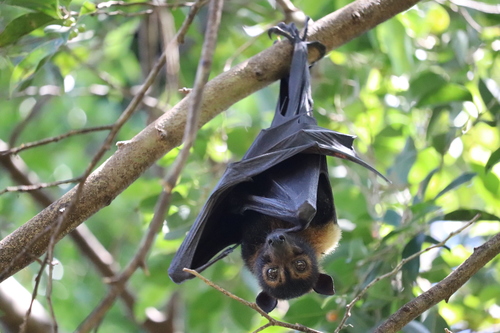
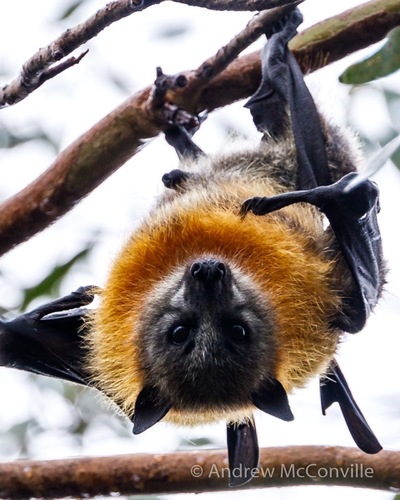
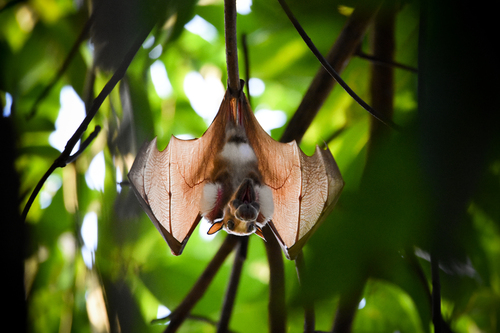
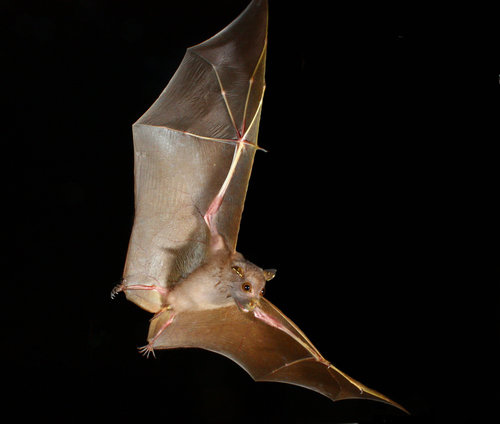
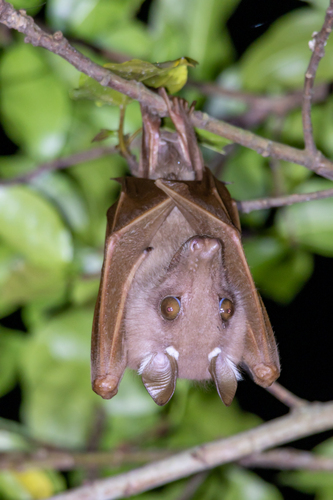
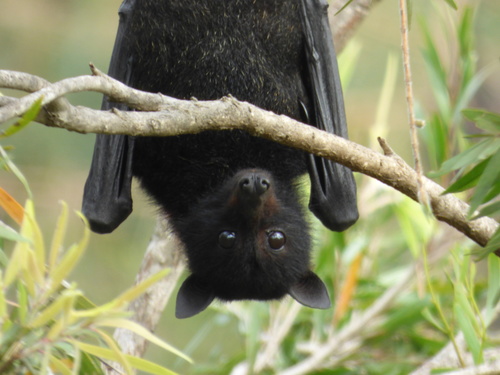
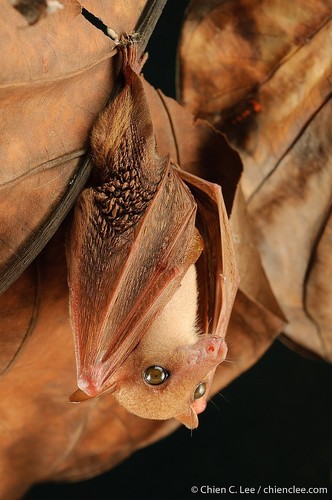
The long-tongued nectar bat, scientifically named Macroglossus minimus (E.Geoffroy, 1810), has several other common names: the northern blossom bat, honey nectar bat, least blossom-bat, dagger-toothed long-nosed fruit bat, and lesser long-tongued fruit bat. It is a species of megabat, and is one of the smallest species in the Pteropodidae family. It has an average body length ranging from 60 to 85 mm. Its fur is reddish-brown, and is relatively longer than that of other related species. The fur on its abdomen is a lighter shade than the rest of its body, and a dark brown stripe runs bilaterally down the top of its head and back.
This species has a wide geographic distribution that includes Thailand, Peninsular Malaysia, southern Philippines, Java, Borneo, New Guinea, the Solomon Islands, and northern Australia. On the island of Borneo, it has been recorded in multiple locations: Kota Kinabalu, Sepilok, Sukau, and Tawau in Sabah; Bandar Seri Begawan in Brunei; Bario, Niah and Bako in Sarawak; and Gunung Kenepi, Kutai, and Sungai Tengah in Kalimantan. No colonies of M. minimus have ever been recorded, which suggests the species lives either alone or in small groups. It feeds on nectar and pollen, which it gathers from mangroves and banana flowers in Malaysia. Ecologically, the long-tongued nectar bat acts as an important pollinator for many tree species in Peninsular Malaysia, including species from the plant families Bignoniaceae, Bombacaceae, Leguminosae, Musaceae, Myrtaceae, and Sonneratiaceae. M. minimus has been recorded at elevations up to 1000 m, in habitats including near coastal mangroves, dipterocarp forests, and lower montane forests.