About Macrocypraea cervus (Linnaeus, 1771)
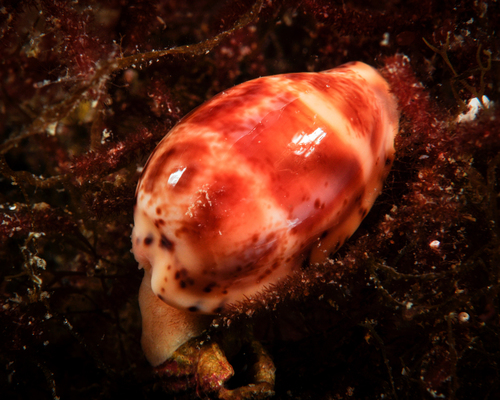
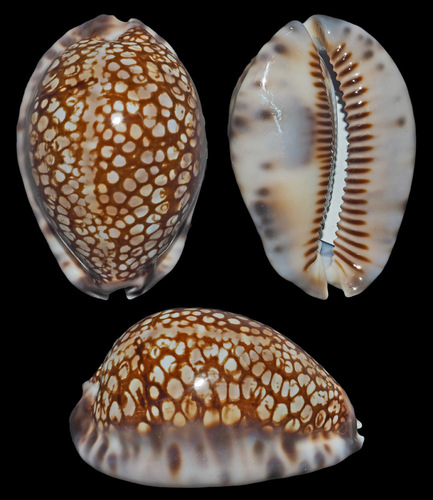
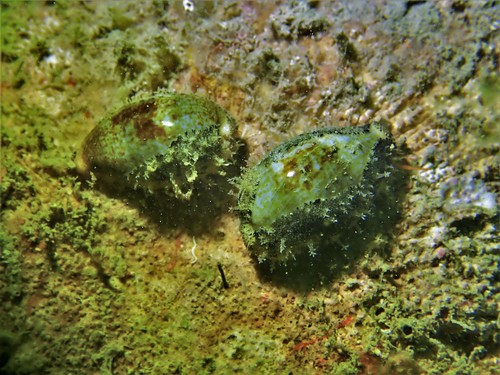
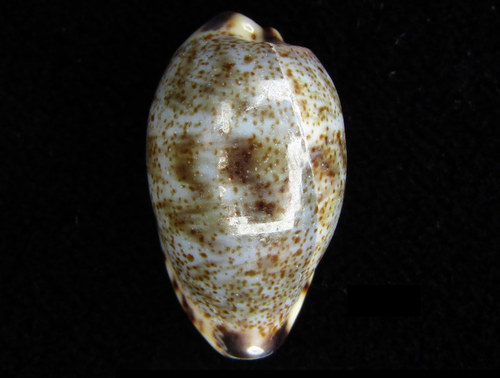
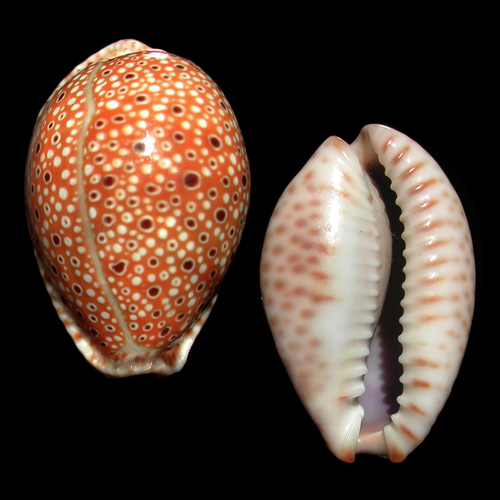
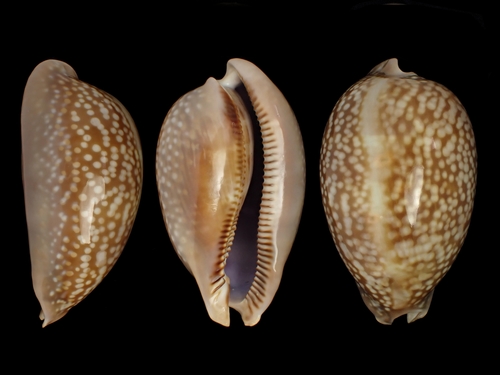
Macrocypraea cervus (Linnaeus, 1771) is one of the largest cowrie species. It is quite similar in shape and colour to Macrocypraea cervinetta, but it is much larger. The maximum recorded shell length is 190 millimetres (7.5 in), while the minimum recorded length is about 40 millimetres (1.6 in). The shell is elongated, with a basic light brown colour. It has small whitish ocellated spots on the dorsum, which resemble the markings of a young fawn—this pattern gives the species its Latin name cervus, meaning 'deer'. Juveniles do not have these spots. The dorsum also has a few clearer transverse bands, and a longitudinal line marking where the two edges of the mantle meet. The apertural teeth are dark brown. In living individuals, the cowrie's mantle is dark grayish and completely covered in short fringes. This species is mainly distributed in the tropical Atlantic Ocean including the Caribbean Sea, and in waters off South Carolina, Florida, Mexico, Brazil, Cuba, and the Bermudas. Living Macrocypraea cervus are mainly found under corals and rocks in shallow waters, down to a maximum depth of 35 m. They feed on algae.