About Macrocephalon maleo S.Müller, 1846
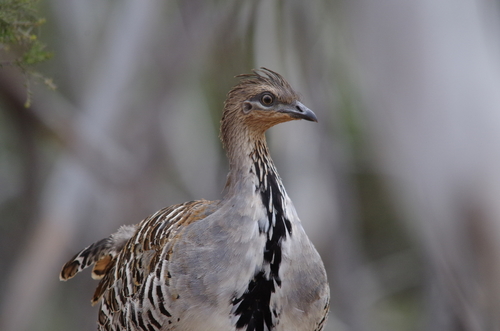
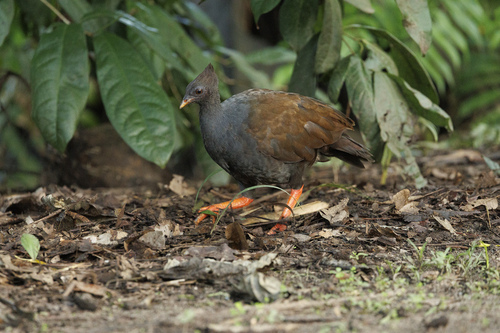
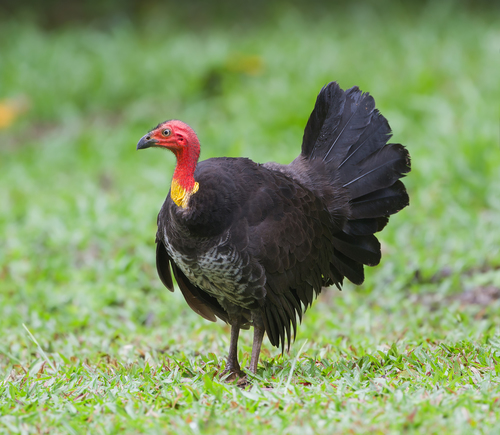
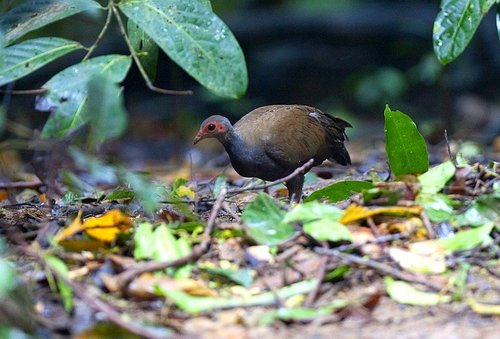
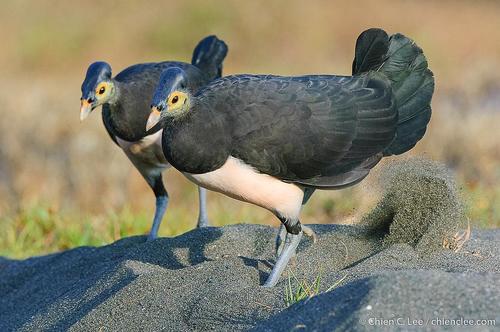
Macrocephalon maleo, commonly called the maleo, is 55–60 cm (22–24 in) long. It has blackish plumage, bare yellow facial skin, a reddish-brown iris, a reddish-orange beak, and rosy salmon-colored underparts. Its crown features a prominent, bony dark casque, which gives the species its genus name Macrocephalon, from Greek words meaning "large head". Its greyish blue feet have four long sharp claws, separated by a membranous web. The sexes are almost identical, with females being slightly smaller and duller in color. Juvenile maleos have mostly brownish, paler heads with short blackish-brown crests and browner upper parts.
This species is endemic to the Indonesian island of Sulawesi. It does not typically occur at altitudes over 1,000 meters, and is most often found in lowland hills or rainforest. Ideal nesting sites include the island's river banks, lake shores, and coastal areas. Maleos are communal nesters. They breed year-round, but the peak breeding season varies based on location on the island. When a female is ready to lay eggs, she leaves the cover of the Sulawesian forest accompanied by her mate to search for traditional coastal breeding grounds. Over a full year, a female can lay between 8 and 12 eggs. After the pair selects an optimal spot, they dig a deep hole and place the egg inside. Once the egg is laid, the parents bury it securely in sand, sometimes adding debris on top of the sand to better camouflage the hole. After burying the egg, the parents leave and never return, leaving the maleo chick to care for itself. The hot sand of Sulawesi, warmed by either geothermal or solar heat, acts as an incubator for the eggs.
Maleo eggs are approximately five times the size of domestic chicken eggs, because they hold nearly fully-formed chicks inside. A newly hatched maleo chick is completely self-sufficient only hours after hatching. Immediately after hatching, the chick must dig its own way up through the sand, after which it is already able to fly and feed itself. After hatching, the young birds move through the sand to the forest and hide there. They must find their own food and defend themselves from predators including monitor lizards, reticulated pythons, wild pigs, and cats. Maleos are monogamous, and paired individuals stay close to one another at all times. Their diet consists mainly of fruits, seeds, mollusks, ants, termites, beetles, and other small invertebrates.