About Mackinlaya macrosciadea (F.Muell.) F.Muell.
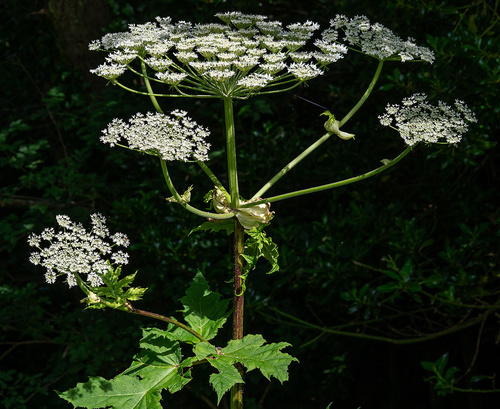
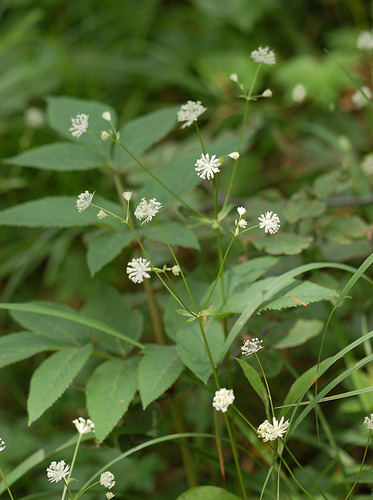
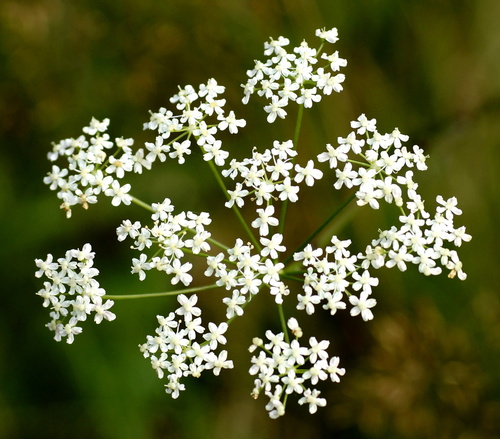
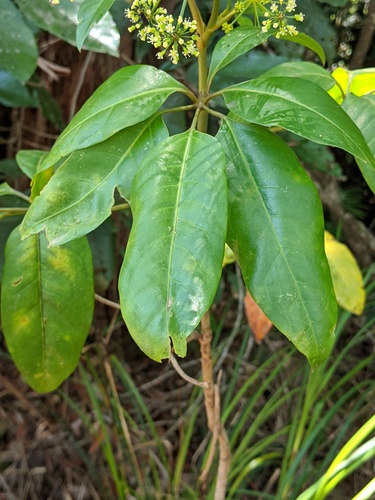
Mackinlaya macrosciadea (F.Muell.) F.Muell. is an evergreen shrub that typically reaches 3 to 5 meters (10 to 16 feet) in height and is usually unbranched. Its compound leaves grow on leaf stalks (petioles) up to 15 centimeters (6 inches) long, and have 3 to 7 leaflets arranged palmately around a single attachment point. The hairless (glabrous) leaflets grow up to 18 centimeters (7 inches) long and 6 centimeters (2.4 inches) wide, and their edges can be smooth, toothed, or lobed. The plant's flower cluster (inflorescence) grows at the end of stems and forms an umbel of umbels: multiple stalks of equal length grow from a single point on the plant, and these stalks then branch into smaller flower stalks (pedicels) that also share equal length and a common attachment point, with each pedicel holding one single flower. Individual flowers are around 2.5 millimeters (0.10 inches) in diameter and may be white, cream, or green in color. The fruit is a 2-lobed drupe with a pale waxy coating (glaucous), colored blue-grey or purple, measuring around 15 millimeters (0.59 inches) long and 18 millimeters (0.71 inches) wide. Each fruit contains 1 to 2 cream to pale brown seeds. This species grows as an understorey plant in and on the margins of multiple types of rainforest. It has several separate (disjunct) populations: one in the Arnhem Plateau and Pine Creek bioregions of the Northern Territory, and multiple populations along Queensland's east coast, ranging from Lockhart River to the Sunshine Coast. In Queensland, it grows at altitudes from sea level up to 1,100 meters (3,600 feet). Flowering and fruiting both take place between May and November. The fruit of Mackinlaya macrosciadea is eaten by southern cassowaries (Casuarius casuarius) and tooth-billed bowerbirds (Scenopoeetes dentirostris).