About Machimia tentoriferella Clemens, 1860
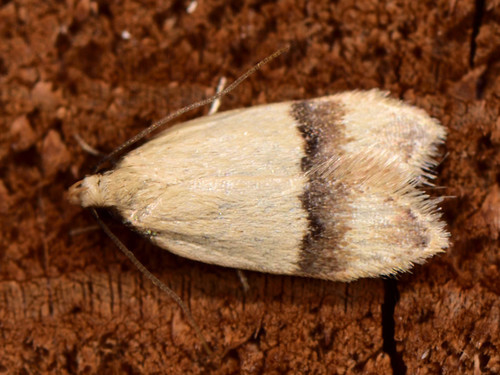
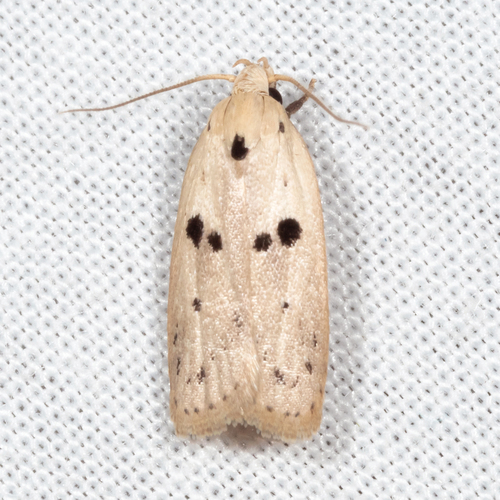
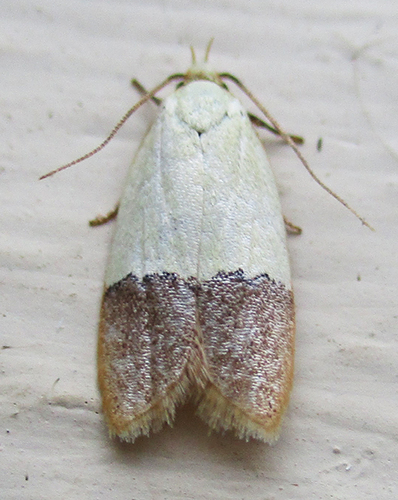
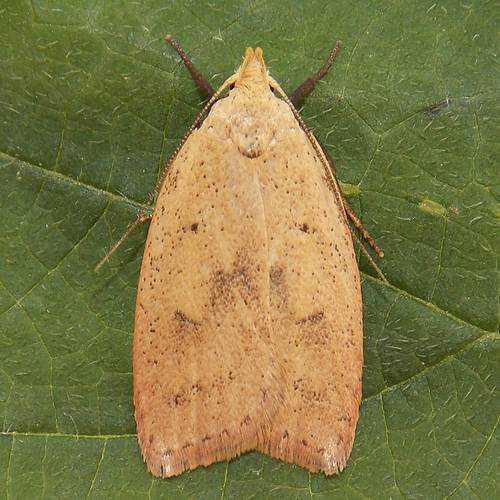
The gold-striped leaftier moth, Machimia tentoriferella, is a moth species belonging to the family Depressariidae. This species is found across North America, ranging from Nova Scotia south to North Carolina and Tennessee, west to Mississippi and Iowa, and north to Ontario. Its specific epithet tentoriferella derives from the Latin word tentorium, which means "a tent". This name most likely refers to the rolled or tied leaf enclosure that the moth's larva creates. The wingspan of adult gold-striped leaftier moths measures 20 to 26 mm. Adults are active on the wing from September to October, with the timing varying based on the location of the population. The larvae feed on Fraxinus americana (white ash) and Fraxinus nigra (black ash). Additional food plants that have been recorded for the larvae include birch, elm, maple, oak, basswood, butternut, cherry, beech, hickory, balsam poplar, chestnut, hazel, apple, lilac, and dogwood.