About Lythrurus fasciolaris (Gilbert, 1891)
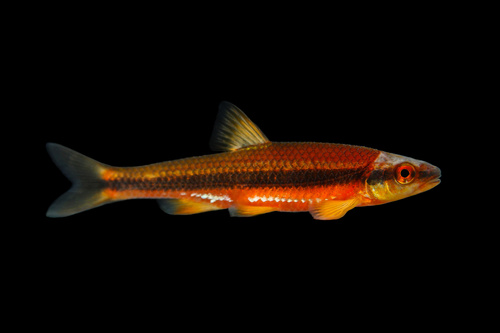
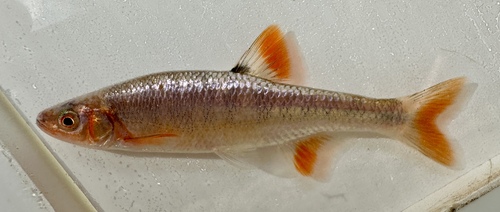
The scarlet shiner, scientifically named Lythrurus fasciolaris, is a freshwater fish native to the eastern United States. Scarlet shiners occupy subtropical, benthopelagic freshwater environments. They thrive in clear water, and typically live in higher gradient streams with coarser substrates made of rocks, pebbles, or gravel. Their native range centers on the Ohio River basin, extending south to Eagle Creek in Kentucky. The species occurs from southwestern Ohio down to the Scioto River, west to the Little River basin in Tennessee, along the Tennessee River into the northernmost parts of Alabama, and also in parts of West Virginia and Virginia. It can also be found in Cumberland River drainages across Kentucky, Tennessee, Alabama, Mississippi, and Georgia. Scarlet shiners have been introduced to additional Ohio waterways, including the Muskingum River drainage within the Ohio River basin, and other non-native areas, most often in Ohio. This species generally lives in small to medium-sized clear streams with medium current flow, and can tolerate slightly murky water. However, it cannot survive in water with heavy silt or sediment deposits, which deprive the fish and their eggs of oxygen; scarlet shiners are intolerant of high turbidity, siltation, and low dissolved oxygen levels. During midwinter, scarlet shiners live in deeper, quieter pools of water. Adult scarlet shiners usually feed on aquatic invertebrates. This species is a natural host for multiple organisms, including the glochidia of the Pyramid Pigtoe mollusk in Kentucky. Larger predatory fish that share the same streams, such as trout, prey on scarlet shiners. Scarlet shiners are often absent from trout-occupied waters, especially at high elevations. They compete for resources with other stream fish, including the striped shiner (Luxilus chrysocephalus), bluntnose minnow (Pimephales notatus), and telescope shiner (Notropis telescopes). The main competitor of the scarlet shiner is its close relative the redfin shiner (Lythrurus umbratilis), which occupies similar waterways, though redfin shiners live in clearer, lower-elevation streams. Scarf shiner populations decline when silt deposits from human land development near their streams exceed the species' tolerance levels. Human introduction of invasive species like rainbow trout to streams has also caused decline or fragmentation of scarlet shiner populations across their range.