About Lythrurus ardens (Cope, 1868)
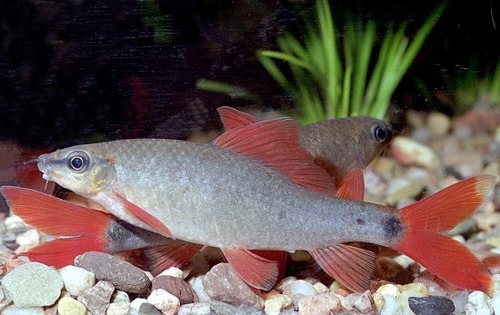
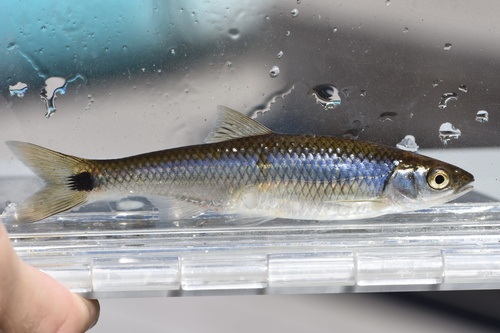
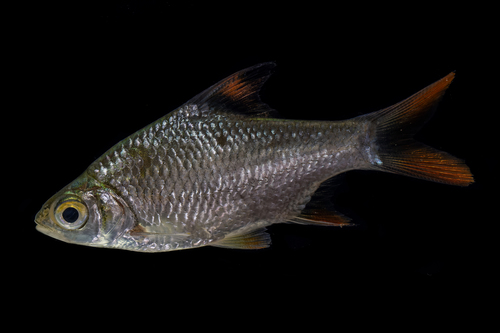
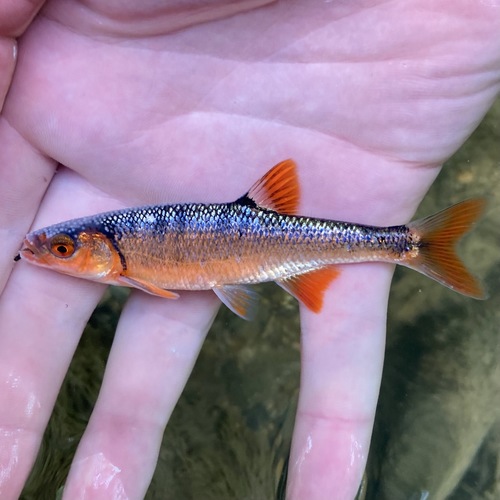
Lythrurus ardens, first described by Cope in 1868, is a fish species with a long, slender body. It has eight dorsal fin-rays, nine to eleven anal fin-rays, thirteen to fourteen pectoral fin-rays, and eight pelvic fin-rays. A dark pigment spot at the base of its first few dorsal fins distinguishes this species from other similar fish that share its habitat. It also has a stripe that fades as it approaches the dorsal fin, plus several colored bands across its back.
This fish is native to Virginia, North Carolina, and West Virginia. Its range has accidentally expanded when it was used as fishing bait and escaped into new natural environments; for example, it is thought to have been introduced to Virginia’s York River through this pathway. It inhabits freshwater pools, rivers, and creeks, and tolerates both clear and turbid water. It is mostly not found in streams that host trout. During winter, this fish typically lives in deeper, quieter waters.