About Lytechinus variegatus (Lamarck, 1816)
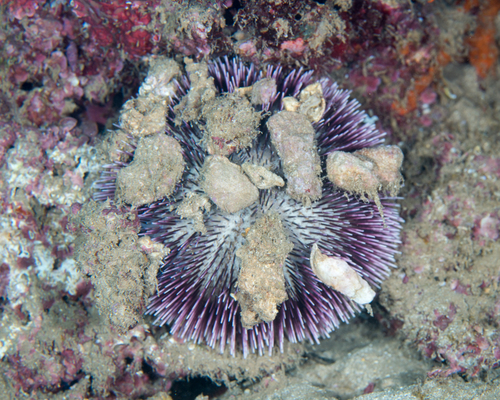
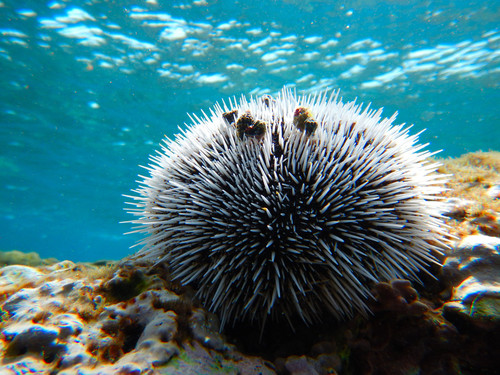
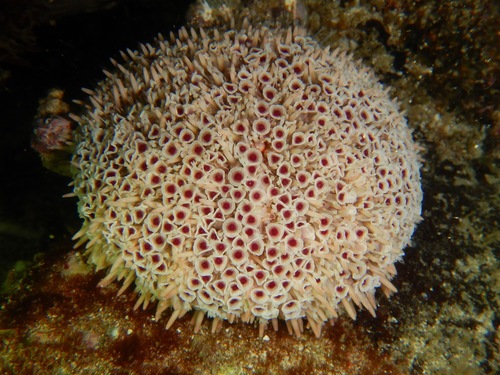
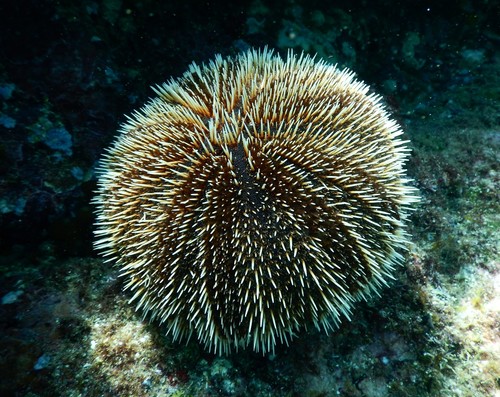
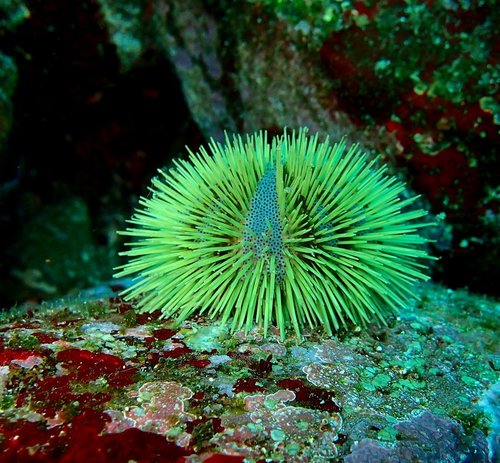
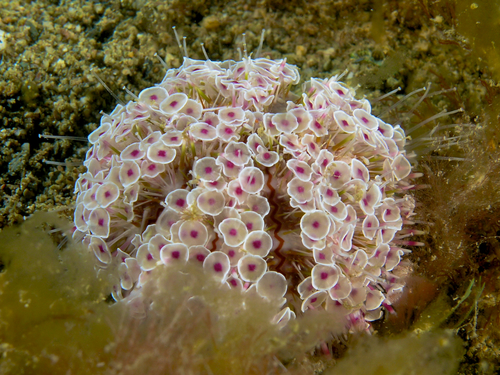
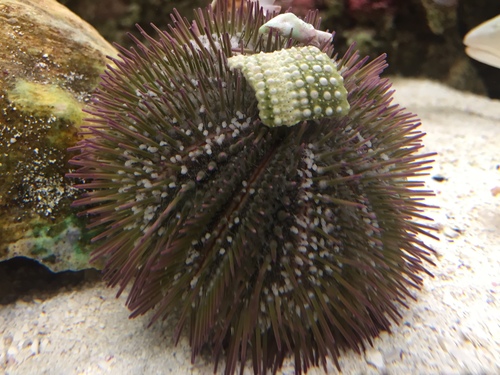
Lytechinus variegatus, commonly called the green sea urchin, has a globular test (shell) that is densely covered in spines, and can reach a diameter of around 11 centimetres (4.3 in). The test may be purple, green, or dull red, with irregular white blotches. Most of its spines are short, but a small number of longer primary spines are also present. Spines vary in colour, and sometimes have a different colour at the base than at the tip. In the Caribbean, the most common colour combinations are a green test with green spines, or a green test with white spines. Between the spines are pincer-shaped structures called pedicellaria. These are white in L. variegatus, which distinguishes it from the similar related species Lytechinus williamsi, which has purple pedicellaria. The green sea urchin is found in tropical waters of the western Atlantic Ocean, with different subspecies occupying distinct geographical ranges. L. v. variegatus occurs in the Caribbean Sea, southern Florida, the Yucatán Peninsula, and northern Brazil, but is not present in Barbados. L. v. carolinus is found from North Carolina southwards to the Caribbean Sea and Gulf of Mexico. This urchin inhabits rocky reefs, the surfaces and undersides of rocks, sandy or muddy substrates, and seagrass meadows. It can occur in large densities, with up to 15 individuals recorded in a single square metre (one square yard).