About Lytechinus pictus (Verrill, 1867)
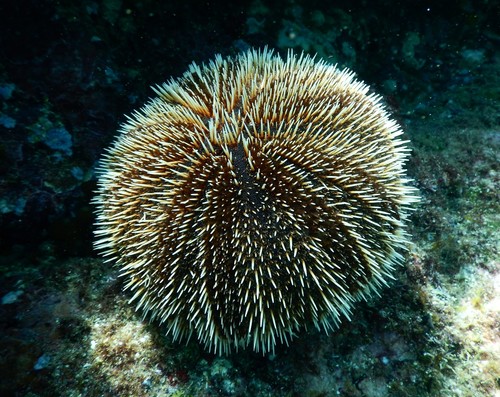
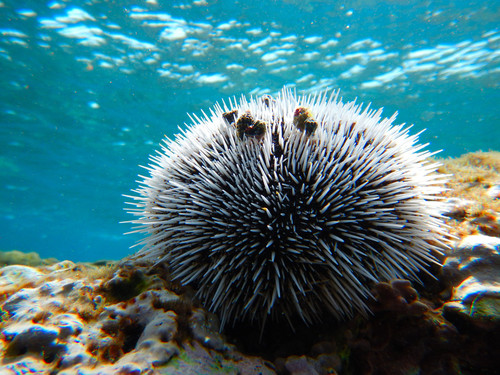
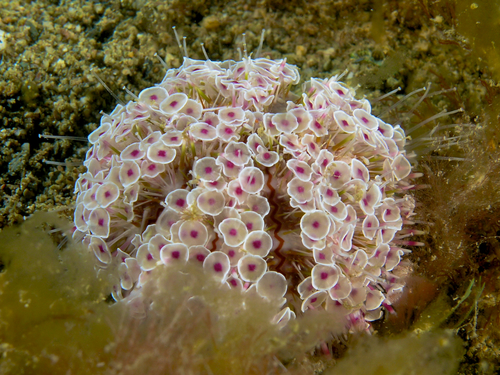
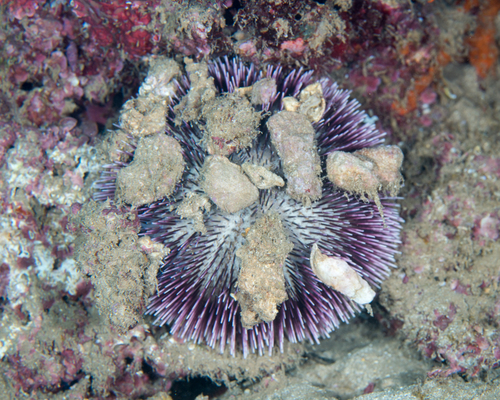
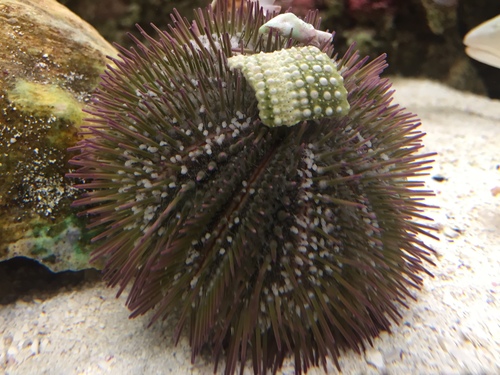
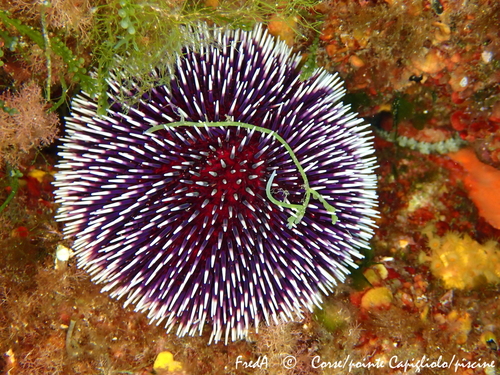
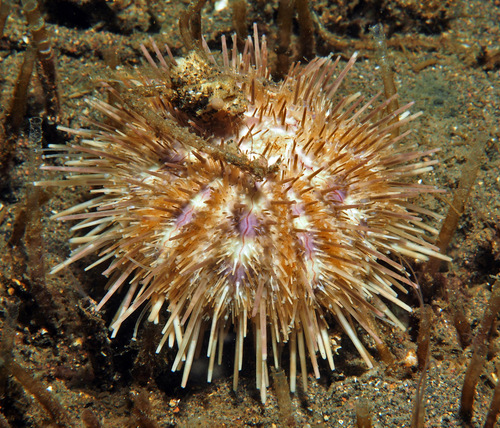
Lytechinus pictus, commonly called the painted urchin, has a test (hard internal skeleton) that reaches up to 40 mm (1.6 inches) in diameter. Its overall body color is greyish or pale straw brown, sometimes with a subtle pinkish tint. Its spines are robust, short and blunt; the basal half of each spine is usually white, while the outer portion varies in color. Juvenile urchins sometimes have banded spines. This species is found in the tropical and subtropical eastern Pacific Ocean, at depths down to approximately 300 m (1,000 ft). Its range extends from central California south to Ecuador. In California, it typically inhabits the middle and lower intertidal zone, while in the northern Gulf of California it mainly lives in the subtidal zone. These sea urchins often form dense aggregations at the edge of or within the kelp beds that line this coast. At San Onofre, California in 1978–1979, the recorded density near kelp beds was 80 individuals per square meter, compared to 40 individuals per square meter inside the kelp bed. At Anacapa Island, California, the highest recorded density was 36 individuals per square meter, found in barren areas with coralline algae near kelp beds. This sea urchin is generally more active at night. During the day, it may semi-bury itself in sand, and sometimes disguises itself with fragments of shell and gravel held in place by its tube feet. It feeds on kelp, particularly the genera Macrocystis, Gigartina and Laminaria, and primarily grazes on young kelp stages rather than fully grown fronds. In California's kelp forests, the painted urchin is preyed on by the bat star Patiria miniata.