About Lyriothemis tricolor Ris, 1916
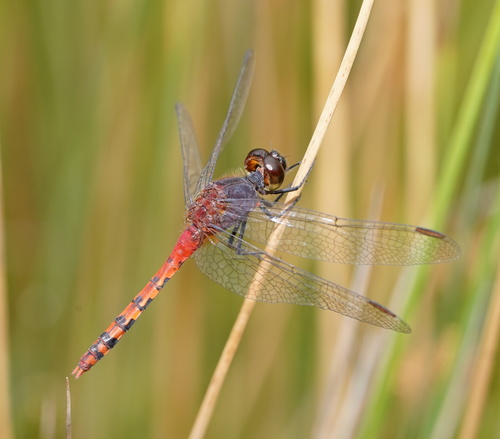
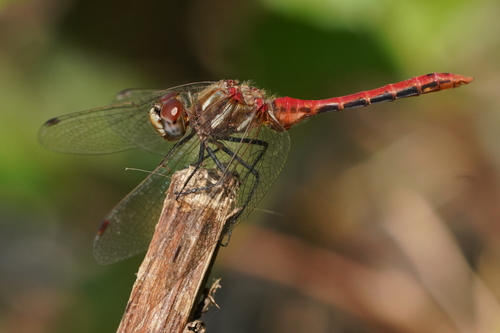
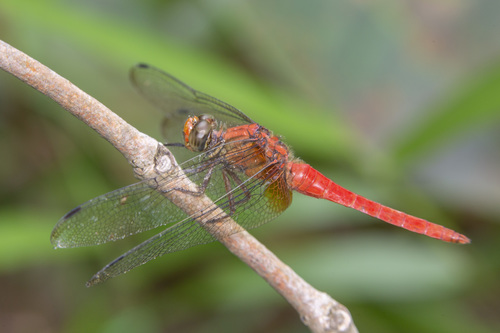
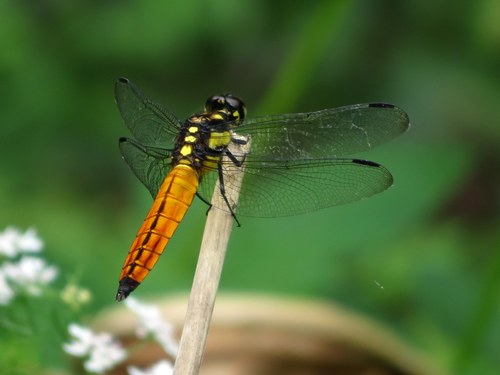
Lyriothemis tricolor Ris, 1916 is a medium-sized dragonfly. Mature individuals have brown-capped greenish-yellow eyes. The thorax is black on its dorsal surface and yellow on the sides, with a thick black oblique stripe running across the posterior half of the mesepimeron and the postero-lateral suture. Its wings are transparent, with an amber-yellow tint at the base. The abdomen is blood-red and marked with black: segment 1 has a narrow border of ochreous yellow, segments 2 and 3 are ochreous along the sides, every segment has a very narrow black border, segments 3 through 9 have a narrow mid-dorsal black stripe that fades in adult individuals, segment 10 is entirely black, and anal appendages are dark reddish-brown.
Females are similar in appearance to males, but have a coppery-brown thorax, and the mid-dorsal carina on segments 3 through 8 is rather broadly black. Its natural habitats are subtropical or tropical moist lowland forests, and subtropical or tropical moist montane forests. Unlike other dragonfly and damselfly species, this species breeds in water that collects inside tree holes in evergreen and semi-evergreen forests. Physicochemical testing of water from these tree holes shows the water is generally acidic, with high levels of total dissolved solids, phosphates, sulphates and nitrates. Measured pH ranges from extremely acidic (3.56) to near neutral (6.48). A diverse community of both invertebrates and vertebrates coexists with the larvae of L. tricolor. It is not known how the different taxa in this community interact with each other. However, the presence of predatory L. tricolor larvae may significantly influence the overall community structure of organisms living in tree holes.