About Lyriocephalus scutatus (Linnaeus, 1758)
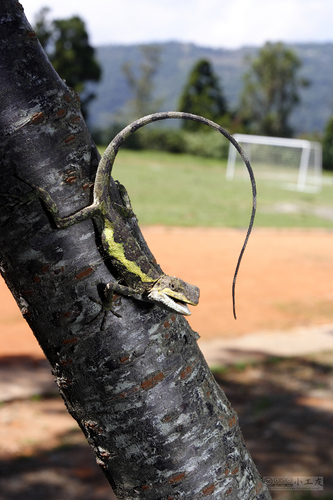
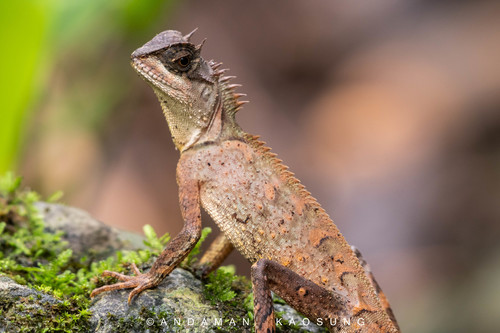
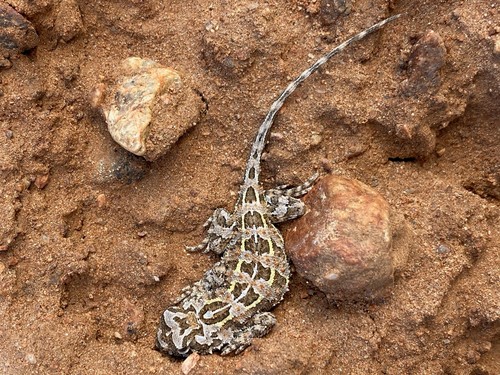
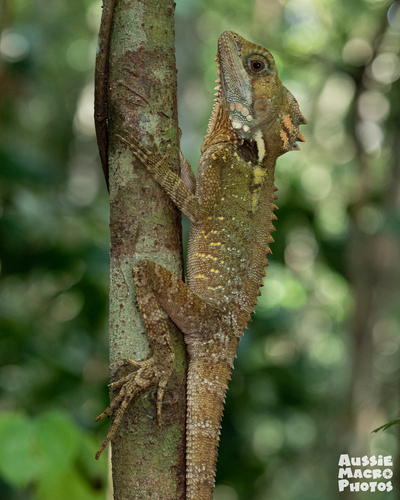
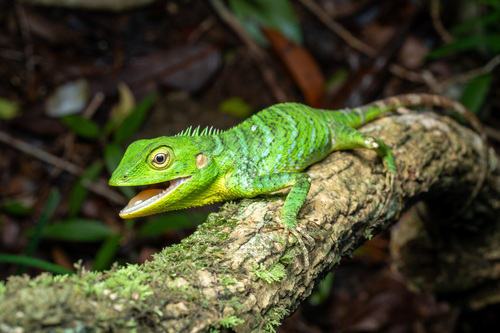
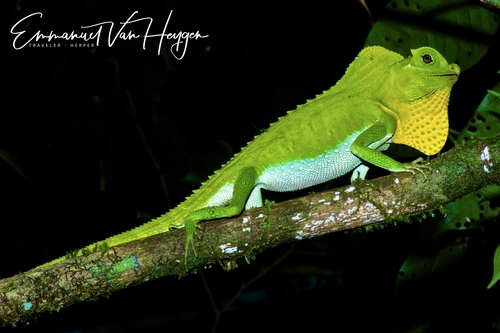
This species is a large agamid lizard with the scientific name Lyriocephalus scutatus (Linnaeus, 1758). The body is laterally compressed. A pair of small spines is present at the back of the head, and a dorso-nuchal crest is developed. Scales on the forehead are keeled. Adults have a distinct bony arch or hump on the head, which gives the species its name. The tympanum is absent. A V-shaped gular sac is present, and large, keeled gular scales are visible. The tail is short, compressed, and has a blunt tip. The dorsum is light green, the throat is yellow, and the rest of the venter is cream colored. Males are bright green with a yellow throat pouch and neck sail. While females can also show this same coloration, they are normally brown, especially when a male is present. Juveniles are brown. This lizard is widespread in the wet lowlands and midhills of Sri Lanka, found from 25 meters up to an elevation of 1650 meters. It inhabits forests with high canopies and dense undergrowth, and it occasionally also enters home gardens. It is active during the day, when it stays low on trees and on the ground. It moves higher up on trees to sleep at night. Its typical threat posture is an open-mouth gape that reveals the bright red lining of the oral cavity. The species is also known to feign death when picked up. Its diet consists primarily of earthworms, and also includes arthropods such as termites, butterflies, and moths. It also feeds on young shoots and buds. Clutches contain 1 to 11 eggs, each egg measuring 12–13 by 20–22mm. Clutches are produced in the months of January, March, May, June, September, October, and December. After being laid, eggs are buried in the soil, sometimes under bushes. The incubation period lasts 35 days.