About Lyomyces sambuci (Pers.) P.Karst.
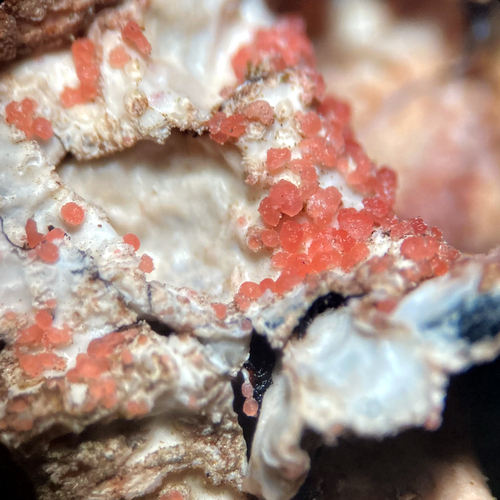
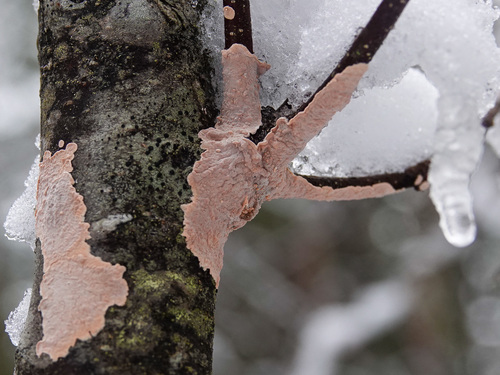
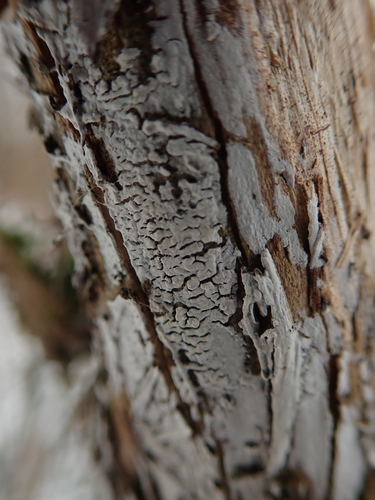
Hyphodontia sambuci, commonly known as elder whitewash, is a basidiomycete fungal pathogen that grows on deadwood, with a particular preference for elder. This fungus is resupinate, forming a very thin, white fruiting body that has a pruinose (flour-like dusted) or chalky appearance. It is classified as inedible. In addition to elder, it also grows on dead but still hanging branches of Fraxinus, Berberis, Nothofagus, Ulmus, Populus, Hedera, Ribes, and Symphoricarpos, and rarely occurs on conifers such as Cryptomeria. As noted earlier, H. sambuci is found mostly on Sambucus nigra in Northern Europe, while it grows on a much wider range of substrates in warmer southern regions. Micromorphological variability of the species increases in the tropics, but macromorphological characteristics always remain consistent: the basidiocarp is chalky white in color, and the fungus often grows as an aerophyte on dead tree and shrub branches that are still attached to the parent plant. H. sambuci is currently recognized as a species complex. Similar species that share capitate cystidia, thin-walled hyphae, and an identical chalky white fruiting body are H. griselinae and H. fimbriata. These species can be distinguished from H. sambuci by differences in their spores and basidiocarp morphology.