About Lyncina vitellus (Linnaeus, 1758)
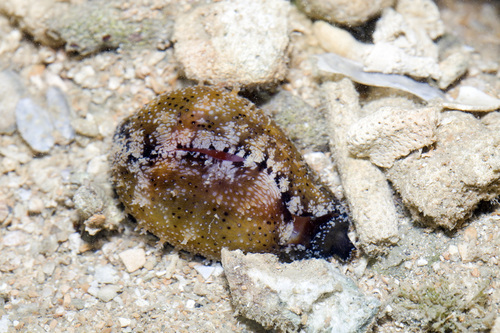
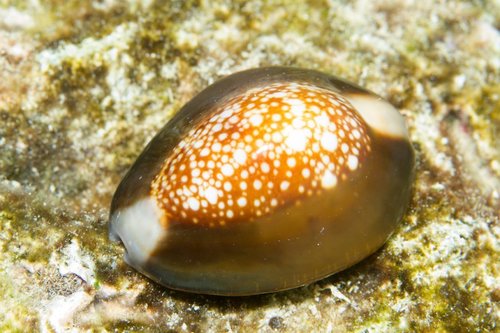
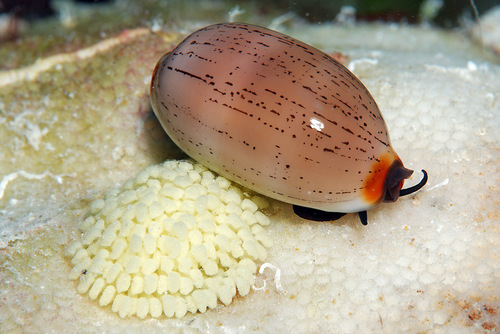
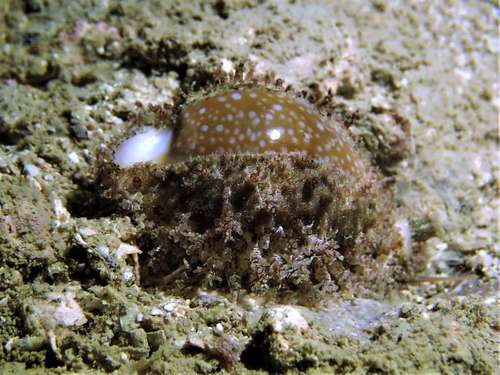
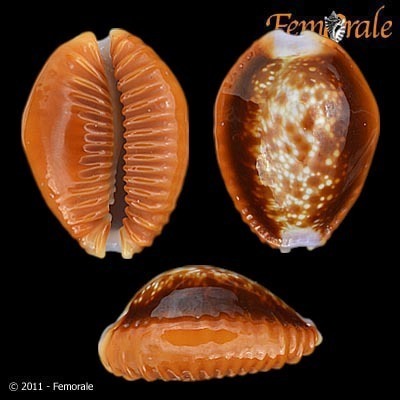
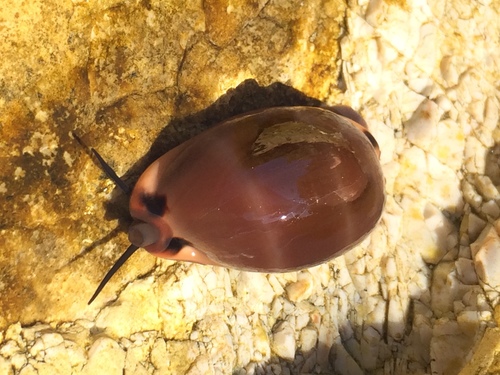
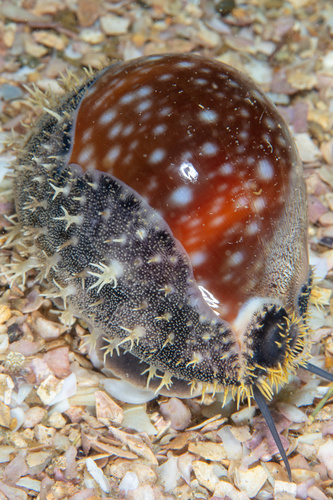
Lyncina vitellus, commonly known as the calf cowry, is a very common species of cowry. The adult shells of this species average 35–45 millimetres (1.4–1.8 in) in length, with a minimum recorded size of 20 millimetres (0.79 in) and a maximum recorded size of 100 millimetres (3.9 in). The shell is typically pear-shaped, with a smooth, shiny dorsum surface that ranges from pale to dark brown and is marked with several small white spots. The shell's margins and extremities are a lighter shade than the dorsum, while the base is generally white. The shell has a wide, sinuous aperture with long labial teeth, and the margins also bear numerous thin vertical whitish lines. Juvenile shells have two to three clearer transverse bands across the dorsum. Lyncina vitellus shells are quite similar in appearance and can be confused with shells of the related species Lyncina camelopardalis. In living individuals, the mantle is grey-brown and almost transparent, and bears long, whitish tree-shaped papillae. Both the mantle and foot are very well developed, and the species usually has external antennae. This species is distributed in the Red Sea and the Indian Ocean, ranging along Aldabra, Chagos, the Comores, Kenya, Madagascar, the Mascarene Basin, Mauritius, Mozambique, Réunion, the Seychelles, Somalia and Tanzania. It is also found off Jeju Island, the Philippines, Palau Islands, Samoa Islands, Polynesia, Hawaii and Vietnam. Lyncina vitellus lives in tropical intertidal and subtidal water up to about 0–25 metres (0–82 ft) depth, on coral reefs, typically under coral slabs and stones.