About Lyncina lynx (Linnaeus, 1758)
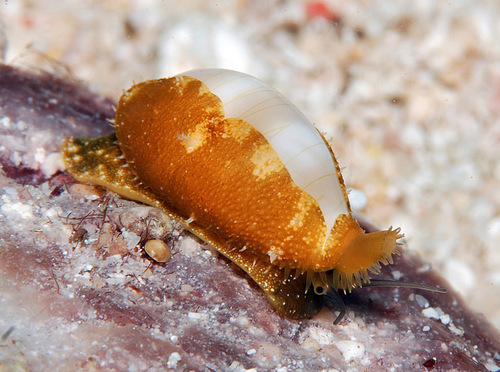
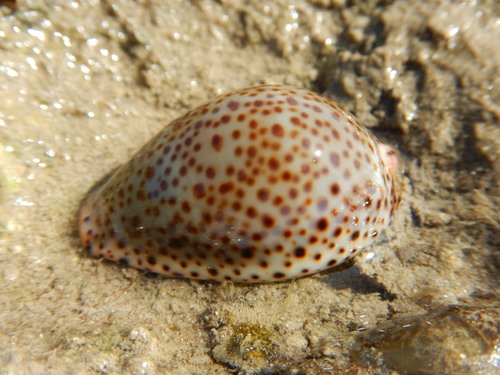
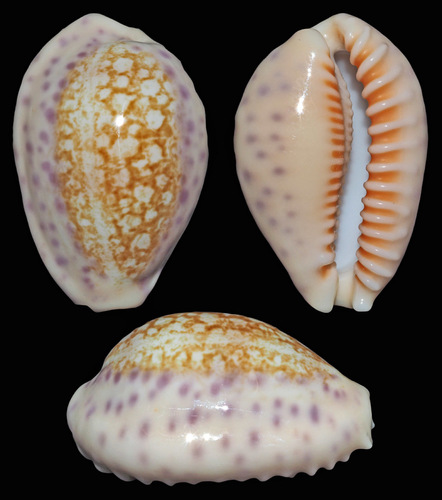
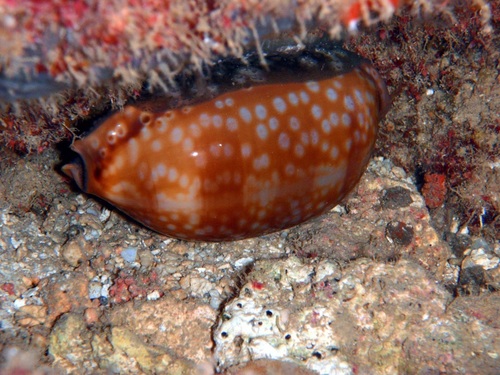
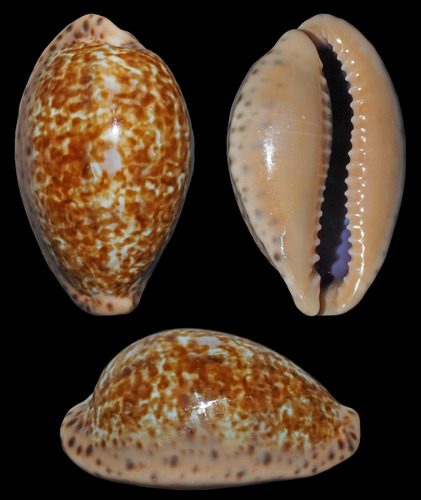
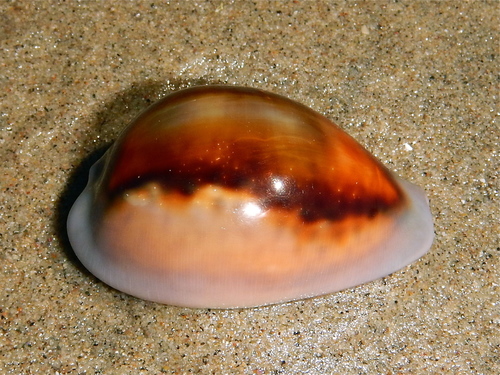
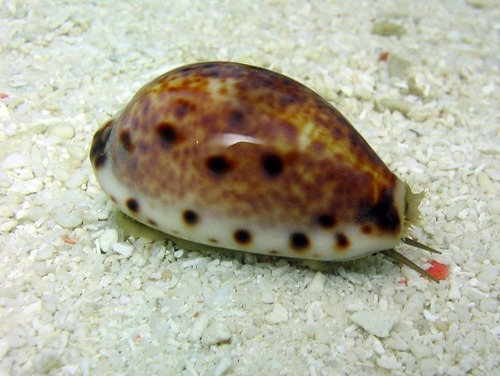
Lyncina lynx is a quite common species of cowrie. The shells of Lyncina lynx vary widely in pattern and size. On average, these shells reach 38–50 millimetres (1.5–2.0 in) in length, with a minimum recorded size of 18 millimetres (0.71 in) and a maximum recorded size of 90 millimetres (3.5 in). The smooth, shiny dorsum surface of the shell is usually pale brown, pale purple, or grey, and is densely covered with small and large dark brown or purple spots. The larger spots extend out to the edges of the shell. The base of the shell is white or pale brown. The aperture is long and narrow, with several white teeth and bright reddish spacing between the teeth. In living Lyncina lynx cowries, the mantle is transparent, with tree-shaped white sensory papillae, and can cover the entire shell. This species is found in the Red Sea, the Indian Ocean along South-East Africa, including locations such as Aldabra, Chagos, Kenya, Madagascar, the Mascarene Basin, Mauritius, Réunion, the Seychelles, Zanzibar, and Tanzania, and the western Pacific Ocean, including the Philippines, Japan, Taiwan, western and northern Australia, Polynesia, and Hawaii. These cowries inhabit tropical shallow water in both intertidal and subtidal zones. They usually live under rocks or corals at depths up to around 10 metres (33 ft). They begin feeding at dusk, and feed mainly on sponges.