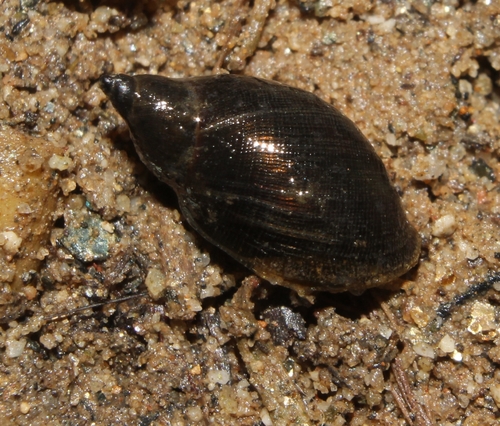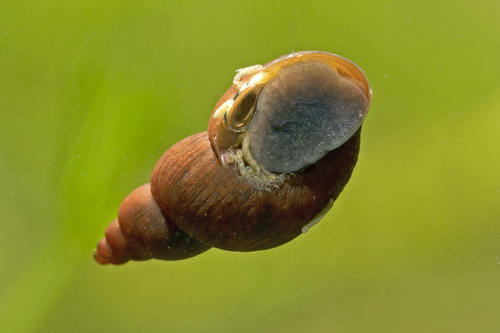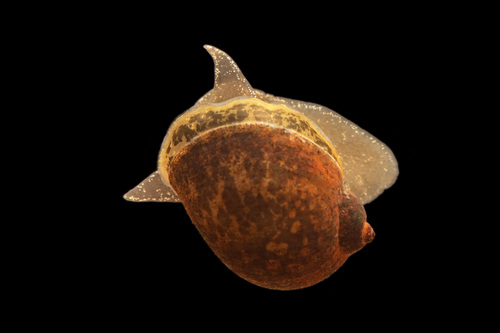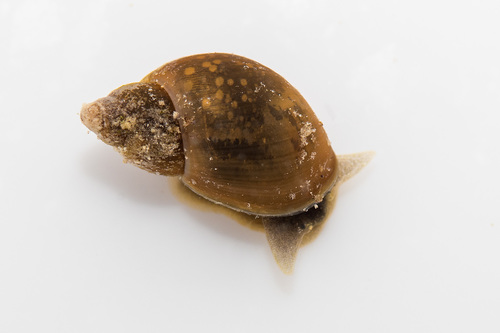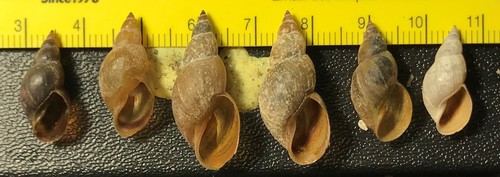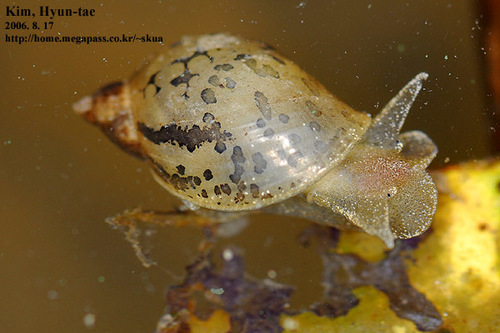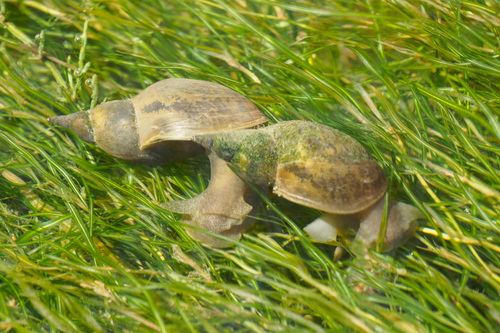
About Lymnaea stagnalis (Linnaeus, 1758)
The scientific name of this species is Lymnaea stagnalis (Linnaeus, 1758), also commonly called the great pond snail. It is a species of large air-breathing freshwater snail, an aquatic pulmonate gastropod mollusk that belongs to the family Lymnaeidae. The great pond snail is widely used as a model organism for research in parasitology, neurology, embryonal development and genetic regulation. Limnaea stagnalis var. baltica Lindström, 1868 is a recognized synonym of Lymnaea stagnalis (Linnaeus, 1758).
This species has a holarctic distribution, occurring primarily across the temperate zones of North America, Europe and Asia. It can be found in many ponds, lakes, and very slow-moving rivers that have abundant underwater vegetation. Its northernmost known populations are located in northern Norway, and in Central Europe, it can live even in montane ecosystems at elevations up to 1700 meters above sea level. In the Saprobiensystem, which is used in Germany to assess the quality of freshwater biotopes, this species has an assigned value of 1.9, and its presence indicates a biotope that falls into water quality class II, the second-highest water quality class in the system.
Lymnaea stagnalis is a simultaneously hermaphroditic species, meaning each individual can mate as either a male or a female. However, in any single copulation event, only one individual performs one sexual role at a time. Lymnaea stagnalis individuals carry out more inseminations when they are in larger groups, and they prefer to inseminate novel partners rather than partners they have already mated with. This increased motivation to copulate when encountering a new partner is called the Coolidge effect, and this effect was first demonstrated in a hermaphroditic species in Lymnaea stagnalis in 2007.