About Lymantria mathura Moore, 1865
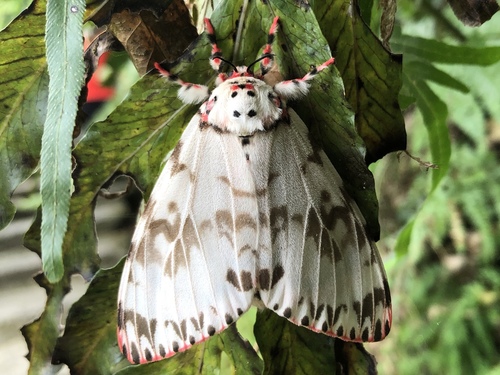
Lymantria mathura, commonly known as the rosy gypsy moth, is a moth species in the family Erebidae. It is found in the Russian Far East, Nepal, Japan (Hokkaido, Honshu, Kyushu), the Korean Peninsula, northern India, and China (documented in Hebei, Heilongjiang, Jilin, and also occurs in western China). This species was first described by Frederic Moore, originally noted as 1866 with the scientific name published in 1865. The wingspan is 40–50 mm for males and 70–90 mm for females. Lymantria mathura larvae disperse via ballooning, which lets them travel greater distances than larvae of Lymantria dispar, and they have high settling rates. Larvae have been recorded feeding on plants from the genera Terminalia, Shorea, Quercus, Mangifera, Eugenia and Mitragyna. The species is considered a pest because it is a major defoliator of deciduous trees. Lymantria mathura larvae show intraspecific variation in polyphenol metabolism that corresponds with their host plant, which lets the species be polyphagous across multiple broadleaf tree species.