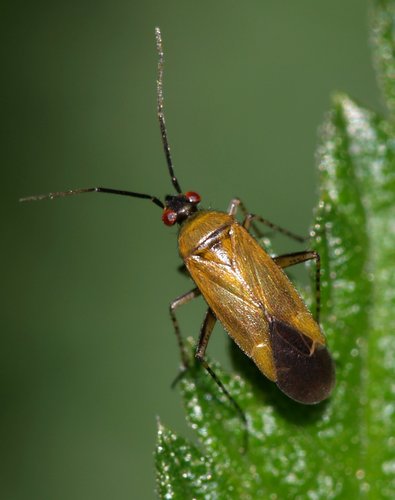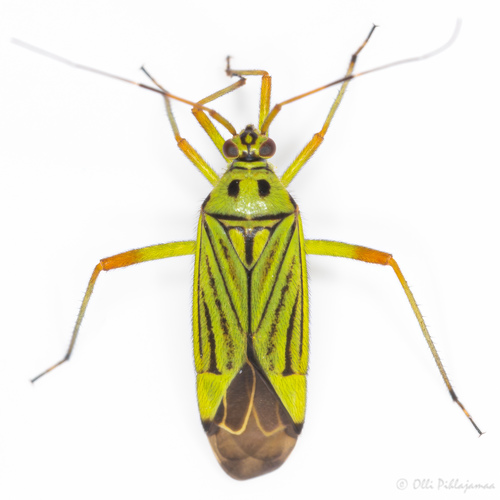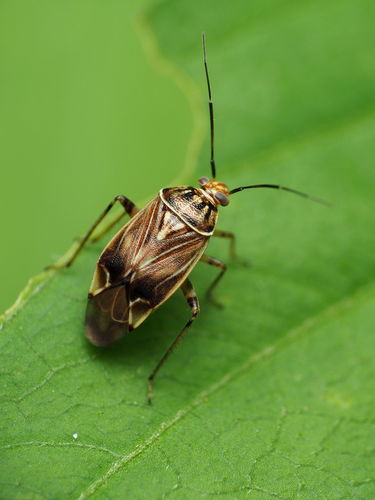
About Lygus lineolaris (Palisot de Beauvois, 1818)
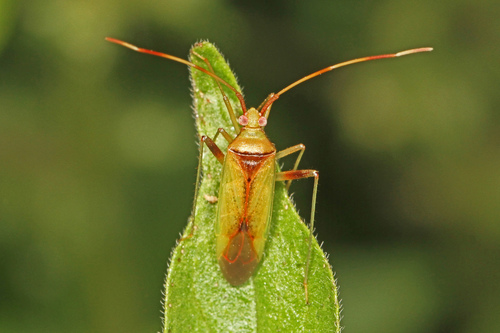
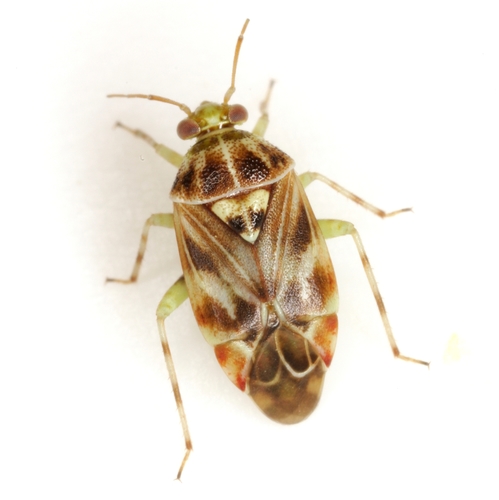
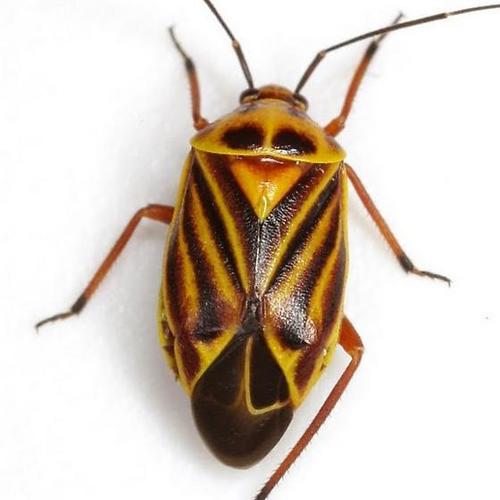
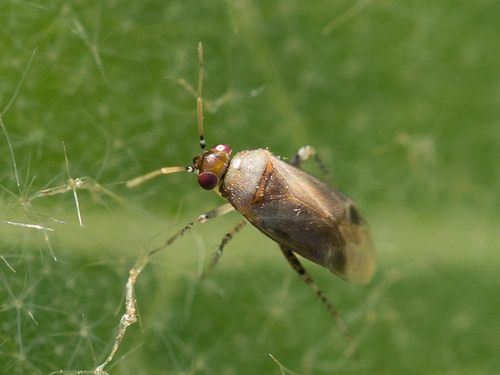
The tarnished plant bug (TPB), Lygus lineolaris, is a plant-feeding insect species in the family Miridae. It has piercing-sucking mouthparts, and is a serious pest of small fruits and vegetables in North America. It is a highly polyphagous species that feeds on over half of all commercially grown crop plants, with a preference for cotton, alfalfa, beans, stone fruits, and conifer seedlings. A study in southwestern Quebec, Canada investigated the presence of L. lineolaris in a commercial vineyard, which found that weeds growing alongside cultivated crops are an important food source for this insect. L. lineolaris occurs across the entire North American continent, ranging from northern Canada to southern Mexico, and is most common in the eastern half of North America. Adult tarnished plant bugs grow up to 6.5 mm in length. They are brown with yellow, orange, or red markings, and have a light-colored "V" shape on their dorsal back. The genome of L. lineolaris was first sequenced recently. One study of Lygus lineolaris genetic diversity and distribution across North America, focused on populations living on host plants, sampled three separate L. lineolaris populations and marked their DNA using the mitochondrial genes cytochrome oxidase 1 and cytochrome oxidase 2. Researchers wanted to test whether genetic differences between L. lineolaris populations correlated with geographical factors. Results showed significant differences in mitochondrial DNA between L. lineolaris populations across North America. Other evidence found that L. lineolaris individuals consistently occurred on the same plant hosts, but did not show any specific overall host plant preference. The presence of L. lineolaris in Quebec vineyards has been officially documented. Results from a 2010 study by Fleury et al. indicated that adult L. lineolaris prefer to overwinter in apple orchards; higher numbers of adults were found inside vineyards during winter months. In mid-June, the summer month, adult L. lineolaris populations inside vineyards decrease, as apples become less available and new flowers emerge. Another study tested whether geographical origin affects fecundity, survivorship, egg hatch rate, and developmental time, and found that geographical differences did not impact any of these four factors. Pollen analysis has been used as a method to track L. lineolaris dispersal. Researchers used pollen grains as indicators of the food sources L. lineolaris uses, as well as the insect's movement between wild host plant habitats and cropping areas. All pollen grains recovered through analysis came from known host plants of L. lineolaris. The pollen analysis also showed that L. lineolaris spends time away from agricultural crops, and can be found on plants growing in wet or disturbed sites. For L. lineolaris, cotton plants are one of the main reproductive hosts. After overwintering, females typically lay eggs in May, first laying eggs in the first row of cotton plants before expanding to more plants across the field. Eggs hatch and nymphs begin developing around June. The highest L. lineolaris population levels typically occur in June and October, and these population peaks also trigger increases in the population of Pisaurina mira, a nursery web spider that preys on L. lineolaris.