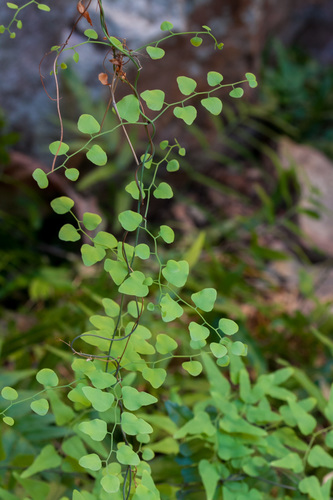
About Lygodium microphyllum (Cav.) R.Br.
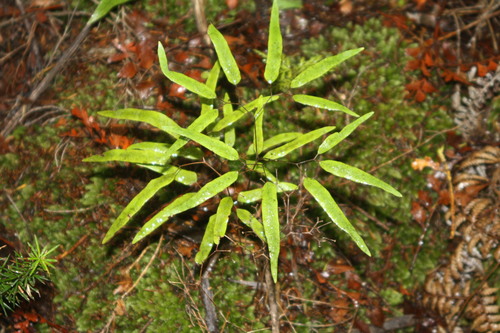
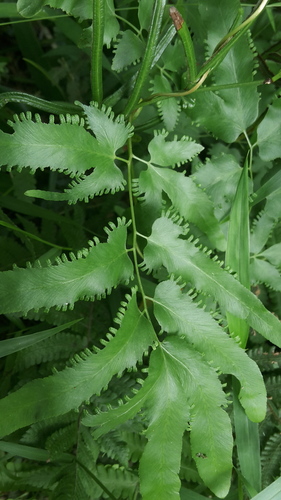
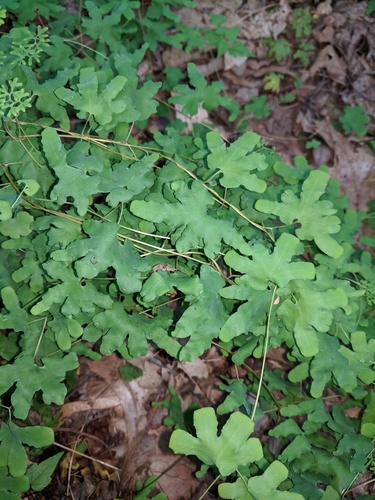
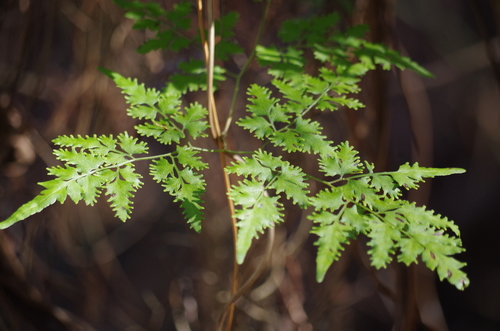
Lygodium microphyllum (Cav.) R.Br. has several common names: climbing maidenhair fern, Old World climbing fern, small-leaf climbing fern, and snake fern. This climbing fern originates from tropical Africa, Southeast Asia, Melanesia, and Australia. Its type specimen was collected near Nabúa on the island of Luzon in the Philippines by Luis Née. Its native range covers much of tropical Africa and South Africa, tropical Asia including China and Japan's Ryukyu Islands, Australia, Fiji, the Mariana Islands, and the Caroline Islands. It has become naturalized in the Caribbean and South Florida, and is an invasive weed in Florida that invades open forest and wetland areas. Where it is invasive, Lygodium microphyllum creates environmental problems. It damages wetland ecosystems and harms endangered species. The fern can grow up and over trees and shrubs, forming dense horizontal canopies that can cover entire plant communities and reduce native plant diversity. It is capable of growing in many different types of ecosystems. Lygodium microphyllum also changes fire behavior for both natural and human-caused fires: it allows fire to climb into tree canopies, which kills trees. It has spread rapidly across South Florida's public conservation lands. In the Philippines, fibers from Lygodium microphyllum (and other Lygodium species, collectively called nito) are used to weave traditional salakot hats.