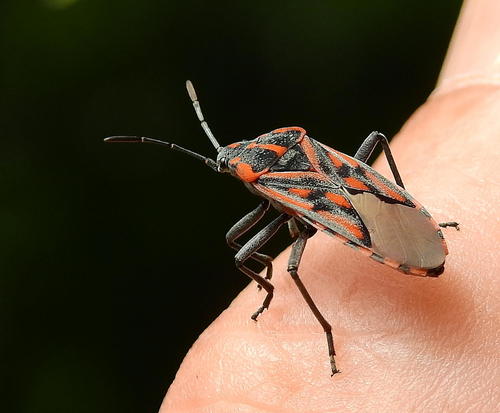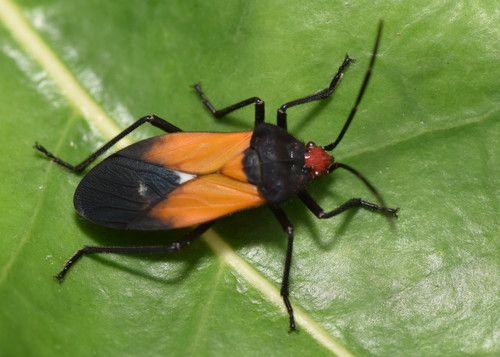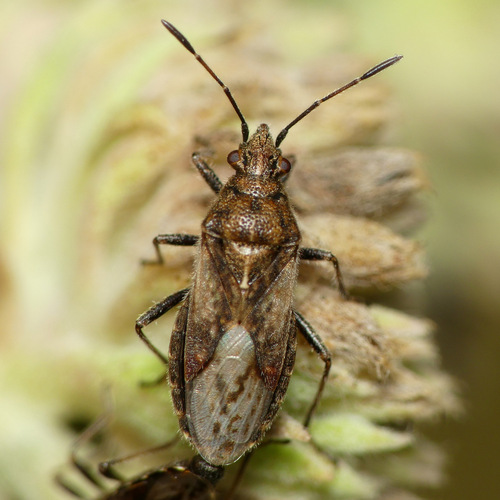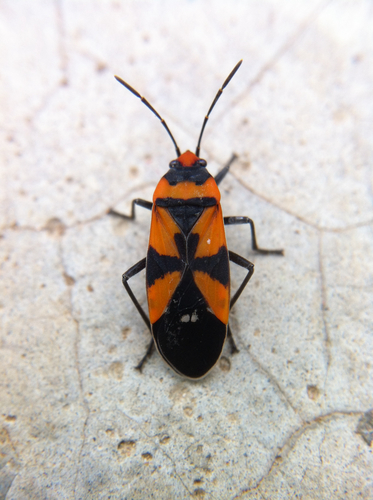
About Lygaeus equestris (Linnaeus, 1758)
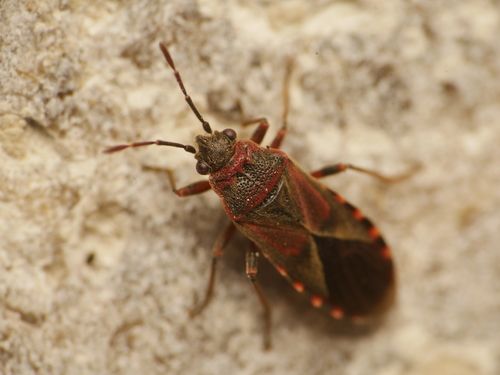
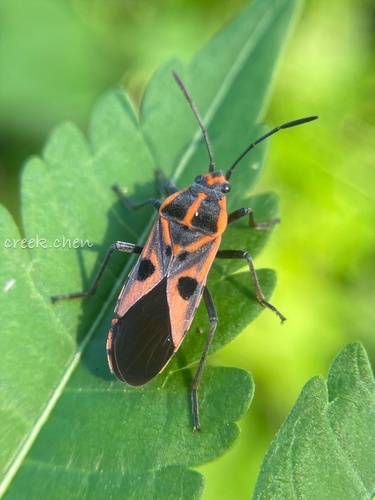
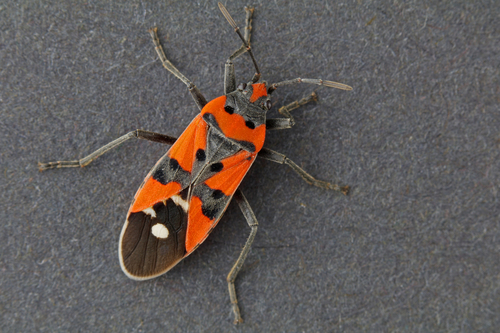
Description: Adult Lygaeus equestris reach a body length of about 11 to 12 millimetres (0.43 to 0.47 inches). These bugs have a distinct red-black body pattern, fully developed wings, and long, powerful legs. On their hemelytra, two transverse bands extend all the way to the margin, and there is a round white spot on the membrane. The scutellum lacks bristles but is covered in tiny fine hairs. The black band located near the eye is wider than the equivalent band on Lygaeus simulans. This species is very difficult to distinguish from the closely related Lygaeus simulans, which differs by having long bristles on its scutellum, angulous tubercles on its antennae, and a larger red area on the head. The red-black pattern of Lygaeus equestris acts as a deterrent to predators and serves as protective coloration, functioning in either Müllerian or Batesian mimicry. These bugs store toxic compounds from their food plants, making them unpalatable to most potential predators. Distribution and habitat: Lygaeus equestris is mainly found in Albania, Austria, Belgium, Bosnia, Bulgaria, Brazil, Croatia, Czech Republic, Denmark, Finland, France, Germany, Gibraltar, Greece, Hungary, Italy, Montenegro, North Macedonia, Poland, Portugal, Romania, Russia, Serbia, Slovakia, Slovenia, Spain, Sweden and Switzerland. It typically inhabits lawns, forest clearings and scrubs, most commonly in warm calcareous areas.