About Lycopodiella inundata (L.) Holub
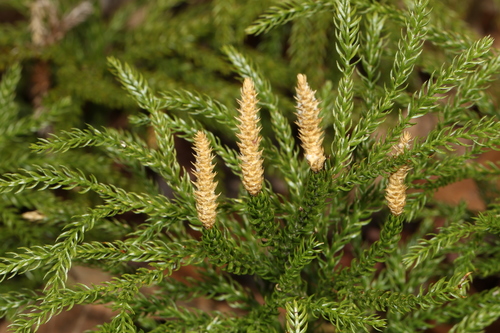
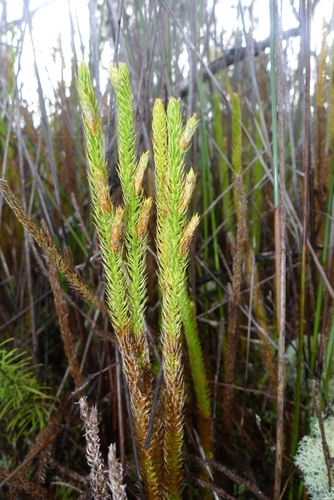
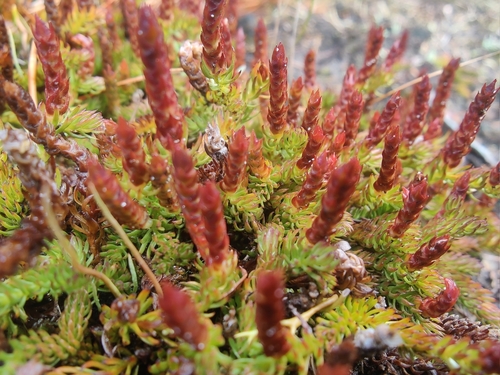
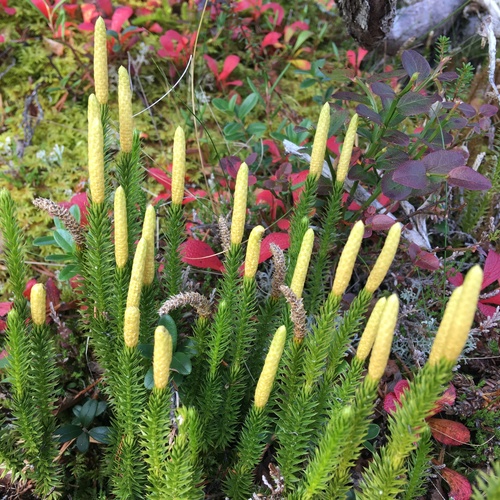
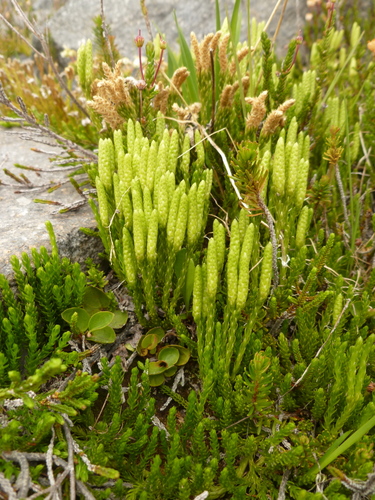
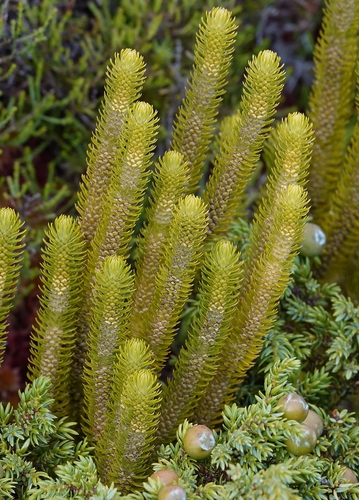
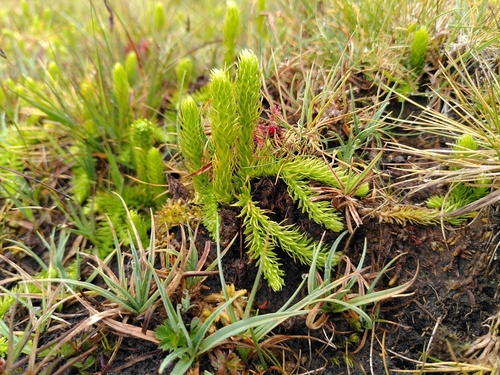
This small club moss forms ground patches. Its leafy sterile stems branch, grow horizontally along the ground, and root at regular intervals. Spore-bearing cone stems grow a few centimeters tall and stand erect during July and August. Its leaves are curved, green, narrow, sharply pointed, and only a few millimeters long. This arctic-alpine club moss has a circumpolar boreal and montane distribution across the Northern Hemisphere. It occurs most commonly in Europe, and is also found in East Asia and North America. In the British Isles, it is classified as a UK Priority Species because it is rare and appears to be declining. It grows in Scotland, the western fringes of England and Wales, and in scattered locations in other areas. When conditions are suitable, this species can spread very rapidly. A notable example of this rapid growth occurred at Llyn Cwm-y-ffynnon in Wales, on bare peat substrates that had not been colonized by other plants after winter inundation, cattle poaching, and peat cutting. It grows at a small number of sites across Ireland, and only one site in Northern Ireland: Peatlands Park in County Armagh. Due to its rarity in this region, it is listed as a Northern Ireland Priority Species.