About Lybius bidentatus (Shaw, 1799)
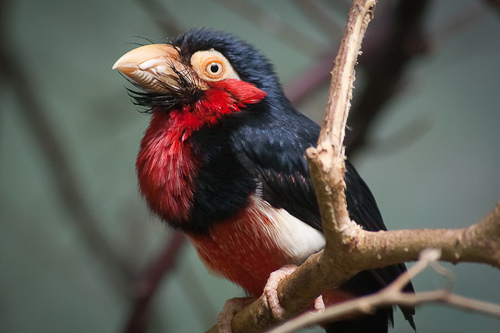
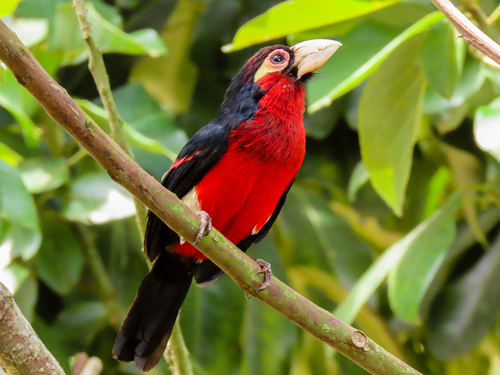
This species, currently known by the scientific name Lybius bidentatus (Shaw, 1799), is also referenced under the synonym Pogonornis bidentatus, and is commonly called the double-toothed barbet. It is a barbet with black and red coloring. It has a large off-white bill, and yellow skin surrounds its eyes. The upper side of its body is black, with a patch of white feathers on its back. Its breast is red, and it has a white patch on its side. Males and females have similar markings, except females have black feather lines on the white side patch. Juveniles of this species are duller, with dark grey feathers. The double-toothed barbet's song is somewhat similar to a cat's purr, and paired individuals will sometimes sing together. Double-toothed barbets generally live in the understory of dense woodland. They also occupy woodland edges, riparian forest, and secondary forest. Some individuals may enter gardens to forage for fruit. This species is most likely to be confused with the black-breasted barbet or the bearded barbet. It flies ungracefully.