About Lybia tessellata (Latreille, 1812)
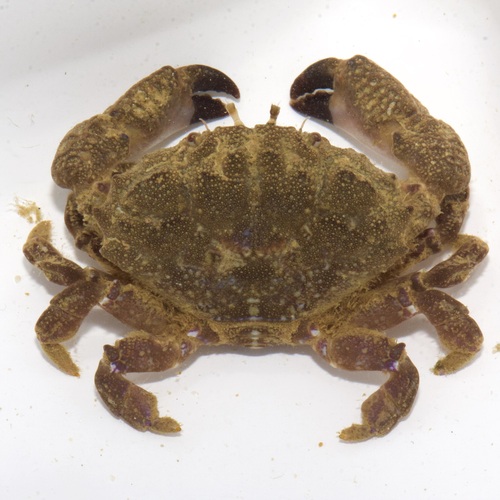
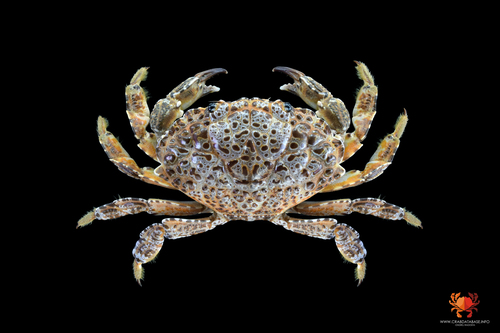
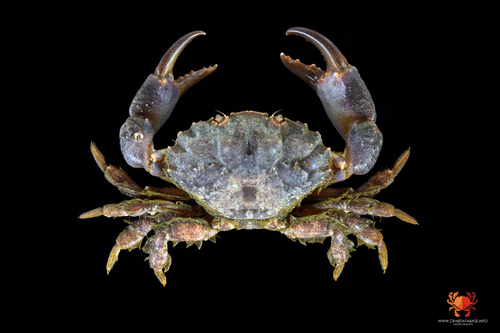
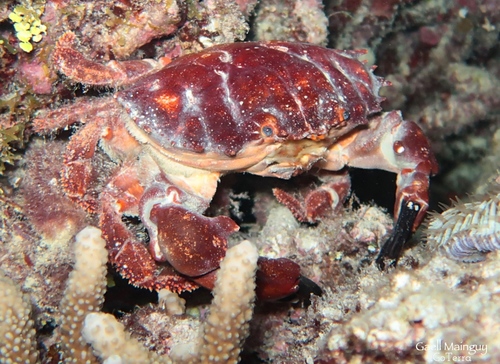
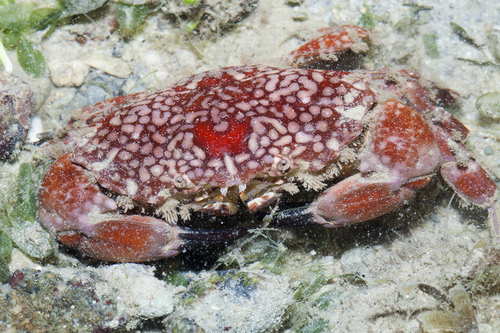
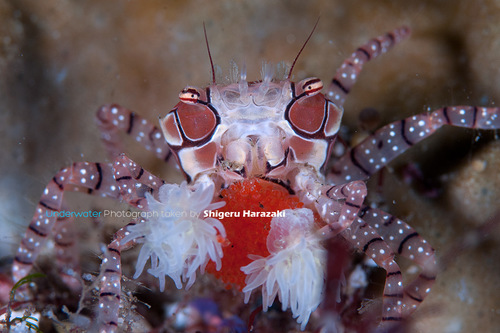
Lybia tessellata is a small species of crab that reaches a body width of approximately 2.5 cm (1 in). Its carapace is trapezoid in shape, and each side of the carapace margin has a distinct tooth-shaped projection located just behind the short-stalked eye. A network of dark lines divides the carapace surface into multiple geometric regions of differing colors, giving the crab a stained-glass-like appearance. Unlike the broad claws (chelae) that are typical for decapod crabs, the chelipeds of Lybia tessellata are slim. Each cheliped has a fine finger that bears eight or nine spines. The first pair of walking legs is smaller than the crab's other three pairs of walking legs, and all walking legs are much larger than the chelipeds. The legs are marked with dark transverse banded lines, speckled with white spots, and covered in sparse, short hairs. The claws at the end of the walking legs are long and thin. Lybia tessellata occurs in shallow waters across the tropical Indo-Pacific region, with its range stretching from the Red Sea and East African coast to Indonesia and New Guinea. It inhabits sandy and gravelly seabeds, where its patterning provides good camouflage, as well as live corals, where it can cling using its long thin legs. This crab is well-suited for keeping in a reef aquarium. However, its small size and cryptic appearance mean it is often better kept in a small tank, where it can be observed more easily. It is compatible with most other aquarium inhabitants, though predatory fish may attack it. It is a shy species, and is easier to locate at night when aquarium tank lights are off.